
KEY TAKEAWAYS
▸ Proper storage protects your investment: Incorrect kayak storage can lead to warping, UV damage, and material degradation over time.
▸ Garage storage saves money but demands space: Wall mounts and ceiling hoists are great ideas for kayak storage in garages, but garage space is often at a premium in most homes.
▸ Outdoor storage racks offer convenience with compromises: Outdoor kayak storage racks keep your kayak accessible but expose it to weather, security risks, and UV damage even with protective covers.
▸ Storage units provide security and space: Renting a storage unit may be the best way to store a kayak if you value security, climate control, and preserving precious home storage space for daily needs.
▸ Support matters everywhere: Regardless of location, always support your kayak at multiple points along the hull to prevent warping and store it clean and dry to maximize longevity.
So you’ve either caught the kayaking bug or are preparing to store your kayak in the off-season. There’s nothing quite like gliding across glassy water on a perfect morning, paddle in hand, without a care in the world. But once you get home and pull into your driveway, reality hits: where exactly are you supposed to put this 10-foot boat?
If you’ve been awkwardly shoving your kayak into an already-cramped garage or leaving it exposed to the elements in your backyard, you’re not alone. Finding the best way to store a kayak is one of those challenges that doesn’t cross your mind until you’re literally standing in your driveway, kayak in hand, wondering if your spouse will notice if it “temporarily” lives in the dining room.
Let’s dive into the world of kayak storage and find a solution that works for your space, budget, and lifestyle.
Why Proper Kayak Storage Actually Matters
Before we get into the how, let’s talk about the why. Your kayak represents a real investment—whether you spent a few hundred dollars on a basic recreational model or splurged on a high-end fishing or touring kayak. Proper storage isn’t just about keeping it out of the way; it’s about protecting that investment.
Kayaks stored improperly can develop warping, especially if they’re supported at only one or two points for extended periods. UV exposure from direct sunlight breaks down the hull material over time, making it brittle and more prone to cracks. Temperature extremes can also take their toll, and leaving your kayak exposed to the elements invites dirt, debris, and critters to make themselves at home.
The good news? With the right storage approach, your kayak can last for many years of adventures.
At-Home Kayak Storage: The DIY Approach
Garage Storage: The Most Common (But Complicated) Option
The garage seems like the obvious choice for kayak storage. It’s protected from weather, secured from theft, and already part of your property. But here’s the catch: garage real estate is precious.
Think about what’s already competing for space in there. Two cars (or at least one car and the car-shaped pile of stuff you’ve been meaning to organize). Your lawnmower. Holiday decorations. That treadmill you swear you’ll use again. Bikes, tools, sports equipment, and probably a random assortment of things you forgot you owned.
Now try to fit a kayak, or multiple kayaks if your whole family paddles, into that equation.
If you do have garage space available, wall-mounted racks or ceiling hoists can be excellent ideas for kayak storage. Wall-mounted systems use brackets or J-hooks to hold your kayak vertically or at an angle, keeping it off the floor and out of the way.
Ceiling hoists use a pulley system to lift your kayak overhead, which is brilliant for space-saving but requires some installation effort and sturdy ceiling joists.
The key to garage storage is supporting your kayak properly. You’ll want to distribute the weight across at least two points, ideally along the bulkheads or across the widest parts of the hull. Never hang a kayak by the grab handles—they’re designed for carrying, not long-term suspension. And remember – the more you stuff into your garage, the more careful you need to be.
Outdoor Kayak Storage Racks: Convenience Meets Compromise
If garage space is tight (or nonexistent), outdoor kayak storage racks offer a middle-ground solution. These freestanding systems can hold multiple kayaks and keep them organized in your backyard, side yard, or driveway.
Outdoor kayak storage racks come in various configurations—some hold kayaks horizontally, while others store them vertically or at an angle. Many are adjustable to accommodate different kayak sizes and styles. The main advantage is accessibility; your kayak is right there when you’re ready for a spontaneous paddle session.
However, outdoor storage comes with some significant considerations. Even with a quality rack, your kayak is still exposed to the elements. You’ll want to invest in a UV-resistant kayak cover to protect against sun damage. Depending on your neighborhood and setup, security can also be a concern—kayaks are relatively easy to steal if they’re sitting unattended in an open area.
The weather is another factor. While kayaks are designed to handle water, constant exposure to rain, snow, and temperature swings isn’t ideal for long-term durability. And if you live in an area with strong winds, you’ll need to ensure your outdoor kayak storage racks are properly anchored—nobody wants to chase their kayak down the street during a storm.
The Backyard Shed Solution
A storage shed can offer the best of both worlds: protected storage that doesn’t eat into your garage space. If you already have a shed, it might be the perfect kayak home. Just make sure you’re storing your kayak properly, supported, and not leaning it against a wall or leaving it flat on the ground for extended periods.The downside? Sheds cost money to build or buy, and depending on your local regulations, may require permits. They also take up valuable backyard space that you might prefer to use for, you know, actually enjoying your yard.
The Storage Unit Solution: Maximum Protection with Minimal Home Impact
Here’s an option that might not have crossed your mind: renting a storage unit specifically for your kayak and other outdoor gear.
Before you dismiss this as overkill, hear us out. A storage unit could actually be the best way to store a kayak, especially if you’re dealing with limited home storage space or seasonal kayaking habits.
Why Storage Units Make Sense for Kayaks
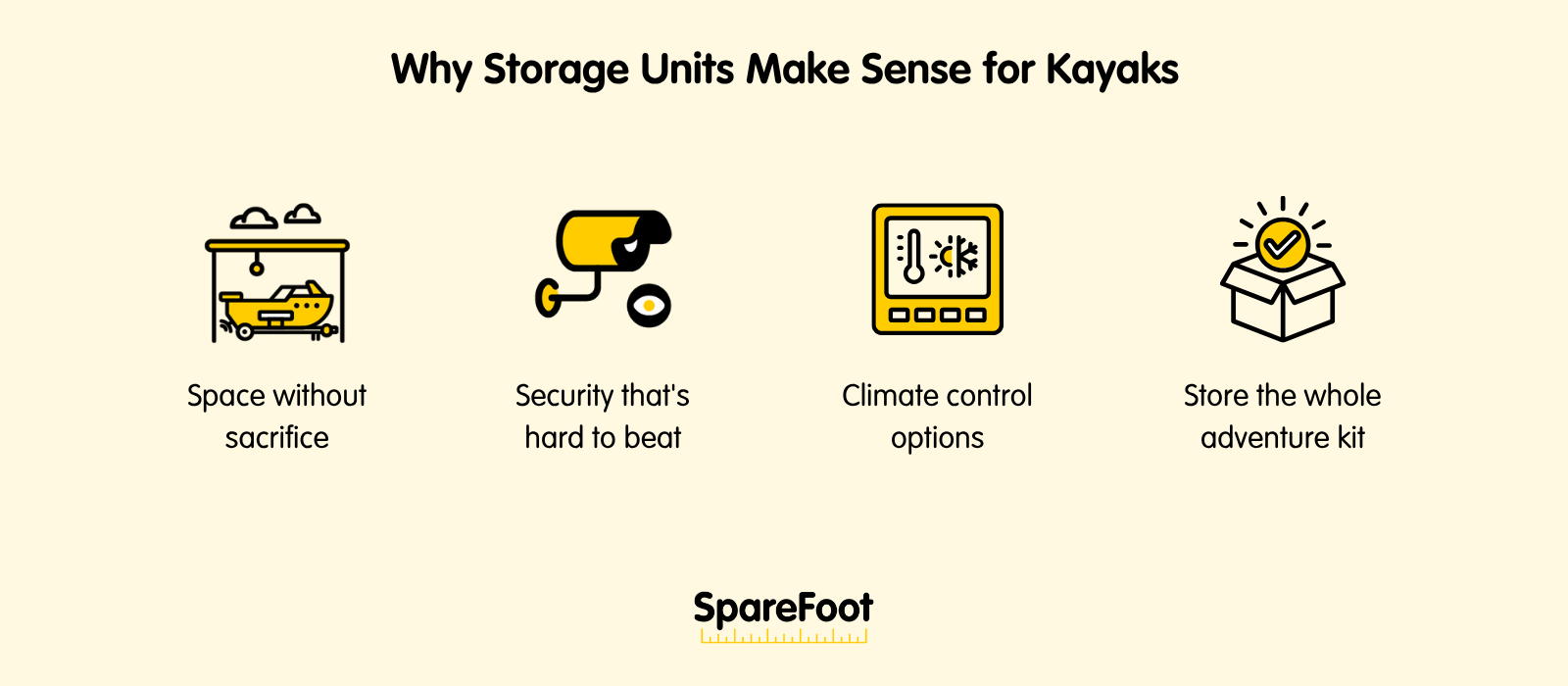
- Space without sacrifice. This is the big one. A storage unit gives you dedicated space for your kayak without forcing you to play Tetris with your garage or sacrifice yard space. You keep your home organized and functional while still owning all the recreational equipment you love.
- Security that’s hard to beat. Most storage facilities offer significantly better security than the average backyard or garage. Think gated access, security cameras, individual unit locks, and sometimes even on-site management. If you own a high-end kayak (or several kayaks), that peace of mind is valuable.
- Climate control options. Many storage facilities offer climate-controlled units that maintain stable temperatures and humidity levels year-round. This is especially beneficial for long-term storage or if you live in an area with extreme temperatures.
- Store the whole adventure kit. Here’s a bonus: you probably don’t just own a kayak. You’ve got paddles, life jackets, dry bags, a roof rack system, a cooler, and who knows what else. A storage unit can house your entire paddling setup plus other seasonal gear like camping equipment or bikes.
Making Storage Units Work for Kayakers
If you go the storage unit route, location matters. Choose a facility that’s reasonably close to your home or (even better) between your home and your favorite paddling spots. This keeps access convenient for those spontaneous kayaking days.
You’ll still want to follow proper storage principles inside your unit. Consider bringing a simple kayak rack system or foam blocks to ensure proper support. Even in a storage unit, avoid leaving your kayak flat on the ground or leaning against a wall for months at a time.
Kayak Storage Best Practices (No Matter Where You Store)
Regardless of which storage solution you choose, following these principles will help keep your kayak in prime condition:
- Support it properly. Always support your kayak at multiple points, ideally at the bulkheads or across the widest parts of the hull. This prevents warping and stress points.
- Keep it clean and dry. Before storing your kayak, rinse off any dirt, sand, or saltwater and let it dry completely. Trapped moisture can lead to mold and mildew.
- Loosen the hatches. If your kayak has hatch covers, loosen them slightly during storage to allow air circulation and prevent vacuum seal effects from temperature changes.
- Cover it up. Whether stored indoors or out, a breathable kayak cover protects against dust, UV rays, and pests. Avoid sealed tarps that can trap moisture.
- Consider the season. If you’re storing your kayak through winter, make sure any water is completely drained from the hull and compartments. Freezing water expands and can cause cracks.
Ready to Find the Perfect Storage Unit for Your Kayak?
If a storage unit sounds like the right solution for your kayak storage needs, SpareFoot makes it easy to find the perfect fit. Compare prices, sizes, and amenities from storage facilities in your area, read reviews from real customers, and book online in minutes.
Whether you need a basic unit for seasonal storage or a climate-controlled space for your high-end gear, SpareFoot helps you discover storage options that match your budget and location.
Start your search today and reclaim your garage space while keeping your kayak secure and ready for your next adventure.

Maggie Stankiewicz
Maggie is a writer and senior content manager who brings a decade of content expertise to the wonderful world of self storage. By day, she blends data and human-driven storytelling to craft content you'll actually want to read. By night, you can find her dissecting horror films or hiking trails with her dog in the foothills of North Carolina.