KEY TAKEAWAYS
▸ The average monthly rental cost of a 10×10 storage unit in the U.S. as of February 2026 is $74.98 — the lowest it has been in the last five years.
▸ Americans say $84 per month is a fair price for a 10×10 storage unit.
▸ 82% of Americans have experienced sticker shock while shopping for storage space.
▸ 63% would be willing to drive 10 minutes or more to save $20–$50 per month on their storage unit.
National Storage Prices Hit a Five-Year Low
Storage pricing has cooled off significantly since its peak a few years ago, and renters are finally catching a break.
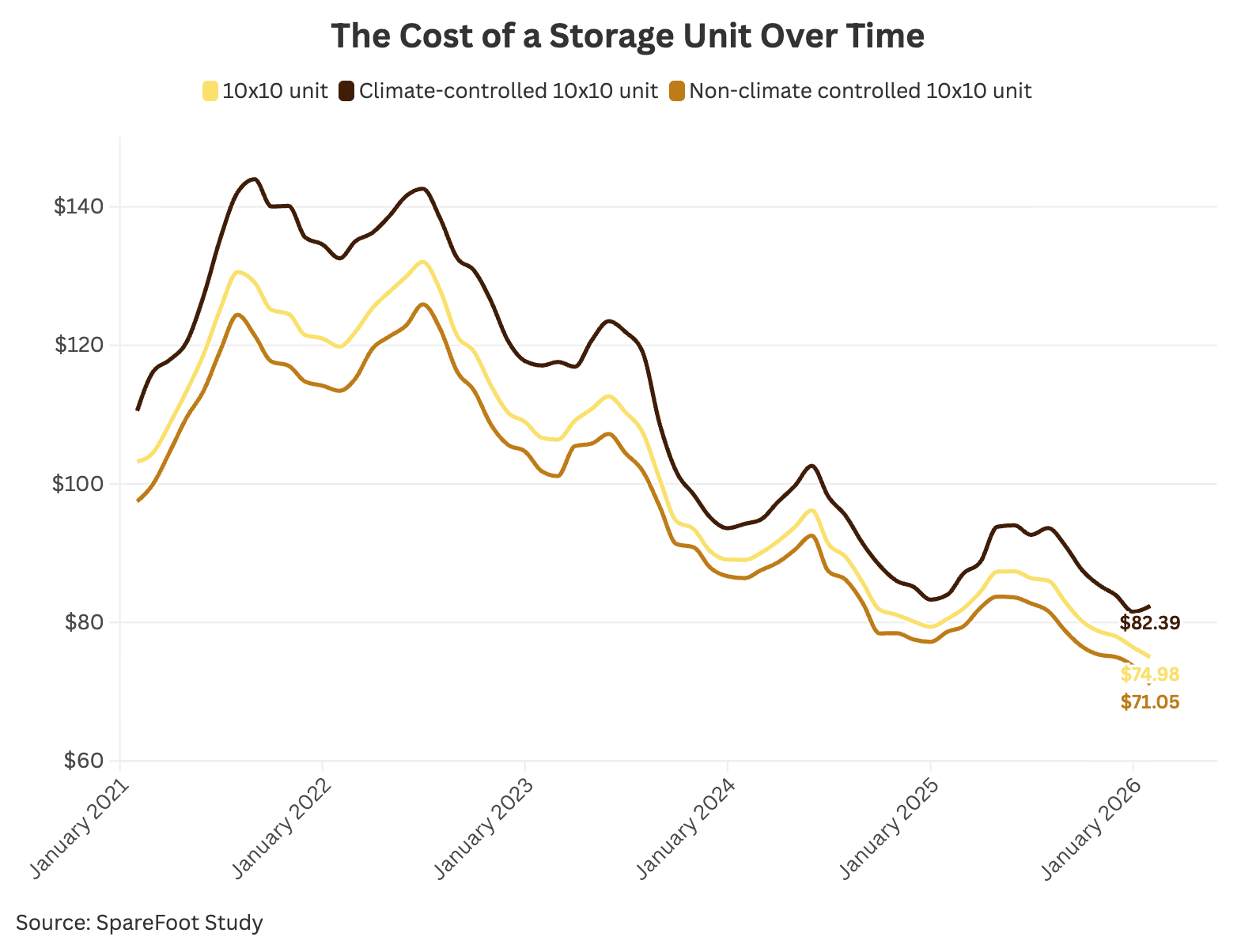
The average monthly rental cost of a 10×10 storage unit in the U.S. was $74.98 as of February 2026, the lowest national average recorded in the past five years. That’s a significant drop from July 2022, when the average price reached $132.06. The difference between those two points shows just how much the market has shifted in renters’ favor.
For renters who need climate-controlled storage, the national average sits at $82.39 per month. That’s still a bit higher than standard units, but well below what people were paying at the 2022 peak.
The Most and Least Affordable Storage Markets in America
National averages only tell part of the story. Where you live still makes a big difference, so here’s a look at what renters are dealing with across the country.
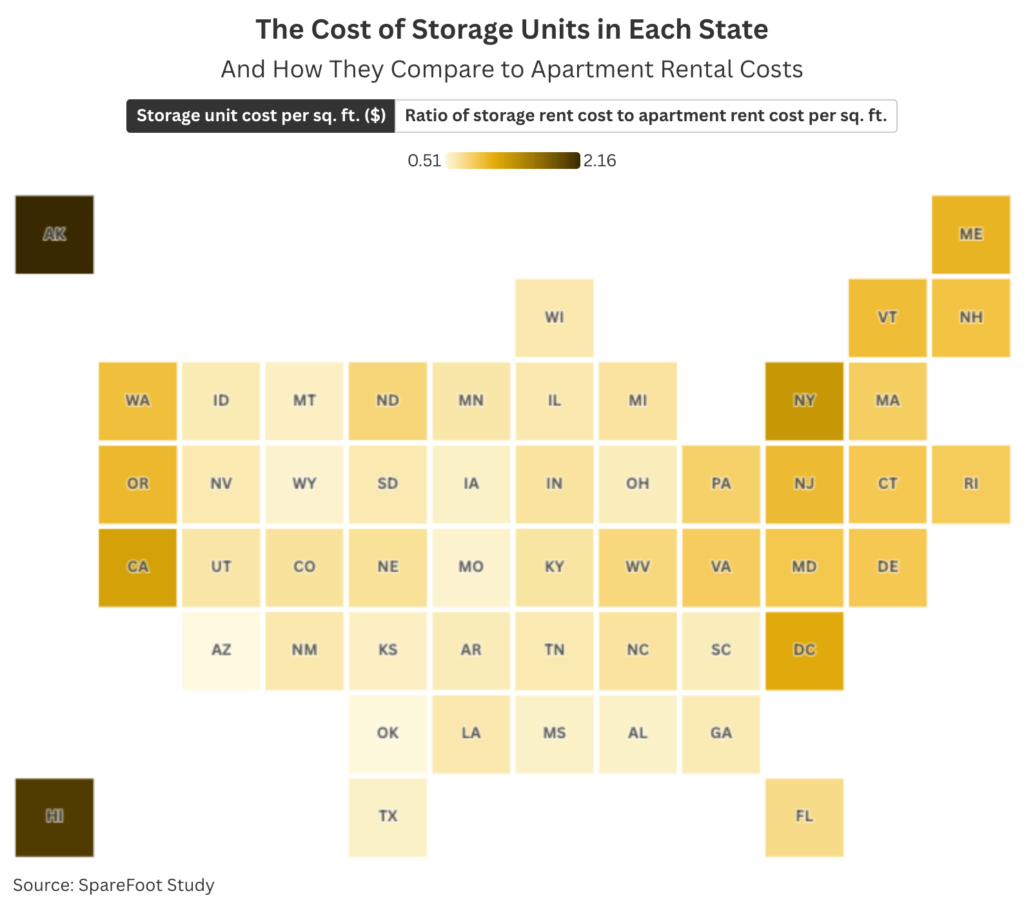
Based on monthly cost per square foot, Alaska ranked as the most expensive state at $2.16, followed by Hawaii at $2.03. New York ($1.30), California ($1.21), and Washington, DC ($1.13) rounded out the top five most expensive markets.
On the more affordable end, Arizona had the lowest cost per square foot at $0.51. Oklahoma ($0.52), Missouri ($0.56), Wyoming ($0.56), and Alabama ($0.57) were also among the least expensive. If you’re in one of these states, you’re in pretty good shape.
Comparing storage prices to apartment rental prices puts things in perspective. In New Mexico, the ratio of storage cost per square foot to apartment cost per square foot was just 0.13, making storage a relative bargain compared to housing. Massachusetts (0.24), Nebraska (0.25), Arizona (0.26), and Illinois (0.26) also showed low ratios.
In Alaska, that ratio reached 1.01, meaning storage costs about the same per square foot as an apartment. New York (0.93), New Jersey (0.57), Washington, DC (0.56), and Hawaii (0.52) also ranked high in this comparison. If you’re renting in any of these markets, it’s worth shopping around carefully.
Sticker Shock, Price Hikes, and What Renters Really Want
Even with prices trending downward nationally, many renters still feel surprised when they start shopping. You’re not alone if the numbers have caught you off guard.
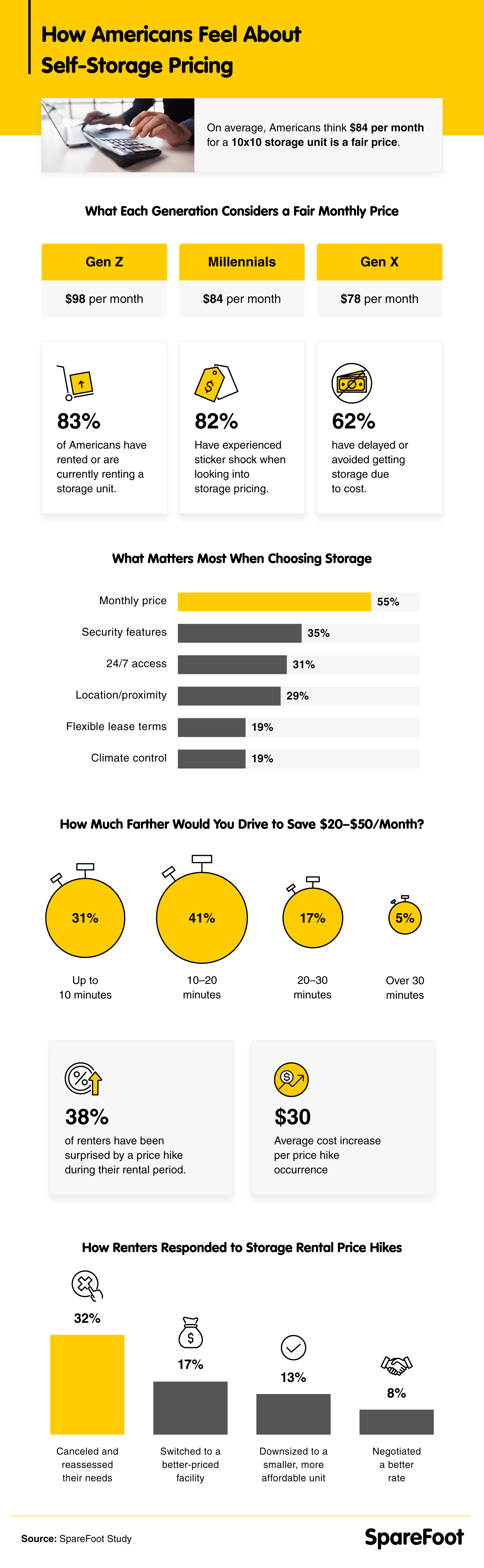
Americans said a fair monthly price for a 10×10 storage unit was $84. It varied by generation, with Gen Z saying $98 was fair, millennials landing at $84, and Gen X averaging $78 per month. With the current national average sitting around $75, most renters are actually paying less than what they’d consider fair, which is a rare win. No matter where you fall, it helps to know what others expect to pay.
Most Americans (83%) have rented or are currently renting a storage unit, and 82% said they’ve experienced sticker shock while researching options. Another 62% have delayed or avoided renting because of cost concerns, which means if price has given you pause, you’re in very good company
When choosing a storage facility, renters prioritize:
- Monthly price: 55%
- Security features: 35%
- 24/7 access: 31%
- Location: 29%
- Flexible lease terms: 19%
- Climate control: 19%
When it comes to saving money, many renters are willing to go the extra mile. A combined 63% would drive 10 minutes or more to save $20–$50 per month on a storage unit. Gen Z showed the most flexibility, with 22% willing to drive 20–30 minutes farther, compared to 18% of Gen X and 15% of millennials. A little extra drive time could add up to real savings over the course of a year.
Mid-lease price increases remain a frustration, and they catch more renters off guard than you might think. More than one-third of renters (38%) said they’ve been surprised by a rate hike, with the average increase reaching $30. In response, 32% canceled their unit, 17% switched facilities, 13% downsized, and 8% negotiated a better rate. It’s always worth asking about potential increases before you sign.
What This Means for Storage Renters in 2026
Storage prices may be lower nationally, and that’s genuinely good news. But not every deal is a good one, and where you live, how flexible you are on location, and how closely you compare options can all make a big difference in what you end up paying.
If you’re shopping for a unit this year, a little homework goes a long way. Check current local rates, ask about potential price increases before you sign, and weigh convenience against cost. A slightly longer drive could save you hundreds over the course of a year. And in a market that continues to shift, taking a few extra minutes to compare options can mean more money in your pocket and fewer surprises down the road.
Methodology
SpareFoot analyzed proprietary pricing data to evaluate how storage costs have changed over time and how they vary by state. We also surveyed 1,001 Americans about their current and past storage rental experiences. Respondents included baby boomers (8%), Gen X (21%), millennials (51%), and Gen Z (20%).
About Sparefoot
SpareFoot helps you compare storage options across more than 20,000 facilities nationwide. Whether you’re looking for climate-controlled storage, vehicle storage, or specific features like military discounts, we make it easy to see your options side by side and find what works best for you.
Fair Use Statement
Feel free to use the information in this article for noncommercial purposes. If you share it, we just ask that you include proper attribution with a link back to SpareFoot.

Maggie Stankiewicz
Maggie is a writer and senior content manager who brings a decade of content expertise to the wonderful world of self storage. By day, she blends data and human-driven storytelling to craft content you'll actually want to read. By night, you can find her dissecting horror films or hiking trails with her dog in the foothills of North Carolina.