
KEY TAKEAWAYS
▸ Many common packing habits unintentionally create more waste than necessary, but small changes can make a big impact.
▸ The right materials and mindful methods can simplify your storage while supporting a more sustainable lifestyle.
▸ Long-term eco-friendly storage is possible when you combine smart packing choices with the right tools and facilities.
Whether you’re moving to a new home or just trying to reclaim space in your garage, packing can feel like a necessary evil—especially when you’re surrounded by piles of cardboard, tape, and single-use plastic. The process can be overwhelming and often leads to unnecessary waste. But with a few mindful shifts, it’s possible to embrace minimalist packing principles and work toward a zero-waste approach. This guide will walk you through practical tips on choosing eco-friendly materials, reducing excess, and building long-term storage habits that align with a minimalist, green lifestyle.
The Problem with Packing
If you’ve ever packed for a move, gone on a decluttering spree, moved into a smaller space, or made a seasonal storage swap, you know how quickly things can spiral—cardboard boxes stacked to the ceiling, bubble wrap by the yard, tape, labels, Styrofoam, plastic bins… Things can add up fast. The volume of materials used often leads to excessive clutter and a significant amount of single-use waste. Most of these items are either non-recyclable or only used once before being thrown away, contributing to the growing problem of environmental pollution.
But here’s the reality check: our packing supplies and habits have long-term consequences, not just for our homes but for our planet. Thankfully, sustainable storage strategies offer a real, practical way to reduce that waste without sacrificing convenience or organization. By being intentional about how and what you pack, you can create a system that works better for your lifestyle—and for the environment.
Pro Tip: First-time mover? Learn how to pack for your move while also keeping your move sustainable and avoiding excess waste!
Sustainable Materials for Storage That Lasts

The foundation of sustainable storage starts with what you use to pack. It may be tempting to stock up on cheap boxes and foam padding, but many of these supplies end up in landfills after just one use.
Instead, opt for materials that can be reused, recycled, or composted. Recycled cardboard boxes are widely available and offer the same durability as new ones without the environmental cost. For cushioning, consider biodegradable packing peanuts made from cornstarch or compostable paper wrap. And when it comes to boxes and bins, look for recycled plastic containers that can be used over and over again.Even small swaps can have a big impact. When choosing the best kinds of boxes to use for moving and storage, opting eco-friendly storage containers or biodegradable wrap helps reduce reliance on petroleum-based plastics and cuts down your carbon footprint.
| Traditional vs. Sustainable Packing Materials | ||
| Item | Traditional Option | Sustainable Alternative |
| Boxes | New Cardboard | Recycled cardboard or reused boxes |
| Cushioning | Styrofoam Peanuts | Biodegradable peanuts or crumpled newspaper |
| Containers | New, Unused Plastic Bins | Recycled plastic or second-hand bins |
| Tape | Plastic Tape | Paper tape or reusable ties |
We all need the essential supplies when it comes to packing for a move. Making intentional choices to support a greener system from the very beginning of the packing process. In fact, the Environmental Protection Agency (EPA) estimates that containers and packaging make up nearly 30% of municipal solid waste in the U.S. each year. By shifting to sustainable packing materials—like recycled cardboard and biodegradable fillers—you actively reduce landfill contributions and carbon emissions. These changes don’t have to cost a fortune, either—many sustainable options are affordable or even free if you’re reusing or sourcing creatively. It’s a tangible way to support a circular economy (a system focused on minimizing waste and maximizing reuse of resources) and lessen your environmental footprint right from the start.
Cut Down on Clutter: How to Pack With Less Waste
One of the biggest opportunities to reduce waste comes not from what you pack, but how you pack for your move. Start by assessing what truly needs to be packed or stored. Many of us hang onto stuff “just in case,” which ends up costing more space, supplies, and time. By storing only what you regularly use or deeply value, you can instantly cut down on the volume of things you pack and store.
Next, be strategic with how you pack. Stack boxes and bins efficiently, using soft items like towels or clothing as padding. This reduces the need for additional packaging and makes the most of every inch.
Instead of printing dozens of paper labels, try a digital labeling system. Apps like Sortly allow you to catalog your boxes digitally and track inventory without relying on printed labels. While QR code systems can be helpful, they may still require printing, so opt for fully digital tools when possible to stay aligned with zero-waste goals.
Another underrated tip? Borrow before you buy. Ask friends or neighbors if they have spare boxes or bins, or check local “Buy Nothing” groups for free supplies. Facebook Marketplace and Craigslist are also excellent sources for free/pre-used packing materials. You can also choose multipurpose packing tools—think cloth storage bags that double as laundry totes, or crates that can later be used as open shelving. These small shifts align beautifully with the principles of minimalist packing and help avoid the all-too-common trap of overpacking “just because you can.”
Think Long-Term: Sustainable Storage Habits That Stick
Once all of your stuff is packed, long-term storage is the next frontier. Eco-conscious storage begins with choosing the right containers. Environmentally friendly storage containers made from recycled or upcycled materials are widely available, and many are designed to be used for years to come. Avoid single-use plastic tubs or cardboard that degrades over time—these often need replacing, which only adds to future waste.
Another rule of thumb: only keep what you use. It sounds simple, but routinely checking your stored items for relevance and frequency of use can prevent clutter, build-up, and excess waste. Rather than holding onto items you’ll never need or use, you could sell some things before your move, or consider donating them to local charities or community organizations that can give them a second life. Avoid upcycling items unless you know they’ll serve a long-term function—repurposing something once before it hits the landfill still contributes to the cycle of waste.
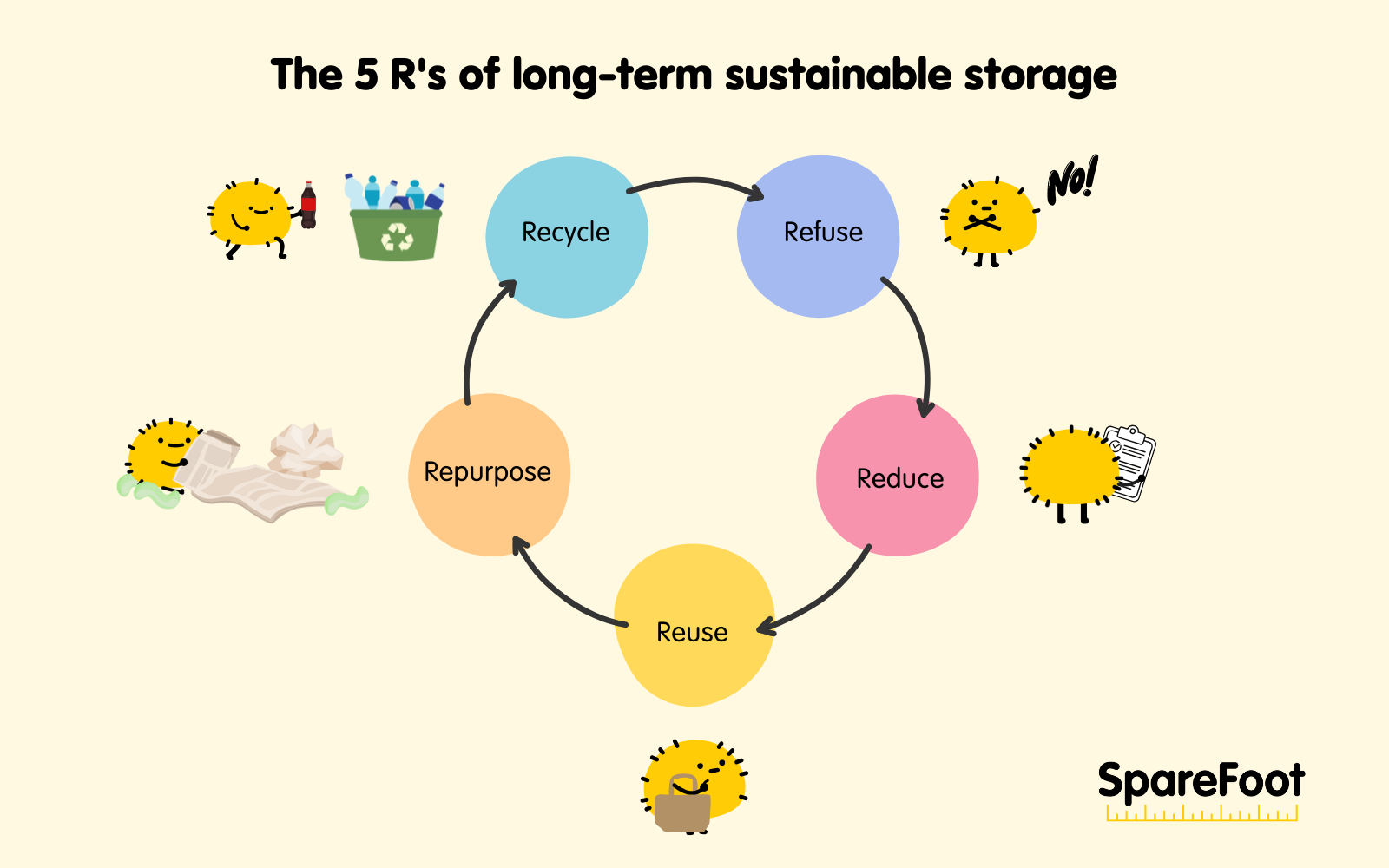
The 5 R’s of Long-Term Sustainable Storage:
- Refuse unnecessary items before they reach your storage.
- Reduce the quantity of items packed by keeping only what’s useful.
- Reuse containers, packing materials, and space efficiently.
- Repurpose items creatively instead of discarding them.
- Recycle what can no longer be reused.
Modern storage facilities also offer a surprising opportunity to go green. Many now use LED lighting, solar panels, and energy-efficient designs. Opting for a local storage unit over building additional space at home can reduce your environmental impact—especially if you’re using sustainable containers inside. It also means you’re supporting businesses making eco-conscious decisions. When storage becomes a long-term habit rather than a one-time task, these types of sustainable decisions really start to add up.
Why Sustainable Packing and Storage Are Worth the Effort
Sustainable packing and storage isn’t just about reducing clutter—it’s a long-term investment in your lifestyle and your impact on the planet. By using eco-friendly packing materials, practicing minimalist packing, and choosing storage options designed for reuse and efficiency, you reduce unnecessary waste and promote smarter habits.
These sustainable practices don’t require perfection—just progress. Whether you’re storing seasonal gear, downsizing your home, or preparing for a sustainable move, every conscious choice helps shape a greener future. Small shifts, like switching to recycled containers or avoiding single-use supplies, really do add up over time.Ready to take the next step toward sustainable storage? Visit SpareFoot.com to discover eco-friendly storage units near you and find a solution that fits your values and your space.
FAQs
Sustainable packing is the practice of using eco-friendly materials and methods to prepare your belongings for storage or transport. Instead of relying on single-use plastics or wasteful supplies, sustainable packing emphasizes reusable, recyclable, or biodegradable options. It’s important because it helps reduce your environmental footprint, cuts down on clutter, and encourages smarter, more intentional organization—especially for long-term storage.
The best sustainable packing materials strike a balance between protecting your belongings and protecting the planet. These materials are either designed for repeated use or made from biodegradable or recyclable components—meaning they won’t sit in a landfill for decades after a single use. They also offer durability and versatility, making them ideal for both short- and long-term storage.
Here’s a closer look at some eco-friendly options:
- Recycled cardboard boxes – Unlike brand-new cardboard, recycled boxes use fewer raw resources and still offer sturdy, reliable structure. They’re perfect for stacking, labeling, and breaking down for future reuse.
- Biodegradable packing peanuts – Traditional Styrofoam peanuts are a major pollutant—but the biodegradable kind, often made from cornstarch, dissolves in water and is safe for the environment. They cushion fragile items just as effectively without the long-term waste.
- Compostable paper wrap – Great for wrapping dishes, glasses, or delicate items, this paper-based wrap can be composted after use. It’s a smart alternative to plastic bubble wrap and is often made from post-consumer recycled materials.
- Recycled plastic bins – These durable containers are ideal for heavy-duty storage. Choosing recycled plastic helps reduce demand for virgin materials while offering years of reuse potential—perfect for attics, basements, or storage units.
- Paper tape or reusable ties – Instead of traditional plastic packing tape, opt for paper tape that’s recyclable and compostable. Reusable Velcro ties or cloth wraps can also secure boxes or bundles without creating waste.
These sustainable packing options don’t just reduce environmental harm—they also streamline your storage system. Many can be labeled, stacked, and reused across multiple moves or seasonal storage changes, making them a practical choice for minimalist packing.
Start by only packing what you actually need to store. Then, look for ways to reuse what you already have—borrow boxes from friends, repurpose towels or clothes for padding, and opt for digital inventory systems instead of printed labels. Choose multipurpose packing tools that can serve other functions later, and avoid overpacking by stacking items efficiently. Every small change adds up to a big difference in reducing waste.
Sustainable packing isn’t just for those with big budgets—it’s often the most cost-effective option when you’re willing to get creative. Many eco-friendly packing strategies rely on materials you already have or can source second-hand, which keeps both your expenses and your environmental impact low.
Here are some smart, budget-friendly ways to pack sustainably:
- Free cardboard boxes – Grocery stores, bookstores, and liquor shops regularly recycle sturdy boxes. Ask staff if they have any extras—they’re often happy to pass them along for free. These boxes are ideal for lightweight items and can be broken down and reused later.
- Used packing materials from local groups – Community-based platforms like Buy Nothing groups, Facebook Marketplace, Craigslist, or Freecycle are goldmines for gently used moving supplies. People often give away bubble wrap, packing paper, and boxes after a move.
- Repurposed household items – Look around your home—you probably have plenty of padding material already. Old towels, pillowcases, cloth napkins, scarves, and even t-shirts can cushion fragile items and reduce the need for bubble wrap or foam.
- Second-hand bins and crates – Thrift stores, garage sales, and local swap groups often carry reusable bins and crates at a fraction of the retail price. These sturdy containers can double as long-term storage solutions and don’t need to be replaced after one use.
- DIY labeling and sorting – Instead of printing labels, use masking tape and a pencil, or keep a digital inventory of what’s in each box using a free app. It reduces waste and printing costs while keeping your packing system organized.
These approaches prove that sustainability doesn’t require a high price tag—just a little planning and resourcefulness. Not only do you save money, but you also keep usable materials in circulation and out of landfills, which supports both your budget and the environment.
Sustainable packing materials are easier to find than ever, thanks to growing demand for eco-conscious solutions. You can start with:
- Online retailers that offer eco-friendly supply categories, including compostable mailers, recycled cardboard, and biodegradable cushioning.
- Local hardware stores that often carry recycled or compostable packing supplies, especially in areas promoting green living.
- Storage and moving companies like SpareFoot, which provide curated guides and recommend packing products that align with sustainable values.
- Community groups like Freecycle, Facebook Marketplace, or neighborhood Buy Nothing groups, where you can often find gently used boxes, bins, and packing materials for free.
While you don’t want to add to environmental waste, purchasing eco-friendly supplies is also an option you can use during your sustainable move. Planning ahead and sourcing materials mindfully doesn’t just save money—it also helps reduce landfill waste and supports a more sustainable storage routine.

Melynda Kloc
With a deep passion for writing, poetry, and storytelling, I've built a career creating copy that educates, builds trust, and encourages genuine connection between customers and brands. Drawing from my background in fine arts, I bring a creative perspective to strategic content that prioritizes authentic voice over formulaic approaches. I believe the best copy doesn't just inform—it creates real human connection in an increasingly automated world.