
The “big move.” For some, it’s an exciting change; for others, a dreaded chore. But love it or hate it, it happens. Often. Moving statistics show that Americans switch addresses an average of 11-12 times throughout their lives and across state lines 1-4 times, so they should be really good at it, right? Wrong.
No matter how many times you’ve moved, moving can be stressful. Many of us leave preparations until the last minute. If you’ve ever spent your final hours scrubbing the dreaded gunk between the fridge and the oven in the dark because you transferred your utilities too soon, you’re not alone.
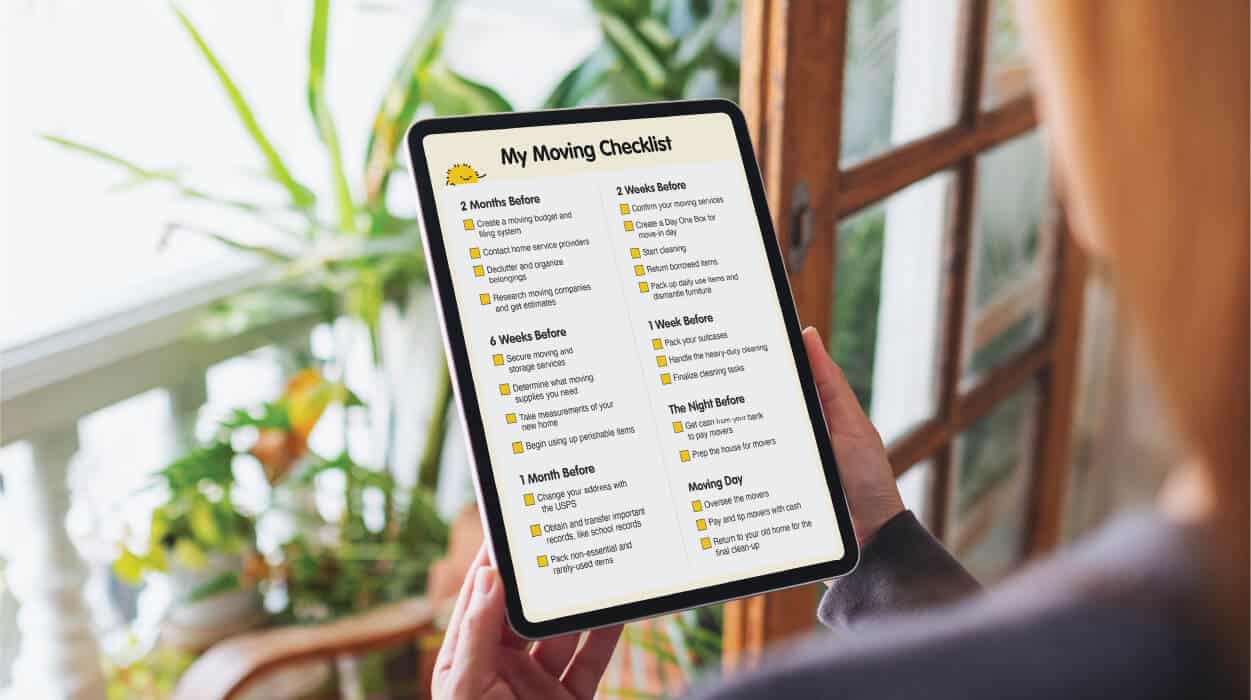
We’ve created a free moving checklist designed to guide you through every step of your move, from planning to unpacking. Follow this timeline to stay organized and stress-free.
2 Months Before Your Move
Beginning roughly eight weeks in advance, you should set the foundation for your big move. Consider it the planning and documenting phase.
1. Create a Moving Budget and Filing System
To stay organized during your move, create a filing system for all your important documents. You can scan your documents using a mobile scanner app or a traditional scanner to create digital copies for safekeeping and easy access. For convenience, store your hard copy documents in a portable file box instead of bulky filing cabinets.
Developing a moving budget is essential to ensure you have enough money to cover all expenses. Start by estimating costs for:
- Moving companies
- Packing supplies
- Storage needs
- Travel
- Necessities for your new home
Consider unexpected expenses like parking permits or last-minute repairs.
2. Contact Home Service Providers
Renters should give notice to their landlord according to the terms of their lease. Homeowners should make any necessary repairs or alterations and may need to notify your HOA.
Arrange the transfer of utilities and other services, which may involve switching providers for some services. Remember to also contact your regular home maintenance and service providers to update your information and schedule service interruptions or transfers. Such services may include:
- Lawn care
- Pest control
- Residential water delivery
- House cleaning
- HVAC maintenance
3. Declutter and Organize Belongings
Begin decluttering your home by clearing away items from surfaces like kitchen islands, countertops, bookshelves, and desks. Shred old mail and unwanted documents to protect sensitive information. To track your belongings and prevent losses, create a home inventory.
Try organizing your belongings into categories and tag items accordingly. This will help you decide what to do with each item: discard, donate, or sell. Schedule a pickup with a local charity or host a garage sale to sell unwanted items. Invite friends and family to browse your items and potentially purchase them.
4. Research Moving Companies and Get Estimates
When searching for moving companies, look for recommendations from friends, family, or online reviews. Whether you hire a portable moving container company or go with full-service movers, look for licensed and insured companies. Always request multiple estimates from different companies to compare prices and services as this will help you find the best deal and ensure you’re getting quality service.
Don’t hesitate to negotiate for a lower price, as many companies are open to bargaining. Confirm timelines and review contracts thoroughly to understand liability and warranty coverage. Familiarize yourself with cancellation policies in case of unforeseen circumstances. To protect yourself from scams, check their credentials and verify their legitimacy.
6 Weeks Before Your Move
Now, it’s time to use your previous research to secure the services and supplies needed for a successful move.
5. Secure Moving and Storage Services
Finalize a price quote and sign the contract with your chosen moving company. If you’re moving yourself, be sure to reserve the right size moving truck for your belongings. Many people underestimate the amount of space they’ll need.
If you need to temporarily store your belongings, research storage options and facilities near your new home. Consider factors such as cost, accessibility, and security when choosing a storage facility.
6. Assess Moving Supplies
Determine the number, sizes, and types of boxes you’ll need based on your belongings. Consider standard moving boxes, wardrobe boxes, kitchen boxes, office and file boxes, picture/mirror boxes, and TV boxes. To save money, ask friends, family, or local businesses for any free boxes they might have.
Create a moving supplies list, and don’t forget essentials like:
- Tape
- Markers
- Bubble wrap
- Packing paper
- Mattress bags/covers
- Moving labels
- Moving blankets
These supplies will help you pack efficiently and protect your belongings during the move.
7. Take Measurements of Your New Home
Before moving day, measure the doorways and hallways in your new home to ensure your furniture will fit through without any issues. This will help you avoid unexpected problems and save time on moving day. Additionally, measure the dimensions of your rooms to plan furniture placement and ensure everything fits comfortably in your new space.
8. Begin Using Up Perishable Items
To minimize waste and reduce the amount you need to pack, start using up perishable items in your pantry and refrigerator. This includes frozen foods, canned goods, and any other items with a short shelf life. By consuming these items before your move, you’ll have less to worry about packing and transporting.
1 Month Before Your Move
The time has come to transfer important documents and begin the most notorious aspect of moving: packing.
9. Change Your Address
Schedule your address change with the USPS to ensure your mail is forwarded to your new address. Additionally, make a list of businesses and organizations that need to be notified of your address change.
Contact your routine service providers, such as doctors, attorneys, credit card companies, car mechanics, subscription services, and banks, to update your contact information. If you’re changing banks, clean out your safe deposit box and transfer any valuables to your new bank.
10. File Important Requests
Notify your child’s school of your move and request their academic records be transferred to the new school. If applicable, notify your employer of your upcoming move and request time off for moving day.
11. Pack Nonessential and Rarely-Used Items
Start by packing items in your basement, garage, and closets. Gradually work your way up to less-used areas of your home. Pack up spare rooms and unload non-essential items from cabinets and shelves. Label boxes with detailed descriptions, such as “Primary Bedroom Closet: Seasonal clothing, hats, boots,” to create an inventory. Flag boxes that need immediate unpacking with a colored reminder tag and load them last on the truck. Dismantle and pack items from outdoor areas like grilling tools, string lights, and potted plants.
2 Weeks Before Your Move
You’re getting close, and you can already see the finish line. With the boxes squared away, you’ll have a lot more space to begin cleaning.
12. Pack Up Your Everyday Items
As you approach your moving date, focus on packing the home essentials you rely on daily. Start with furniture, disassembling pieces whenever possible to save space and protect them during transport. Pack cookware and utensils in sturdy boxes, using packing paper or bubble wrap for added protection.
Organize your clothing and shoes by category and pack them into labeled boxes or suitcases. Consider using wardrobe boxes for hanging clothes to maintain their shape. For shoes, use shoeboxes or stuff them with packing paper to prevent them from getting crushed.
13. Finalize Your Services
Schedule the transfer or cancellation of your utilities, including electric, water, gas, cable, and telephone services. Confirm the date and details of your contracted moving services with the company. If you need temporary storage for your belongings, book a short-term storage unit.
14. Create a Day One Box
A “Day One Box” is a collection of essential small items you’ll need immediate access to once you arrive at your new home. This box should be easily identifiable and easily accessible during the move.
Include items like:
- Personal toiletries: Toothbrush, toothpaste, soap, shampoo, etc.
- Medications: Any prescription or over-the-counter medications you need daily
- Essential clothing: A change of clothes, pajamas, and comfortable shoes
- Important documents: Driver’s license, passport, insurance cards, etc.
- Electronics chargers: Chargers for your phone, laptop, and other devices
- Kitchen essentials: A few basic utensils, plates, cups, and snacks
- Light cleaning supplies: Basics like paper towels, cleaning spray, dust rags, and a broom
You may want to consider using temporary tableware in your kitchen essentials kit to keep things simple.
15. Start Cleaning
Begin your cleaning routine by dusting and washing baseboards throughout your home. Scrub around and behind toilets to remove dirt and grime. Scour grout in bathrooms and between tile surfaces for a sparkling finish. Don’t forget to wipe or dust fans, light fixtures, and blinds.
Clean the insides of empty drawers and storage areas to remove dust and debris. Focus your attention on windows and mirrors to create a fresh and clean look. If you have outdoor space, pull weeds and tidy up your landscaping.
16. Return Borrowed Items
Before you move, take the time to return any borrowed items to their rightful owners. This will help you avoid clutter and ensure you don’t accidentally move items that don’t belong to you. Additionally, returning borrowed items is a courteous gesture that shows respect for others and helps maintain positive relationships.
1 Week Before Your Move
With seven days until your big move, you’re in the final countdown. If you’re feeling the pressure, simply follow these final tips on heavy-duty cleaning and more.
17. Pack Your Suitcases
Select essential wardrobe items to pack into the luggage you’ll keep with you. This should include clothes for a few days, toiletries, and any essential medications. Pack up the rest of your wardrobe for the movers to handle.
Refill your prescriptions before you move to ensure you have a sufficient supply for the transition. This will prevent any disruptions in your medication routine.
18. Handle the Heavy-Duty Cleaning
For a deep clean, wipe down your refrigerator, microwave, and stovetop. Wash countertops, sinks, and other surfaces to remove dirt and grime. Run auto-clean cycles on your dishwasher, oven, and washing machine for a thorough cleaning.
Wash all doors, walls, and windows, both exterior and interior. Clean carpets and floors using industrial tools if necessary. Scrub toilets inside and out, and scrub bathtubs, showers, and sinks. Consider reapplying caulk for a fresh and clean look.
Don’t forget to focus on fine details like shower heads, faucets, knobs, light switches, and door handles. Repaint and patch any damaged walls or doors for a fresh start in your new home.
The Night Before Your Move
One day until your big move. This is it. It’s time to put all that hard work and planning into action, but not before you pause to review. These moving tips and tasks sure will come in handy.
19. Finalize Cleaning Tasks
Defrost your freezer and remove any remaining food items. Recheck the fine details you covered in the previous cleaning steps to ensure everything is spotless. Spot-clean appliances, floors, countertops, and other surfaces for any remaining dirt or grime.
Take pictures of the home’s condition to document its cleanliness and create a record for your landlord or new homeowner.
20. Prepare Last-Minute Moving Details
Plan for payment by getting cash from the bank or noting the location of your checkbook or credit card. Check the weather forecast to plan accordingly for any potential rain or extreme temperatures. Position your Day One Box somewhere accessible so you don’t lose track of it during the move.
Identify the best entry and exit points for the moving van to avoid traffic congestion. Plan for foot traffic and lay down secured cardboard or moving blankets to protect your floors. If you’re moving locally, map outside streets to avoid main roads and potential traffic jams.
Moving Day
The big day has arrived. Throw on the moving gear you set aside and get to work.
21. Manage the Movers
Organize boxes in a way that leaves easy-access pathways to storage areas for efficient unpacking. Be prepared to pay and tip the movers in cash. Before the movers leave, take inventory to ensure all your belongings are accounted for.
Assess your new home for any mover-related damages. Scrutinize all areas for defects and take pictures to document any issues. This will help protect you and your belongings in case of damage claims. By managing the movers and inspecting your new home, you can ensure a smooth and successful moving process.
22. Return to Your Old Home for Final Steps
Clean up any moving-related messes on floors, walls, and doors. Secure all entries, exits, and windows to prevent unauthorized access. Leave keys in a visible area for your landlord, real estate agent, or new homeowner. Before departing, leave your contact information for the new residents in case they need to reach you.
After Your Move
It’s now time to unpack, but don’t forget to spot-clean first.
1 Week Post-Move
As you adjust to living in a new space, begin spot-cleaning and organizing your new home. Use antibacterial cleaning products to reduce your exposure to germs from the previous owner. Wipe down cooking appliances that may have been exposed to harmful cleaners. In brand-new dwellings, look out for construction dust on surfaces.
Take your time, and don’t feel rushed to unpack everything at once. Start with key spaces like bedrooms, bathrooms, kitchens, and living rooms. This will allow you to establish essential areas and gradually unpack other belongings at your own pace.
2 Weeks Post-Move
As you unpack, break down boxes immediately to avoid clutter. Start gradually decorating your new space, placing the most meaningful items first. This will help you create a welcoming atmosphere and personalize your new home.
Don’t be discouraged if you still have a lot of unpacking to do. Take your time and avoid putting too much pressure on yourself. To celebrate your new home, consider throwing a small housewarming party with friends, family, and new neighbors. Keep it casual with no-fuss snacks and drinks.
Conquer Your Move With These Bonus Tips
Moving can be a whirlwind, but with this comprehensive moving checklist as your guide, you can plan for it with confidence. Break down the tasks into manageable steps, delegate where possible, and don’t be afraid to ask for help from friends and family.
Here are some bonus tips for a stress-free moving experience:
- Embrace the power of technology: There are numerous moving apps available to help you with everything from creating packing lists to finding reliable movers.
- Label everything: Clearly label all your boxes with the room they belong in and a brief description of the contents. This will save you time and frustration when you’re unpacking.
- Reward yourself: Moving is a lot of work, so don’t forget to celebrate your accomplishment once you’re settled in. Treat yourself to a takeout meal or a relaxing evening in your new space.
Download or print out the moving checklist below so you can check off completed steps along the way.
A general guideline is to tip movers $5 to $10 an hour for each mover. However, you can adjust the tip based on the quality of service and the complexity of your move. Although winter may be the cheapest time to move, the best time of year to move is typically during the spring or fall months. Moving costs tend to be lower than during busy summer months and there is less competition for moving services. Stay organized by using a detailed checklist and planning ahead to avoid last-minute rushes. Delegate tasks whenever possible to lighten your workload and reduce stress. Remember to take breaks throughout the process to avoid burnout. Don't hesitate to ask for help from friends, family, or professionals if you're feeling overwhelmed.
Frequently Asked Questions
How Much Should I Tip the Movers?
When Is the Best Time of Year To Move?
How Can I Reduce Stress During the Moving Process?

Andreea Draguleasa
Andreea Draguleasa showed an affinity for foreign languages and literature at an early age and started writing when she was 6. She studied journalism, advertising, and public relations at the University of Bucharest and worked as a content writer for a tourism agency and as a journalist for a magazine in the hospitality industry until 2010. After seven years as marketing manager for a Home & Deco online shop, she realized that learning something new every day brings her the most joy, so she went back to researching and writing informative articles. Through her experience traveling the world, she's picked up tips and resources she now shares on self storage solutions. When not writing about home organizing and storage, Andreea spends most of her time reading, playing video games, and spoiling her cat.