

KEY TAKEAWAYS
▸ Moving trends point to early summer as the busiest season, with June driving the highest share of storage reservations in 2025.
▸ Storage pricing can help show where people are moving to, especially in high-demand states where space is limited and storage costs more.
▸ Smaller storage units are becoming more popular, suggesting more people are using storage for apartment moves, in-between leases, downsizing, and overflow.
▸ Flexible movers have an advantage: moving outside peak season, comparing prices early, and choosing the right unit size can help keep costs in check.
Most people pick a moving date because of a lease, a closing date, a new job, or the one weekend everyone in the group chat is somehow free. Fair enough. But timing your move does more than set your calendar; it can change what you pay, how many options you have, and how rushed the whole process feels.
That’s where storage reservations start to tell a clearer story. People usually reserve storage while they’re packing, relocating, downsizing, or stuck between two places. When those reservations spike, demand is already building.
Looking at reservation patterns, state-level pricing, and unit size trends from 2024 through 2026, a few patterns stand out. The simple version: when you move, where you move, and how much space you reserve can make your move easier, or a lot more expensive than it needs to be.
When Is Peak Moving Season? Storage Reservations Point to Summer
If you’ve ever tried to move in the middle of summer, you already know it can feel like everyone else had the exact same idea. The data backs that up.
In 2025, June was the busiest month for storage reservations, making up 13.7% of national demand. May and August were close behind, each landing around 10.8%. Put together, that confirms what most movers feel in real life: late spring through summer is peak moving season.
The timing can shift from year to year. In 2024, the busiest stretch landed later, with August and September seeing the highest reservation shares. Summer is still the main rush, but some years push that demand into early fall.
The more useful takeaway is knowing when things slow down.
January through March consistently show lower reservation activity, which usually means more availability and softer pricing. If your timeline has any flexibility, late winter or early spring can give you more options and less competition, before summer demand ramps up.
Where People Are Moving: Storage Pricing Can Reveal Demand Hot Spots
Storage prices don’t just reflect cost. They also hint at where demand is strongest.
States like Hawaii, Alaska, New York, Washington, D.C., and California rank among the most expensive storage markets. These are places where space is tighter and more people are competing for it, which pushes prices up.
On the more affordable side, states like Oklahoma, Arkansas, Wyoming, Montana, South Dakota, Missouri, Alabama, Wisconsin, and Texas sit well below the national average. If you’re comparing where people are moving to, or trying to make a move work on a tighter budget, those markets are worth a closer look, especially alongside trends outlined in this breakdown of where people are moving to.
There’s also some movement year over year. States like Washington, Oregon, Vermont, and Massachusetts have seen prices ease or move closer to the national average. That can point to shifting demand, more available supply, or both.
The practical takeaway: don’t assume storage costs will look the same everywhere.
If you’re heading into a high-demand area, compare prices early and reserve before options narrow, especially after reviewing current averages like those in how much storage costs. If you’re moving somewhere more affordable, you’ll likely have more time to compare locations, sizes, and features without feeling rushed.
Why Smaller Storage Units Are Gaining Popularity
One of the clearest self storage trends right now is the rise of the 5×5 unit.
The 5×5 became the most popular unit size nationally, rising from 27.9% of reservations in 2024 to 32.8% in 2025. That shift points to how people are actually using storage today.
More moves aren’t full-house relocations. They’re apartment moves, downsizing, temporary transitions, or that in-between stretch where your lease ends before your next place is ready.
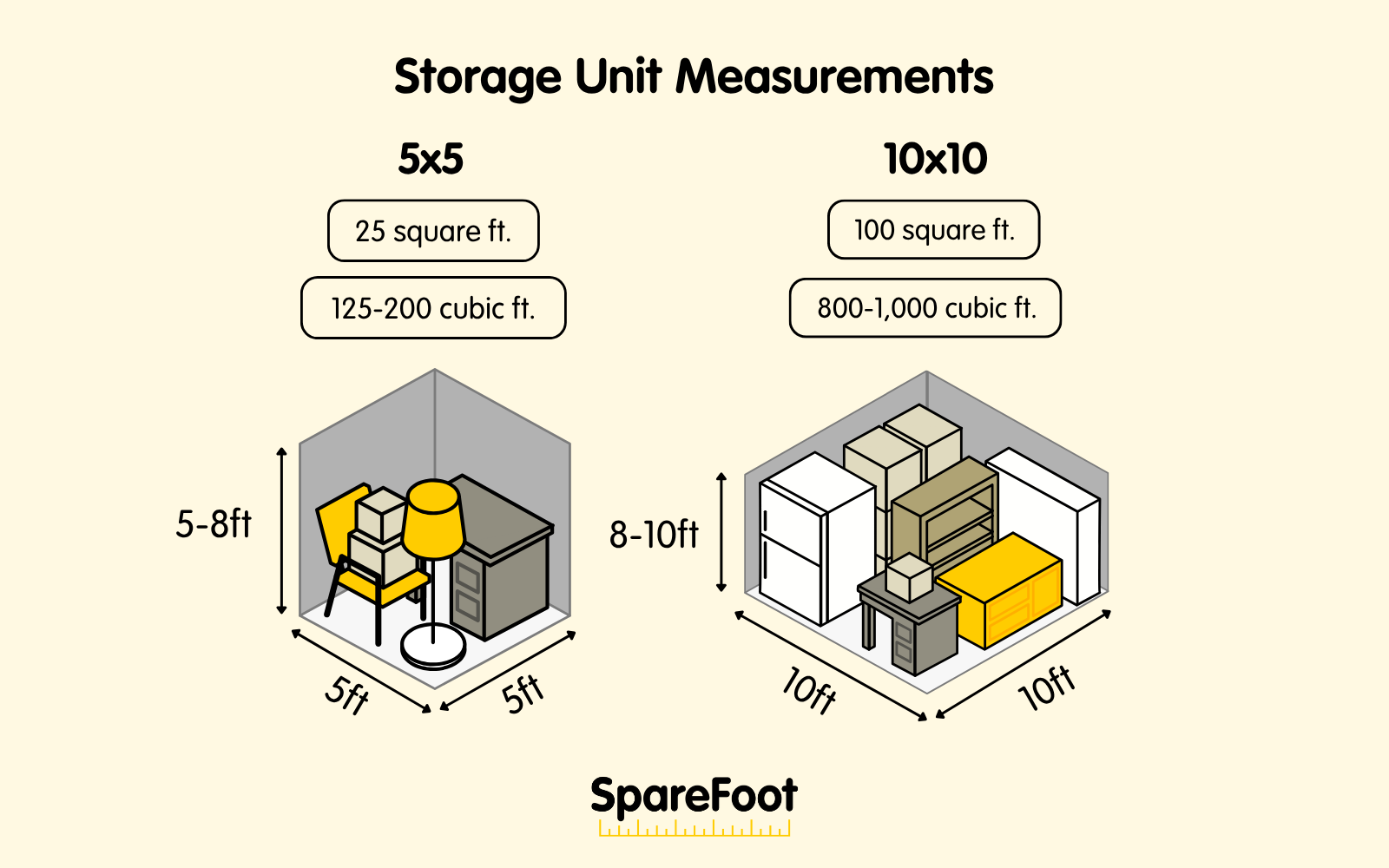
A 5×5 unit usually fits boxes, seasonal gear, small furniture, or the overflow that builds up when your closet taps out. It works well for renters, students, or anyone who needs space without paying for more than they’ll use.
At the same time, the 10×10 dipped from 22.3% of reservations in 2024 to 20.1% in 2025, while the 5×10 stayed relatively steady. That shift lines up with smaller households and more partial storage needs.
Climate controlled storage adds another decision. In 2025, climate controlled units cost about $9 more per month on average than non-climate controlled options, with the gap widening in warmer months.
For electronics, wood furniture, documents, or anything sensitive to heat and humidity, that extra cost can be worth it. For durable items like plastic bins or basic household goods, a standard unit often does the job.
What Bigger Storage Trends Mean for Movers Right Now
A few patterns matter right now, based on the Storable Industry Pulse Report Q1 2026.
National occupancy sits at 76.9% (up 0.3% year over year), and the average length of stay has climbed to 19.3 months (up 1.2 months year over year).
Regionally, the West is the tightest market at 79.8% occupancy.
At the same time, move-in pricing has softened, based on the Storable Industry Pulse Report Q1 2026.
National occupancy sits at 76.9% (up 0.3% year over year), and the average length of stay has climbed to 19.3 months (up 1.2 months year over year). More units are staying filled for longer, which slows turnover and makes availability tighter for new renters, especially in already competitive markets. At the same time, move-in pricing has softened. The national average for a 10×10 dropped from $106.84 in early 2025 to $102.27 in early 2026, a decrease of about 4.3%. In practice, that means some facilities are competing more on price even while availability remains constrained.
Regionally, the West is the tightest market at 79.8% occupancy, which matters if you’re moving toward California, Nevada, or the Pacific Northwest. The South shows more supply pressure at 74.7% occupancy, with move-ins down by roughly 35,000 year over year, which can translate to more negotiating room. For movers, this creates a small window, comparing storage earlier can help you lock in better pricing before peak summer demand limits your options.
How to Use These Moving Trends Before You Move
Moving trends only matter if they change how you plan.
If you can avoid June through August, you’ll usually have more options and less competition. Timing guidance like this is expanded further in the best time of year to move by region. If you’re moving into a high-cost state, check storage prices before you load the truck, not after. And if you’re only storing part of your home, don’t default to a larger unit just to be safe.
A 5×5 or 5×10 is often enough for an apartment move, a short gap between leases, or the extra items that won’t fit in your next place, especially when you compare what fits using how to pick the right size storage unit. Larger units make more sense when you’re storing full rooms, appliances, or most of a household.
If you’re exploring seasonal or long-term moves, it can also help to look at patterns in destinations like underrated snowbird cities, where demand and pricing can shift throughout the year.
The goal isn’t to find the biggest unit or the closest facility. It’s to find the setup that fits your timeline, your budget, and what you actually need to store.
Plan Your Move with These Trends

Storage data makes one thing clear: timing, location, and how much you store all shape how easy or expensive your move becomes.
Demand spikes in early summer, which tightens availability and pushes prices up. Higher-cost states tend to reflect stronger demand, while more affordable regions often give you more flexibility. At the same time, the shift toward smaller unit sizes shows that many moves today are partial, temporary, or in-between; not full household relocations.
Planning with those patterns in mind can help you avoid the busiest weeks, compare prices before options narrow, and choose a unit that actually fits what you need.
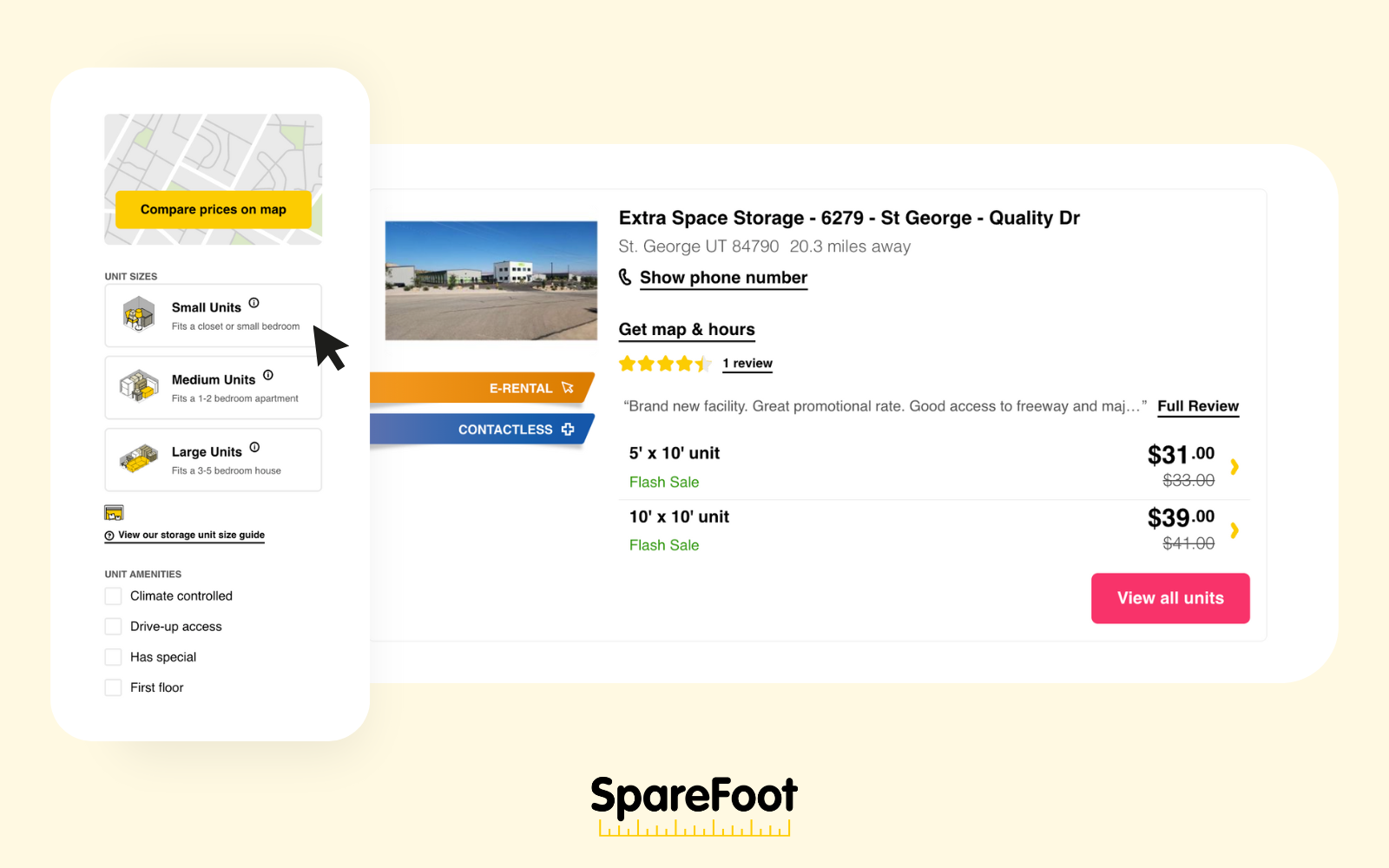
If you’re getting ready to move, start early. Enter your zip code, compare nearby storage options on SpareFoot, and lock in a setup that works for your timeline and budget before demand picks up.
Late winter and early spring are usually the most affordable. Demand is lower, which often means better pricing and more availability than in peak summer months.
During peak season, reserving a few weeks in advance helps you secure better pricing and more options. In slower months, you may have more flexibility.
Smaller units like 5×5 and 5×10 are increasingly common for apartment moves or temporary storage. Larger units are typically needed for full household storage.
Yes. High-demand areas like major cities and coastal states tend to cost more, while inland or less dense regions often have lower prices and more availability.

Melynda Kloc
With a deep passion for writing, poetry, and storytelling, I've built a career creating copy that educates, builds trust, and encourages genuine connection between customers and brands. Drawing from my background in fine arts, I bring a creative perspective to strategic content that prioritizes authentic voice over formulaic approaches. I believe the best copy doesn't just inform—it creates real human connection in an increasingly automated world.