
KEY TAKEAWAYS
▸ Clean and dry golf clubs before storage to prevent rust formation and grip damage that costs hundreds in repairs.
▸ Store golf clubs upright in stable racks to avoid shaft stress and warping, especially important for graphite clubs.
▸ Garage storage works well for most golfers when combined with proper racks and basic humidity control using silica gel packets.
▸ Climate controlled storage becomes valuable for premium club sets worth $2,000+ or storage periods exceeding six months.
▸ Regular maintenance checks every three months help catch minor issues before they become expensive equipment replacement problems.
You’re excited about your first round of the new season. You head to your garage, grab your golf bag, and notice something’s off. Your favorite iron has rust spots along the grooves. Your driver’s grip feels sticky. What should have been a great day on the course starts with the sinking realization that your golf club storage tactics may have just cost you hundreds of dollars in equipment damage.
This scenario plays out in garages across the country every spring. Golf clubs are a serious investment, with quality sets easily costing $2,000 to $5,000, yet many golfers unknowingly damage their equipment during storage. Protecting your clubs doesn’t require expensive solutions or complicated procedures. With the right approach, your clubs will emerge from storage in the same, sparkly-clean condition they went in.
This guide walks you through everything you need to know about golf club storage. You’ll explore garage solutions that work for most golfers, when climate-controlled storage makes sense, and how to avoid the costly mistakes that turn winter storage into an expensive lesson.
Why Proper Golf Club Storage Matters
Golf clubs might seem durable, but they’re precision instruments with specific vulnerabilities. Moisture is enemy number one, causing rust on metal components and creating ideal conditions for mildew in bags and grips. Extreme temperature changes create their own problems. Heat can loosen the adhesives holding clubheads to shafts, while freezing temperatures make grips brittle and graphite shafts susceptible to cracking.
The grooves on your irons and wedges also need a bit of special attention. These precisely machined channels provide the spin and control that affect every shot. They’re also perfect places for grass, stains, and dirt to collect moisture and accelerate rust formation. Professional grip replacement typically runs $8-15 per club, while shaft replacement can cost $50-100 per club, making prevention far more affordable (and less of a hassle!) than repairs.
Your golf club storage bag faces its own storage challenges, too. Leather bags need to breathe and can be permanently damaged by plastic covers that trap moisture. Synthetic bags are a little more forgiving, but they can still develop persistent odors and mildew if stored damp. Those forgotten protein bars in side pockets? They become pest magnets during long storage periods.
Best Way to Store Golf Clubs: The Fundamentals

Preparing your clubs for storage properly prevents expensive damage while ensuring they’re ready for your next round. Whether you’re storing for a few months or longer, follow these fundamentals to protect your investment.
Cleaning Process
Smart golf club storage starts with a thorough cleaning routine that prevents months of damage. Begin by wiping down each clubhead with a damp cloth, paying special attention to those grooves where debris loves to hide. An old toothbrush works perfectly for scrubbing out stubborn grass stains and embedded dirt that can hold moisture against the metal.
Complete drying matters more than most golfers realize. Even slightly damp clubs can develop problems over months in storage. Don’t forget the grips either, as oils from your hands combined with dirt create a film that degrades grip materials over time. Empty all pockets in your golf bag, removing balls, tees, gloves, and especially any forgotten snacks that attract unwanted visitors during storage.
In or Out of Bag
The positioning decision (whether to keep clubs in the bag or out) depends on your timeline. Short-term seasonal storage works fine with clubs in the bag for convenience and protection. Longer storage periods benefit from removing clubs entirely, allowing better air circulation while making periodic inspections easier.
Positioning
Upright storage represents the gold standard because it maintains each club’s original design integrity. Leaning clubs against walls creates pressure points that can weaken shafts over time, particularly problematic for graphite clubs. Horizontal storage under other items can cause warping that affects swing weight and ball flight.
Golf Club Storage: Garage Solutions
Most golfers can successfully store clubs in their garage with the right setup. Garages offer several distinct advantages that make them ideal for golf equipment storage.
Garage Benefits
Your garage provides convenient access during golf season, letting you grab clubs for spontaneous rounds without trips to off-site storage facilities. The generally dry environment protects equipment while allowing you to easily monitor your clubs’ condition throughout storage periods. With the right storage system, garages offer space-efficient solutions that keep equipment organized without requiring monthly storage fees.
The key lies in understanding your garage’s specific environment. Temperature fluctuations between 50 and 80°F work well for golf equipment. Problems arise when garages regularly exceed 90°F in summer, making grips sticky and potentially loosening clubheads, or drop below freezing, making materials brittle.
Golf Club Storage Racks Options
Wall-mounted racks excel when floor space is limited. Simple models starting around $30-40 hold one or two bags securely, while premium options with rubber padding run $60-80 and provide superior protection. These systems can accommodate up to three bags while maximizing vertical space that’s often underused in typical garages.
Freestanding organizers offer flexibility for golfers who rearrange garage space seasonally. Budget models around $50-90 focus on functionality, while premium options reaching $200 add attractive appearances to your storage area. Many include wheels for easy repositioning when loading equipment.
Ceiling-mounted systems use pulleys to raise clubs completely out of the way, perfect for tight garages where floor space serves multiple purposes. Corner racks make productive use of often-wasted triangular spaces, providing stable storage without interfering with vehicle parking.
Product Features to Look For
Weight capacity matters most since full bags weigh 30-50 pounds. Look for rubber padding that protects bags and clubs from scratches and dings. Stability features prevent tipping, while metal construction typically outlasts plastic alternatives in garage environments with temperature fluctuations.
DIY Solutions
Budget-conscious golfers can create effective storage for under $25. PVC pipe frameworks provide sturdy club holders when mounted on simple wooden frames. Repurposed coat racks work well with added padding at contact points. Pegboard systems with golf-specific hooks offer excellent flexibility for expanding storage as your equipment collection grows.
Garage-Specific Warnings
Position storage away from water heaters, lawn chemicals, and automotive fluids that can damage grips and finishes over time. Keep clubs elevated off garage floors where moisture accumulation and pests create ongoing problems. Store equipment away from areas where car exhaust might accumulate. If your garage lacks insulation, consider breathable cloth covers during the winter months, avoiding plastic materials that trap moisture.
Humidity control becomes crucial in coastal areas and regions with high summer humidity. Silica gel packets placed in golf bags provide inexpensive moisture control, while small dehumidifiers offer more comprehensive protection for around $50-150.
Climate and Environmental Considerations
Temperature and humidity control significantly impact how well your golf clubs maintain their condition during storage. Understanding these environmental factors helps you choose the right storage approach and prevent costly equipment damage.
Temperature Requirements
Golf clubs perform best when stored between 50-80°F, a range that prevents grip deterioration and maintains adhesive integrity. Excessive heat above 90°F makes grips sticky while potentially loosening the specialized adhesives that secure clubheads to shafts. Freezing temperatures create different problems, making graphite shafts brittle and causing rubber grips to crack and lose their tacky feel.
Temperature fluctuations often cause more damage than consistently cool or warm conditions. Garages naturally provide better environmental stability than alternatives like hot attics or damp basements, moderating temperature swings while maintaining reasonable humidity levels.
Humidity Control
Target humidity levels around 40-50% prevent clubhead rust while keeping grips from drying out and cracking. High moisture accelerates rust formation on metal components, particularly around ferrules and shaft connections, where water penetrates and causes internal damage. Excessively dry conditions cause rubber grips to harden and lose their essential tacky surface.
Silica gel packets placed inside golf bag compartments provide inexpensive, effective moisture control without expensive equipment. For particularly humid climates, small dehumidifier units costing $50-150 protect thousands of dollars’ worth of equipment by maintaining consistent conditions.
When to Consider Climate-Controlled Storage
Extended storage periods spanning six months or more benefit significantly from climate-controlled storage that maintains stable temperature and humidity regardless of external weather conditions. Golfers in extremely humid coastal areas or very dry desert climates often find the monthly investment justifies itself through superior equipment preservation.
High-value club sets worth $2,000 or more make climate-controlled storage economically sensible, as replacement costs far exceed storage fees. Vintage or collectible clubs require stable environmental conditions to maintain both playability and collector value over time.
If you’ve already noticed early signs of rust formation or grip deterioration, climate-controlled storage can halt further damage progression while you address necessary repairs or plan strategic replacements.
Storage Unit vs. Home Storage: Making the Choice

Professional storage facilities become the smart choice when home storage just isn’t cutting it. Modern storage options offer convenience and protection that often outweigh the monthly cost, especially for valuable golf equipment.
When Storage Units Make Sense
Life changes create storage needs that garages can’t handle. Downsizing between golf seasons, apartment living with zero storage space, or temporary housing during moves all point toward professional storage solutions.
Many golfers love storing multiple seasonal sports together; golf clubs in summer, skiing gear in winter, with easy swapping as seasons change. It’s like having a bigger garage that’s always organized and climate-controlled.
Some golfers also need solutions for golf cart storage alongside their clubs and other equipment. Professional facilities often provide golf cart storage ideas that accommodate both vehicles and accessories in climate-controlled environments, making them ideal for comprehensive golf equipment protection.
Space Requirements
Golf clubs need surprisingly little room. Your complete set, bag, and accessories fit comfortably in just 1-2 square feet. A 5×5 storage unit handles golf gear plus plenty of other seasonal equipment without feeling cramped.
Families with multiple sports often prefer 5×10 units or 10×10 spaces that accommodate everyone’s gear with room to spare. You’ll have space for bikes, camping equipment, and other seasonal items that clutter home storage areas.
Essential Features
Climate control tops the must-have list for golf equipment. Stable temperature and humidity prevent the expensive damage that ruins clubs over time. Think of it as insurance for your investment – the monthly cost beats replacing damaged equipment.
Watch this video to learn more about climate-controlled storage units:
Drive-up access makes grabbing clubs for last-minute rounds effortless. No stairs, no elevators, just pull up and load your bag. Indoor units offer better protection than outdoor alternatives and usually include climate control as standard.
Security matters when you’re storing thousands of dollars in equipment. Look for well-lit facilities with cameras and controlled access. The peace of mind is worth the slight premium over basic storage options.
Protecting Your Golf Bag in Storage
Your golf bag deserves the same care as your clubs before and during storage. A little prep work now saves you from unpleasant surprises when you’re ready to hit the course again. Different bag materials and features require specific care to prevent expensive damage and ensure your bag looks great when golf season returns.
Care by Bag Type
Leather bags need conditioning before extended storage using quality leather products that prevent cracking and drying. Never wrap leather in plastic; it needs to breathe to maintain its integrity and appearance over time.
Synthetic bags prove more forgiving but still benefit from thorough cleaning that removes accumulated dirt, sweat, and other contaminants. A good cleaning removes the grime that can break down materials over time. These materials handle storage better than leather but shouldn’t be neglected entirely.
Cart bags with electronic features require special attention. Remove all batteries from GPS devices, rangefinders, and other electronic equipment to prevent corrosion damage during extended storage periods.
Preventing Mildew and Odors
Make sure everything’s bone dry before storage. Even slightly damp areas can develop mildew over months in storage, creating persistent odors and potential material damage.
Leave pockets partially unzipped to promote airflow that prevents stagnant conditions where mold thrives. Place moisture-absorbing packets inside bag compartments, especially in main areas where clubs sit without air movement.
Never seal golf bags in plastic for long-term storage; this creates perfect conditions for moisture problems. Cedar sachets provide natural odor prevention with a pleasant scent while repelling insects that might damage bag materials.
Storage Maintenance
Apply zipper lubricant before storage to prevent sticking and corrosion during long periods without use. Quality zipper wax costs a few dollars but prevents frustrating zipper failures when you’re ready to play again.
Loosen shoulder strap adjustments to prevent permanent stretching that makes bags uncomfortable to carry. Some golfers stuff bags with clean, dry towels to maintain shape during longer storage periods, though this isn’t necessary for seasonal storage under six months.
Common Golf Club Storage Mistakes to Avoid
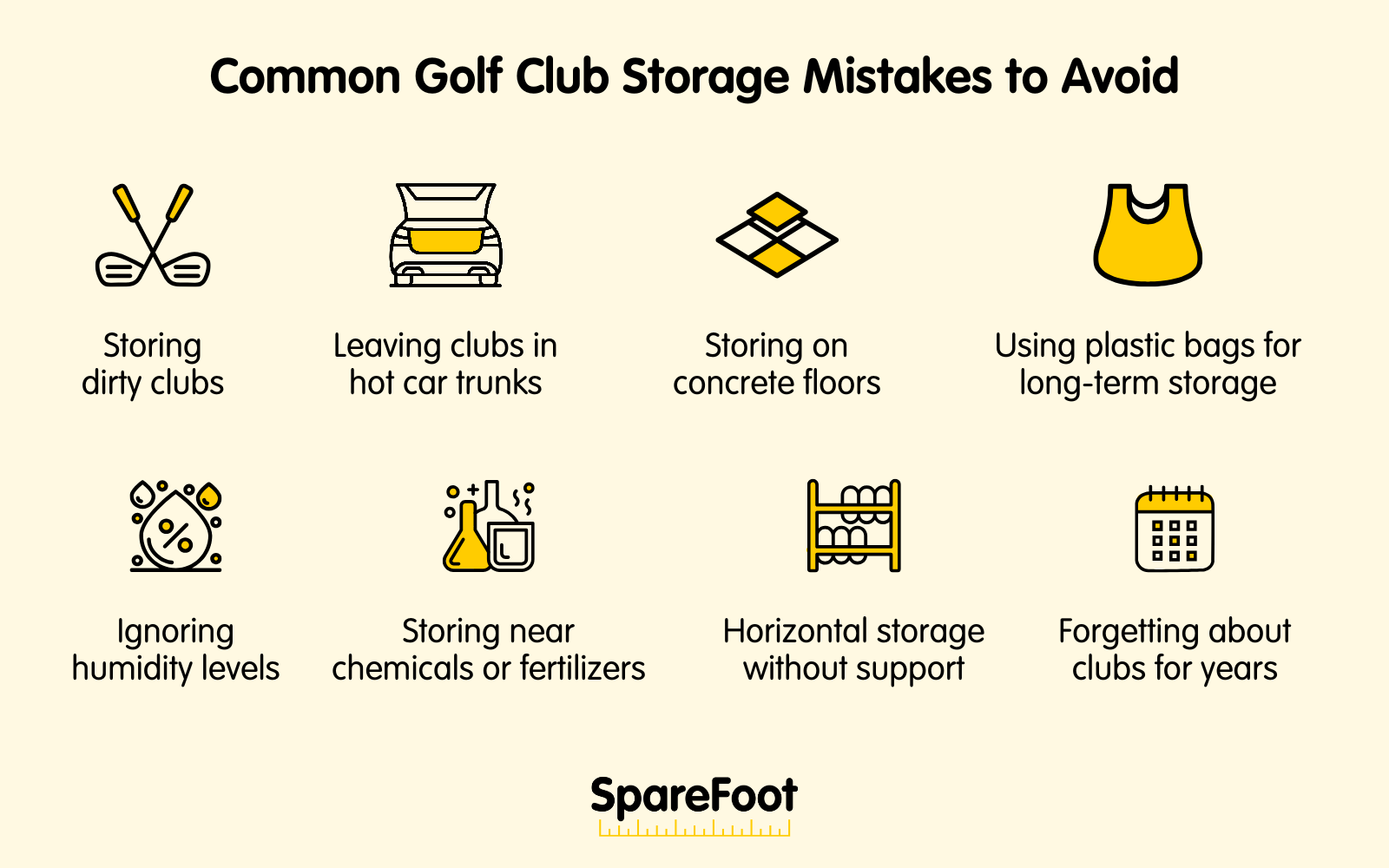
Every spring, golfers discover expensive storage mistakes that could have been easily prevented. Rust on clubheads, warped shafts, and ruined grips cost thousands in replacement equipment when simple awareness would have saved everything. These common errors happen to experienced golfers who think they’re doing everything right.
- Storing Dirty Clubs: Grass stains and dirt hold moisture against metal surfaces, creating perfect conditions for rust formation. That “quick storage” without cleaning turns into expensive clubhead replacement by spring.
- Leaving Clubs in Hot Car Trunks: Car trunks easily hit 120°F in summer heat, melting adhesives that hold clubheads to shafts and turning grips into sticky messes. Your trunk isn’t storage… it’s an oven.
- Storing on Concrete Floors: Concrete naturally sweats as temperatures change, creating constant moisture exposure that promotes rust and bag damage. Always elevate your clubs off garage floors.
- Using Plastic Bags for Long-Term Storage: Plastic traps moisture and kills airflow, creating ideal conditions for rust and mildew. What looks like protection becomes a recipe for equipment destruction.
- Ignoring Humidity Levels: Silent damage happens over months when humidity isn’t controlled. You won’t notice gradual grip deterioration and rust formation until it’s too late and expensive to fix.
- Storing Near Chemicals or Fertilizers: Fumes from lawn chemicals, paint, and automotive products gradually damage grips and club finishes. Keep storage areas away from anything with strong odors.
- Horizontal Storage Without Support: Leaning clubs against walls or stacking them creates pressure points that bend shafts over time. Graphite shafts are especially vulnerable to stress-related damage.
- Forgetting About Clubs for Years: Set calendar reminders for quarterly checks. Minor issues caught early cost pennies to fix, while neglected problems require expensive repairs or complete replacement.
Golf Club Storage Checklist
Pre-Storage:
| To-do | |
| Clean all clubheads thoroughly and remove embedded debris from grooves | |
| Wipe down and completely dry all grips and shaft surfaces | |
| Clean the golf bag exterior and interior, removing dirt buildup | |
| Remove balls, tees, scorecards, gloves, and any food items from all pockets | |
| Check for existing rust spots, grip deterioration, or other damage | |
| Take inventory photos for insurance and condition reference |
Storage Setup:
| To-do | |
| Choose climate-appropriate location with stable temperature and humidity | |
| Install or position golf club storage rack with adequate weight capacity | |
| Add moisture-absorbing packets to bag compartments as needed | |
| Position clubs upright with proper support to prevent shaft stress | |
| Ensure stable, secure positioning that prevents tipping or movement | |
| Apply breathable covers only if necessary, avoiding plastic materials |
Ongoing Maintenance:
| To-do | |
| Set calendar reminders for quarterly inspection schedules> | |
| Monitor humidity levels in storage areas if needed | |
| Replace moisture absorbers based on environmental conditions | |
| Document any changes in equipment condition for tracking |
Pro tip: Keep an eye out for end-of-season sales on quality storage racks and accessories. Investing in proper storage equipment costs far less than replacing damaged clubs and typically pays for itself over just a few seasons.
Protecting Your Golf Clubs Year-Round
The best way to store golf clubs combines proper upright positioning with climate control, whether that’s in your garage with appropriate racks or through professional storage facilities. Quality equipment maintains its performance and value when stored properly, and regular maintenance checks help catch problems before they become expensive repairs.
Garage storage works well for most golfers, offering convenient access and solid protection at minimal cost. Professional storage makes sense when space is limited or extreme climates threaten your investment.

Ready to find the perfect storage solution for your valuable golf clubs? SpareFoot makes comparing storage options simple, with thousands of facilities offering climate control and drive-up access. Find storage units near you and protect your golf investment with confidence.
With proper cleaning and climate control, golf clubs can be stored indefinitely without damage. Most golfers store clubs seasonally (3-6 months) without issues when following basic storage principles.
Golf clubs should always be stored upright when possible. Horizontal storage or leaning against walls creates pressure points that can weaken shafts over time, especially graphite clubs.
Golf clubs can be stored in garages that stay between 50-80°F. Avoid storage when garages regularly exceed 90°F, as extreme heat damages grips and can loosen clubhead adhesives.
Golf clubs can rust if stored dirty or in humid conditions. Proper cleaning and moisture control with silica gel packets prevent rust formation during storage periods.
Garage storage with basic racks costs $25-200 for equipment. Professional climate-controlled storage typically runs $50-150 monthly depending on unit size and location.
Freezing temperatures (below 32°F) make graphite shafts brittle and rubber grips prone to cracking. If garage temperatures drop below freezing, consider professional climate-controlled storage.
For seasonal storage (under 6 months), clubs can stay in the bag. Longer storage periods benefit from removing clubs for better air circulation and easier condition monitoring.

Melynda Kloc
With a deep passion for writing, poetry, and storytelling, I've built a career creating copy that educates, builds trust, and encourages genuine connection between customers and brands. Drawing from my background in fine arts, I bring a creative perspective to strategic content that prioritizes authentic voice over formulaic approaches. I believe the best copy doesn't just inform—it creates real human connection in an increasingly automated world.