

KEY TAKEAWAYS
▸ Clean and condition your leather jacket before storage to prevent permanent damage.
▸ When storing a leather jacket, use padded hangers and breathable garment bags; never use wire hangers or plastic.
▸ Store in cool, dark places with stable temperature, avoid attics, basements, and garages.
▸ Never fold a leather jacket for storage; always hang it to maintain shape.
▸ Practice leather coat care and check the state of, and condition your leather jacket periodically during storage to extend your jacket’s lifespan.
That leather jacket hanging in your closet tells a story. Maybe it’s the one that makes you feel unstoppable when you slip it on, or the piece you saved up for months to finally afford. Perhaps it’s that perfect vintage find you discovered at a little boutique, or even a treasured gift from someone special. Whatever brought it into your life, you want that jacket to look as amazing five years from now as it does today.
Here’s what most people don’t expect: leather can be surprisingly high maintenance. Store it wrong for just one season, and you might pull it out to find permanent shoulder dents, chalky white spots, or leather that feels more like cardboard than butter. What makes this especially frustrating is how easily these problems happen without you realizing it.
Sound familiar? You grab whatever hanger is closest, squeeze it into that packed closet behind winter coats, or maybe even fold it up for the dresser drawer. After all, how complicated can storing clothes really be? Turns out, when it comes to leather, there’s definitely a right way and a wrong way to do things.
Preparing Your Leather Jacket for Storage
It’s the first cool day of fall, and you’re excited to break out that favorite jacket. You pull it from storage only to discover it smells musty, feels stiff, and has developed some concerning white spots around the collar. This exact scenario happens to people every year, but it’s completely preventable with the right preparation.
Why Leather Needs Special Care
Leather might seem tough, but it’s actually pretty sensitive once you understand what’s happening beneath the surface. Think about it: this material started as animal hide, but the tanning process transforms it into something that needs more attention than you’d expect.
Temperature changes are where most problems start. When it gets hot, leather expands. When it cools down, it contracts. Picture bending a piece of metal back and forth repeatedly until tiny stress cracks appear. That’s essentially what happens to your jacket over time, especially around areas that flex the most, like elbows and shoulders.
Then there’s the moisture challenge. Too much humidity creates a perfect environment for mold and mildew (they absolutely love leather), while too little moisture leaves your jacket feeling like dried-out cardboard. Even sunlight can slowly break down the dyes and finishes, turning that rich black or brown into an uneven, faded mess.
Most jacket disasters happen because of simple storage mistakes that seem harmless. Wire hangers create permanent shoulder dents, plastic bags become moisture traps, and storing leather in garages or basements subjects it to wild temperature swings that slowly destroy the material.
Cleaning Before Storage
Your jacket might look clean, but trust me on this one, it’s not as clean as you think. Every time you wear it, your jacket becomes a magnet for invisible passengers: skin oils from your neck, environmental pollution from city air, tiny food particles from that lunch meeting, and makeup residue from getting dressed. All this stuff becomes an all-you-can-eat buffet for bacteria and insects during storage. Even worse, some of these contaminants actually react with leather over time and create permanent discoloration.
Start with the detective work: empty every single pocket. You’ll be amazed at what turns up: ancient gum that’s fossilized, receipts from three seasons ago, mystery crumbs from forgotten snacks. Don’t skip the tiny coin pocket or that inside chest pocket you probably forgot existed.
Next, grab a soft, clean cloth and give the entire jacket a thorough wipe-down. Pay special attention to the collar where your neck touches (this gets surprisingly grimy), around pocket edges where your hands constantly go, and anywhere oils and dirt love to accumulate. These spots might look fine, but they’re usually hiding the most buildup.
For deeper cleaning, stick with products specifically designed for leather. Lexol Leather Cleaner works great for most standard leathers and won’t cost you a fortune, about $12 for a bottle that’ll last ages. Whatever you do, resist the urge to reach for household cleaners, dish soap, or anything containing bleach. These can permanently damage or discolor leather faster than you’d believe.
Always test any cleaner on a hidden spot first. Apply just a tiny amount somewhere inconspicuous (inside a pocket or along an inner seam) and wait to see what happens. Better to discover an incompatible product on a hidden area than right across the front of your jacket.
When you’re ready to clean, put the cleaner on your cloth, never directly on the jacket. Work in small, gentle circles without pressing too hard. Leather can be surprisingly delicate, and aggressive cleaning can damage the surface finish. Once you’re finished, let everything air dry completely at room temperature. Skip the hair dryer, heating vents, and direct sunlight, heat sources can cause cracking.
Conditioning the Leather
Think of conditioning leather like moisturizing your skin after a long day in the sun. Skip it too long and things start getting dry, cracked, and uncomfortable. Leather conditioner replenishes those natural oils that keep the material supple and prevent it from turning brittle over time. This step becomes absolutely crucial before storage because well-conditioned leather handles environmental changes like a champ.
For everyday leather jackets, products like Bick 4 Leather Conditioner ($15) or Chamberlain’s Leather Milk ($18) deliver excellent results without breaking the bank. If you’ve got something really expensive or made from exotic leather, you might want to invest in specialized conditioners, but most people can stick with these quality basics and get great results.
Apply conditioner with a clean, soft cloth using gentle circular motions. Focus extra love on high-stress areas where your jacket bends and flexes during wear. Elbows and shoulders get the most movement, followed by areas around zippers and button closures. These spots are most likely to develop cracks if they dry out, so they need the most attention.
Give the conditioner at least 30 minutes to really soak in before moving on to storage. If you rush this step, you might end up with sticky residue on the surface or uneven absorption that creates blotchy areas. Use this time to gather your storage supplies or clean up your closet space.
Dealing With Stains and Odors
You know that sinking feeling when you spot a stain on your favorite jacket? That little voice saying “I’ll deal with it later” when you’re rushing out the door? Storage time is when “later” comes back to haunt you. Stains that sit during storage often become permanent fixtures, especially when storage conditions aren’t perfect. Temperature, humidity, and time team up to set stains so deep that even professional cleaning can’t save them.
Don’t let this happen to your jacket. A $15 cleaning product now beats replacing a $400 jacket later.
For basic stains, leather-specific cleaners usually save the day. Work from the outside edges of the stain toward the center to prevent spreading, and use as little moisture as possible. Leather doesn’t like getting soaked, too much water creates its own set of problems.
Stubborn stains might need professional attention, and yes, it costs more than DIY solutions. But $40-60 for professional cleaning beats replacing a destroyed jacket every time. Professional leather cleaners have access to specialized products and techniques that simply aren’t available to regular consumers.
Don’t overlook odors either. Storage conditions can sometimes intensify smells, turning a slightly funky jacket into something that clears the room when you open the closet door. If your jacket has picked up odors, let it air out in a well-ventilated space for several days before storage. For persistent smells, try placing clean baking soda in the pockets overnight to absorb odors, then vacuum it all out thoroughly the next day.
How to Store a Leather Jacket Long Term
Most people go wrong right about now. They treat their leather jacket like any other piece of clothing, but leather definitely has its own rules.
Choosing the Right Hanger
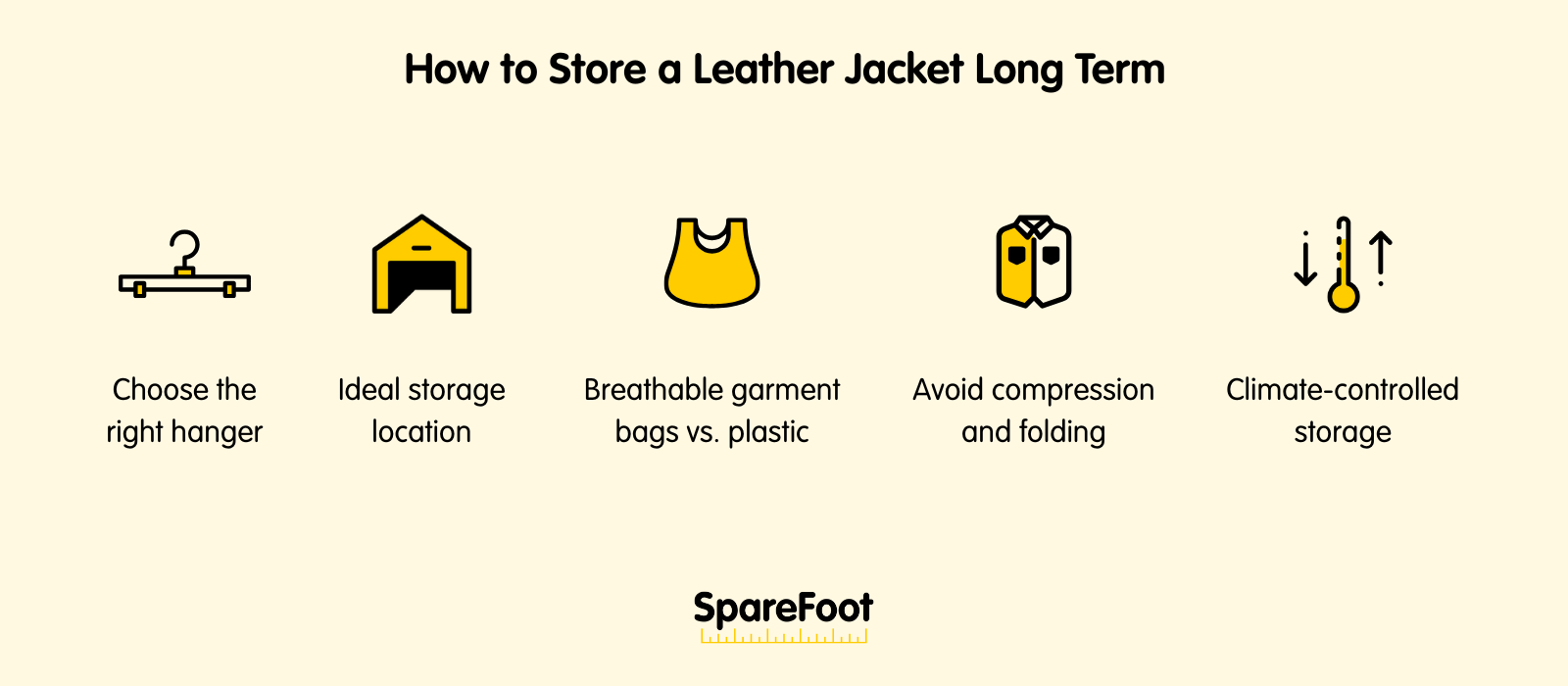
Wire hangers are basically leather jacket enemy number one. Those thin metal contraptions dig into jacket shoulders and leave permanent indentations that never, ever come out. They also can’t properly support the jacket’s weight, which leads to stretching and weird shape distortion after months of hanging. If you’ve got wire hangers holding up your leather right now, this is your wake-up call to fix that situation.
Spend $15-25 on quality padded hangers that distribute weight evenly across the shoulder area. The padding acts like a cushion, maintaining your jacket’s natural shape while preventing pressure points that create permanent damage. Cedar hangers ($20-30) take things one step further because cedar naturally repels insects and absorbs excess moisture from the air, creating a more stable environment around your jacket.
Make sure whatever hanger you choose actually fits properly inside your jacket’s shoulders. Too wide and you’ll stretch the shoulder seams. Too narrow and you get inadequate support that defeats the whole purpose. Most leather jackets work well with hangers that are 17-18 inches wide.
Ideal Storage Location
Location matters way more than most people realize. Your jacket needs environmental consistency above everything else. You don’t need to hit an exact temperature, but keeping it steady is crucial. Anywhere between 60 and 75 degrees works fine, but the key is avoiding wild swings that make leather expand and contract repeatedly.
Forget about attics, basements, and garages completely. These spaces are always the first to feel seasonal changes, and they experience more temperature and humidity variation than interior rooms. Heat rises, cold sinks, and these areas get hit with both extremes. A regular bedroom closet on an interior wall usually provides much more stable conditions than any basement or attic space. When storing items, it’s important to know which items should never be stored in your garage because of these environmental challenges.
If you want to monitor conditions closely, aim for humidity somewhere between 40 and 50 percent. Small digital hygrometers cost about ten dollars and eliminate the guesswork. Too much humidity promotes mold growth, while too little dries out the leather.
Breathable Garment Bags vs. Plastic
For protection from dust and pests, cotton or canvas garment bags work perfectly. These natural materials allow air circulation while keeping unwanted visitors away from your jacket. Many leather jackets come with their own storage bags from the manufacturer. If you still have yours, use it instead of generic alternatives since it was designed specifically for that type of leather and its particular needs.
Never use plastic bags for long term leather storage. Plastic traps moisture and creates ideal conditions for mold and mildew growth. Even small amounts of humidity can become major problems when trapped in plastic for months at a time. Expensive jackets have been completely destroyed by well-meaning people who thought they were protecting them with plastic covers.
Avoiding Compression and Folding
The folding rule for leather is simple and absolute: don’t do it. Ever. Folding creates permanent creases that become more pronounced over time and eventually turn into actual cracks. Unlike fabric clothing that can bounce back from being folded, leather lacks the elasticity to recover its smooth appearance once it’s been creased.
Those vacuum storage bags that work great for regular clothes are absolutely terrible for leather. The compression can permanently damage the leather’s texture and crack protective surface treatments. Give your jacket adequate space to hang freely without crowding from other garments. Leather needs room to breathe, both literally and figuratively.
When planning your storage strategy, remember that choosing the right storage containers becomes especially important for materials like leather that need specific environmental conditions rather than just space efficiency.
Climate-Controlled Storage Benefits
Sometimes your home simply cannot provide the environmental consistency that leather needs for optimal preservation. Maybe you live in a region with extreme humidity, lack adequate closet space, or deal with dramatic seasonal temperature swings that make stable storage impossible.
Professional climate-controlled storage facilities eliminate the environmental variables that challenge even the most careful home storage efforts. These facilities maintain steady temperature and humidity levels regardless of external weather conditions or seasonal changes. The benefits of climate-controlled storage extend far beyond simple temperature regulation.
Consider professional storage if your living situation involves high humidity that promotes mold growth, extremely dry conditions that make leather brittle, dramatic temperature fluctuations, limited closet space that forces overcrowding, or frequent moves that make consistent storage conditions difficult to maintain.
How to Pack a Leather Jacket for Travel or Moving
Sometimes life forces you to pack up and move your leather jacket, whether for a cross-country move, extended travel, or just a weekend trip where weather might be unpredictable. Knowing how to pack a leather jacket (or any leather in general) requires a completely different approach than long-term storage because you’re prioritizing protection during transport rather than creating perfect long-term conditions.
Rolling vs. Folding Techniques
Nobody wants to fold their precious leather jacket, but travel sometimes creates impossible space constraints that force difficult choices. If you absolutely must fold it, rolling creates much gentler curves than sharp creases. Think of it like the difference between bending a wire slowly versus creating a sharp angle. The gradual curve of rolling distributes stress more evenly across the leather surface.
To roll properly, lay the jacket face down on a clean surface, fold the arms across the back, then roll from the bottom hem toward the collar. This technique minimizes stress concentration points while creating a reasonably compact package for travel.
For very short trips lasting just a day or two, careful folding along natural seam lines might be acceptable if you use protective tissue paper along the fold lines. But get that jacket hanging again the moment you reach your destination. The longer leather stays creased, the more likely those creases become permanent features.
Protective Layering With Tissue Paper
When it comes to packing materials, acid-free tissue paper provides the best protection during compressed packing because regular tissue paper can contain chemicals that cause leather discoloration over time. The extra cost is worth it for valuable jackets, especially if you travel frequently with leather items.
Place tissue paper between fold lines and stuff some loosely inside the sleeves and body of the jacket to help maintain shape during transport. When packing multiple garments together, tissue paper also serves as a barrier to prevent dye transfer from other fabrics to your leather.
Packing in Luggage or Moving Boxes
Your choice of luggage makes a bigger difference than most people realize. Hard-sided suitcases offer superior protection because they maintain their structural integrity under pressure and prevent crushing damage from other luggage stacked on top. Airport baggage handlers aren’t known for their gentle touch, and soft-sided bags provide virtually no protection against potential abuse.
Always position your leather jacket on top of other packed items to minimize weight pressing down on it. Think of packing like creating layers, with heavier, more durable items on the bottom and delicate pieces like leather on top.
For household moves, wardrobe boxes that allow jackets to hang during transport provide the gold standard of protection. These specialized moving boxes cost more than regular cardboard boxes, but they’re worth every penny when dealing with expensive leather goods.
Preventing Creases and Damage During Transport
Professional moving companies have seen it all when it comes to damaged clothing during relocations, so many have developed specific procedures for handling valuable items. Don’t be shy about mentioning that you have expensive leather pieces that need extra care. A reputable company would rather know about special requirements upfront than deal with damage claims later.
When hanging transport isn’t feasible, choose appropriately sized boxes that accommodate your jacket and protective materials without requiring excessive compression to close properly. The key is creating adequate space while preventing items from shifting around during transport.
Leather Coat Care Best Practices
Your jacket doesn’t go into suspended animation once you hang it in storage. Leather continues to age and react to its environment even when sitting quietly in your closet, which means a little proactive maintenance can prevent minor issues from becoming major problems down the road.
Regular Conditioning Schedule
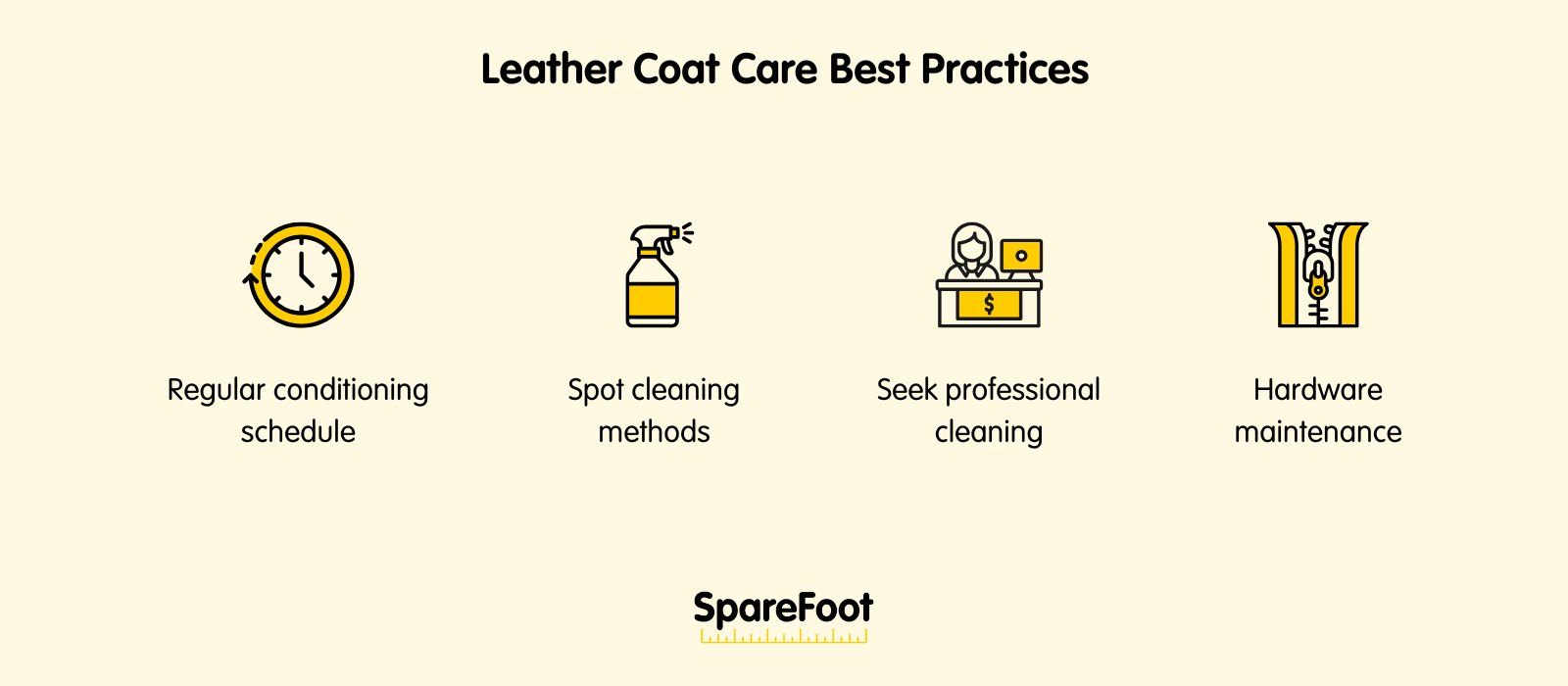
Even perfectly stored leather jackets benefit from periodic conditioning sessions. Think of it like regular maintenance on your car, you don’t wait until something breaks to take preventive action. Every six months or so, take your jacket out of storage and give it a light conditioning treatment to keep the leather supple and healthy.
Let the jacket reach room temperature before applying any products. Cold leather doesn’t absorb conditioners effectively, so patience pays off. Apply conditioner sparingly to areas that tend to dry out first, typically places where the jacket bends during wear like elbows, shoulders, and the collar area.
Keep simple records of when you condition each jacket and any observations about its condition. This helps you track how your storage conditions affect different pieces and catch developing problems during your leather coat care routine before they become expensive repairs.
Spot Cleaning Methods
When stains happen (and they will), acting quickly makes all the difference in the world. Fresh stains are exponentially easier to remove than ones that have had time to set and bond with the leather. The approach you take depends on what caused the stain and how long it’s been sitting there.
Oil-based stains need immediate damage control. Your first mission is to stop the spread by blotting up as much oil as possible with clean, absorbent cloths or paper towels. Avoid the temptation to rub or scrub, which just drives the oil deeper into the leather and spreads it to previously clean areas.
Once you’ve soaked up all the surface oil you can manage, apply cornstarch or talcum powder generously to the stained area. These powders work like tiny sponges, absorbing oil from porous materials like leather. Let the powder sit for several hours or even overnight for substantial stains. The longer you let it work, the more oil it can pull out. When time’s up, gently brush away all the powder with a soft brush.
Water spots create their own unique challenge. The minerals and impurities in water can leave visible marks on leather even after the moisture disappears. This gets especially tricky with hard water that contains high levels of calcium and other minerals. Never try speeding up the drying process with heat, which can lock the stain in permanently.
Let water-spotted leather dry naturally at room temperature, then gently buff the affected area with a soft, clean cloth. Sometimes this gentle buffing restores an even appearance across the leather surface. If water marks stick around after buffing, light conditioning often helps blend the spot with the surrounding leather.
When to Seek Professional Cleaning
For more complex stains like ink, food, or unknown substances, professional treatment is often the best approach rather than experimenting with home remedies. Leather restoration specialists have access to specialized cleaning agents and techniques that simply aren’t available to regular consumers.
Some signs that definitely call for professional help include any stain that has penetrated deeply into the leather, significant color fading or bleeding from one area to another, or any kind of mold or mildew growth. These problems require tools and expertise beyond what most people have at home.
For valuable or sentimental jackets, it makes sense to establish a relationship with a quality leather care professional before problems develop. You want to find them before you’re in crisis mode, not after damage has already occurred.
Maintaining Hardware
Don’t forget about hardware maintenance during extended storage periods. Zippers, buttons, snaps, and buckles can all seize up or corrode if neglected for months at a time. Clean all metal components thoroughly before storage and apply light lubrication to zippers using specialized products or even bar soap. Avoid petroleum-based lubricants that can migrate into the surrounding leather and cause staining.
Test zipper function periodically during your maintenance check-ins and address loose buttons or snaps promptly. The stress of hanging can worsen existing problems over time, and it’s much easier to tighten a slightly loose button than to repair damage after it rips completely free.
When rotating your wardrobe for spring, pay special attention to hardware function as you transition jackets between storage and active use. This seasonal check is your best opportunity to catch and address small problems before they become bigger issues.
Storage Solutions from SpareFoot
When to Consider Climate-Controlled Storage Units
Multiple valuable leather pieces might justify professional storage even if your home conditions are generally adequate. When you’re dealing with thousands of dollars’ worth of leather goods, the monthly cost of professional storage often proves less than the replacement value of even one item damaged by less than ideal home storage conditions.
Professional storage facilities provide security features that most homes cannot match. Comprehensive fire suppression systems, theft prevention measures, and extensive insurance coverage protect valuable collections from various risks that could affect home storage.
Watch this video to learn more about storage amenities to look out for:
Many people struggle with seasonal clothing transitions, especially when valuable items require special care beyond simply making space in closets. Professional storage eliminates the guesswork involved in summer clothes storage for leather pieces that need specific environmental conditions.
Instead of cramming everything into inadequate home closet space where leather items get crowded and compromised, professional storage provides dedicated room for each jacket with proper hanging space and optimal environmental protection. Access policies at quality facilities still allow reasonable retrieval during storage periods, accommodating unexpected weather changes or special occasions.
Benefits of Storing Seasonal Leather Items
For people dealing with space constraints in small apartments or homes, professional storage often provides better solutions than attempting to organize closets for items requiring specific environmental conditions that most residential spaces cannot consistently provide.
Professional climate-controlled storage facilities control humidity levels with precision, manage air circulation patterns to prevent stagnation, and provide protection from pests that can damage leather over extended periods. These facilities are specifically designed to protect valuable items, whereas homes serve many functions that might conflict with optimal storage conditions.
Protecting Your Leather Jacket Investment
Practicing leather coat care and learning how to store a leather jacket doesn’t require a degree in material science, but it does need some attention to detail. Start this process in late fall before winter storage, giving yourself enough time to properly clean and condition everything without rushing.
Clean and condition thoroughly before storage, use padded hangers and breathable garment bags, keep things in a stable environment, and check on your jacket periodically. Most storage problems happen when people treat leather like regular clothing that can handle neglect.
Your leather jacket represents more than the money you spent, it’s part of your personal style and maybe holds sentimental value too. The hour or two you invest in proper storage keeps you enjoying that jacket for decades rather than watching it deteriorate from preventable mistakes.
When your home can’t provide consistent conditions, find and reserve climate-controlled storage in minutes with SpareFoot. Whether it’s one treasured jacket or a whole collection, proper storage techniques ensure your investment keeps looking great for years to come.


Melynda Kloc
With a deep passion for writing, poetry, and storytelling, I've built a career creating copy that educates, builds trust, and encourages genuine connection between customers and brands. Drawing from my background in fine arts, I bring a creative perspective to strategic content that prioritizes authentic voice over formulaic approaches. I believe the best copy doesn't just inform—it creates real human connection in an increasingly automated world.


