How To Store Summer Clothes
When seasons change, so do the clothes you wear. Outfits and seasonal pieces meant for warmer weather end up sitting around in your closet and dresser, taking up space while they wait for the temperatures to rise again–and if they aren’t stored properly, they might come out of your closet with mold or holes in them. Ew.
If you want your warm-weather staples to last longer while saving space, here are a few tips on how to store summer clothes until you’re ready to bring them back into rotation.
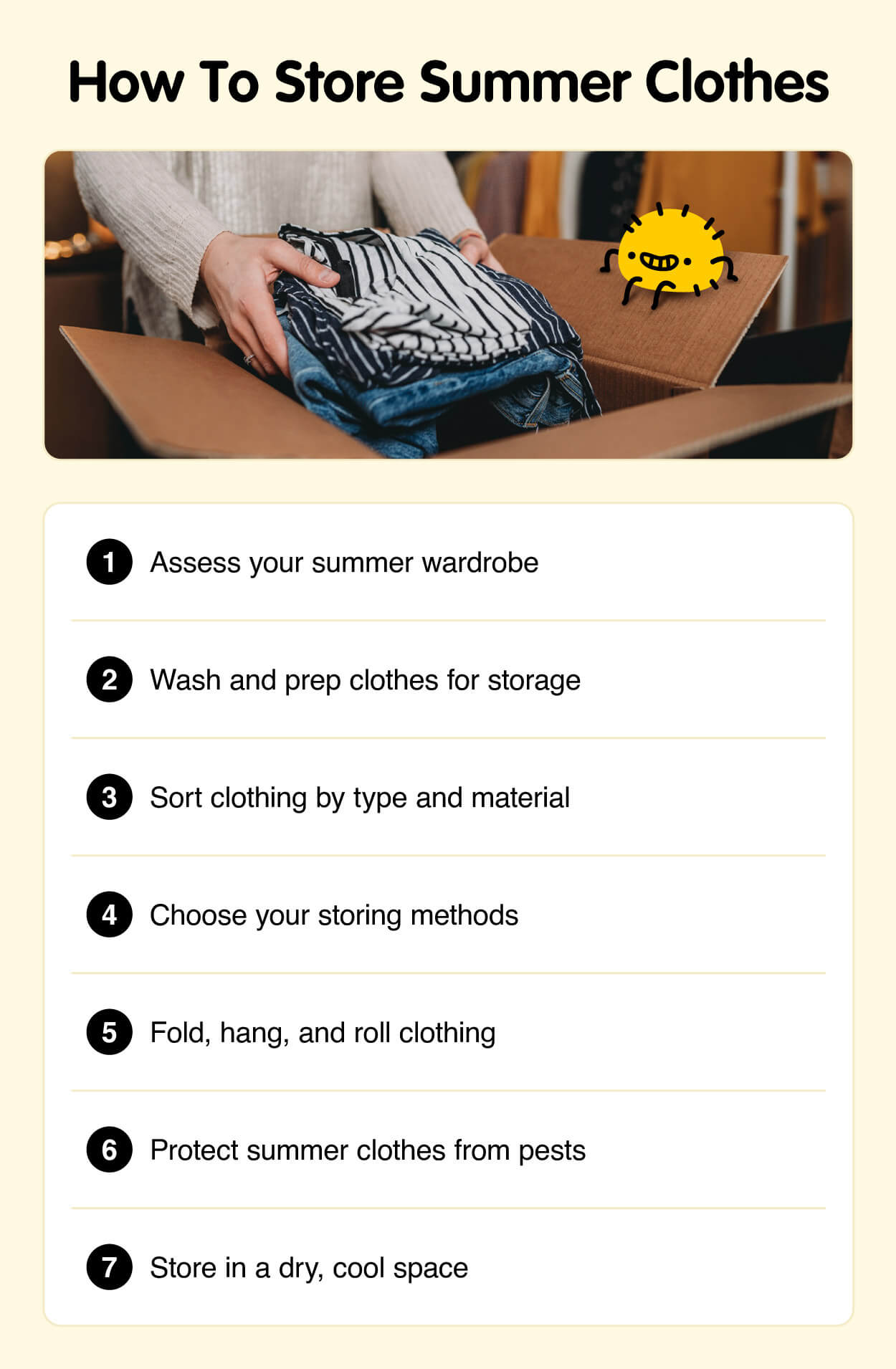
1. Assess Your Summer Wardrobe
If you’re serious about storing summer clothes long term, start by going through every little piece of your summer wardrobe. We recommend separating them into three categories: pieces you want to keep for next summer, pieces that need stitching or repairing, and pieces that you can sell or donate.
From here, pack the clothes you want to get rid of into a bag for easy transport to a used clothing store or donation center. If you’re confident you can repair your damaged keepers yourself, make that a priority project; if not, get in contact with someone who can take care of those fixes for you.
2. Wash and Prep Clothes for Storage
Once you know which clothes you want to save for next year, set some time aside to wash and prepare them for storage. You can easily separate your more casual clothes into whites and colors and throw them in a washing machine before drying them according to manufacturer instructions. More delicate or dry-clean-only items should be hand-washed or taken to the dry cleaners so you don’t damage the fabric.
Once all of your clothes are washed and dried properly, lay them out to prevent wrinkling before you move on to the next step.
3. Sort Clothing by Type and Material
When planning out how to store summer clothes for winter, you should further sort your clothes by type and material to keep them organized and make sure you can store different kinds the same way. As you’ll see later in this guide, some clothes can be folded or even rolled while others need to be put on hangers, depending on what they’re made of and how delicate they may be.
For example, you won’t want to treat cotton shirts the same way as silk or lace articles–these are way more delicate and can be crushed and damaged if you store them without care. Fibers like wool also need to be treated carefully, as they can be a target for mold and pests.
4. Choose Your Storing Methods
Take stock of the different kinds of clothes you have, then take stock of how much space you have available in your home for summer clothes storage. If the clothes you’re keeping are mostly casual and don’t require special care, you can roll or fold them into storage containers and use leftover closet space for what few delicates you may have.
However, if you have a large collection of clothes that won’t fit into your personal storage space, or if many of them are delicate and need special care, consider investing in a self-storage unit with amenities like climate control. Maintaining a low temperature and humidity level will keep your clothes from getting moldy or attracting pests. No matter what space you use, be sure to choose the right storage bins for your clothes – these will depend on your needs as well.
5. Fold, Hang, and Roll Clothing
The best way to store clothes depends on how delicate they are and how much specific care they need. Casual clothes will be perfectly fine if laid out flat and folded up – you can even roll less bulky items such as T-shirts up into a cylindrical shape to save space. These clothes can be safely stored in a plastic container or box.
Delicates and fancier summer clothes such as dresses, on the other hand, shouldn’t be folded. Most of these should be put on hangers and ideally stored within individual garment bags, and if you can access temp controlled storage to store them in, you’ll prevent any environmental damage that might occur. Linens shouldn’t be folded, but can be rolled without damaging if you don’t have space to hang them.
6. Protect Summer Clothes from Pests
If you’re concerned about moths or other insects damaging your clothes in storage, one of the best and simplest ways to keep them away is a thorough wash before storing, as insects can be attracted to stains. Other protective measures you can take include choosing airtight containers or bags for your clothes to prevent pests from getting to them, as well as storing clothes with natural insect repellents such as cedar wood.
7. Store in a Dry, Cool Space
The overall best way to store seasonal clothes is to keep them in a space with a cool temperature and a minimum of moisture. Dry spaces greatly reduce the risk of your clothes developing mold or mildew, and cool spaces help prevent your clothes from long-term damage from their environment. You can further prevent moisture by storing your clothes with silica gel.
As storage experts, Sparefoot recommends investing in a climate-controlled storage unit to store any clothes you want to make sure survive their time out of season. These solutions guarantee a cool, dry space to put delicate items.
Protect Your Seasonal Wardrobe with Sparefoot’s Climate-Controlled Storage!
With the tips and solutions we’ve outlined above, you’re well on your way to understanding how to store summer clothes when it’s time to put them away for the winter. No two people will have the exact same set of clothes, but we have plenty of resources to help you find climate-controlled storage if you want to take every possible precaution and minimize potential damage to your precious wardrobe.
Your clothes aren’t the only thing worth protecting in storage, though, and helping you find the right way to store your possessions is Sparefoot’s specialty. From short-term storage to long-distance moves, check us out and see how we can assist!
Different wardrobes will require different solutions. Casual clothes that don’t need special care can be folded or rolled up to put in a box or bin, but delicates should be put on hangers and stored inside garment bags. This also depends on how much space you have – take a look at our blog for some apartment storage ideas if you have limited space.
Garment bags are often available in either cotton fabric or synthetic plastic materials, but plastic garment bags are only suited for very short-term garment storage – they can trap moisture and keep air from circulating. Fabric garment bags allow air to pass through while keeping pests out, and if moisture is a concern, they allow garments to air-dry naturally.
The best way to store seasonal clothes for an extended period is to invest in a climate-controlled storage unit. This may seem like a big commitment, but it’s easy to find cost-effective solutions for any size or budget using Sparefoot’s search platform.
Plastic bins are often already on hand at home, so they’re an easy choice for storing clothes over the winter. However, it’s only safe to store casual clothes and non-delicate items in them, as plastic bins aren’t airtight and can allow moisture and pests to enter and damage delicate fabrics.

Peter Lalush