

KEY TAKEAWAYS
▸ Regional weather, demand patterns, and housing cycles matter more than national moving trends when planning your move.
▸ Summer (May-September) is peak moving season with 20-30% higher costs, while fall and winter offer better rates and availability.
▸ Plan around regional challenges: hurricanes in the Southeast (June-November), snow in the Northeast and Midwest (December-March), extreme heat in the Southwest (June-August), and wildfires on the West Coast (late summer-fall).
▸ Move mid-week and mid-month to save money regardless of season or location.
▸ Book storage when your move-out and move-in dates don’t align to avoid rushed decisions and last-minute stress.
Moving rarely goes exactly as planned. Your lease ends before your new place is ready, the weather doesn’t cooperate, or your schedule gets turned upside down. What seemed straightforward last month can suddenly feel a lot more complicated.
Timing your move right can save you serious money, reduce stress, and give you way more options when things inevitably change. Weather, school schedules, and how many other people are moving at the same time can all affect your experience and your budget. National trends give you a starting point, but they don’t tell the whole story. What works perfectly in Florida might be a disaster in Minnesota.
This guide breaks down the best and worst times to move across different U.S. regions, explains why those patterns exist, and helps you make smarter timing decisions. Whether you’re moving across town or across state lines, understanding your region’s moving season can help you avoid a lot of unnecessary headaches during your move.
Peak vs. Off-Peak Moving Seasons: What You Need to Know

Peak Moving Season (May–September)
Moving demand peaks between late spring and early fall across most of the U.S. Availability disappears quickly during this window, and pricing reflects the competition. Families coordinate moves with school schedules, college towns experience mass lease turnover, and home sales typically surge during these months.
The increased demand drives moving costs 20–30% higher than off-peak periods. Long-distance or out-of-state moves feel this impact most severely, particularly when flexibility is limited. Professional movers book up weeks or months in advance, and last-minute options become expensive or nonexistent.
Benefits of peak season moves:
- More predictable weather in most regions
- Easier coordination with school calendars
- Longer daylight hours for loading and unloading
- More real estate inventory available
Drawbacks to consider:
- Significantly higher moving costs
- Limited availability for preferred dates
- Less flexibility if plans need to change
- Potential weather challenges (hurricanes in the Southeast, extreme heat in the Southwest)
Moving during peak season requires advance planning. Book movers at least 8-12 weeks ahead for local moves and 12-16 weeks for long-distance relocations. If your timeline is uncertain, secure temporary storage as a backup option.
Off-Peak Moving Season (October–April)
Off-peak season delivers lower costs, greater availability, and more scheduling flexibility. Moving companies have open calendars and often discount rates to fill slower periods. For budget-conscious movers, this season offers the best opportunity to negotiate prices and secure preferred dates with minimal advance notice.
Advantages of off-peak moves:
- 20–30% lower rates compared to summer months
- More availability with shorter booking windows
- Greater flexibility to reschedule if needed
- Less competition for rental trucks and storage units
Challenges to anticipate:
- Winter weather in northern regions (snow, ice, freezing temperatures)
- Holiday scheduling conflicts in November, December, and early January
- Shorter daylight hours for outdoor work
- Potential for weather-related delays
October and November represent the sweet spot in many regions: demand has dropped from summer peaks, but severe winter weather hasn’t arrived. These months combine cost savings with relatively stable conditions.
For winter moves in cold climates, take extra precautions. Protect temperature-sensitive items, allow extra time for potential delays, and consider renting climate-controlled storage if there’s a gap between move-out and move-in dates.
Mid-Week and Mid-Month Timing
Beyond seasonal considerations, moving on weekdays (Monday through Thursday) consistently costs less than weekend moves. Moving companies charge premium rates for Friday through Sunday due to higher demand from people with traditional work schedules.
Similarly, mid-month moves avoid the concentration of lease expirations at month’s end. Rates typically increase during the last week of each month when most leases turn over. Target the second or third week of the month for the best combination of availability and pricing.
Best Time to Move: A Region-by-Region Breakdown
Best Time to Move in the Northeast

Ideal months: May–June and September–October
The Northeast experiences dramatic seasonal temperature swings that create distinct windows for moving. Late spring offers warming temperatures and dry conditions after the winter thaw. Early fall provides comfortable weather before the first snowfall, typically arriving in November or December, depending on latitude.
Regional weather patterns
Winter brings snow, ice, and nor’easters from December through February. These storms can delay or cancel moves with little warning. Sub-freezing temperatures create additional challenges for protecting belongings during loading and transport. Summer humidity peaks in July and August, making physical labor more demanding and potentially damaging moisture-sensitive items.
Times to avoid
December through February poses the highest risk of weather disruptions. July and August bring peak season pricing, limited availability, and uncomfortable working conditions. In college-dominated cities like Boston, Cambridge, and Ithaca, early September sees concentrated demand when students return for the fall semester.
Planning considerations
Book movers 10-12 weeks in advance for September moves in college towns. If winter moving is unavoidable, prepare for cold weather by protecting electronics, musical instruments, and other temperature-sensitive belongings. Consider climate-controlled storage for any gap between move-out and move-in dates. Check long-range weather forecasts weekly as moving day approaches and maintain flexible timing if possible.
Best Time to Move in the Southeast

Ideal months: November–April
Late fall through early spring provides the most reliable moving conditions in the Southeast. Temperatures moderate after summer’s peak, humidity drops significantly, and hurricane season ends by late November. This window offers comfortable working conditions and minimal weather-related disruptions.
Regional weather challenges
Hurricane season officially runs from June 1 through November 30, with peak activity in August and September. Coastal areas face potential evacuation orders and storm damage. Summer heat regularly exceeds 95°F with high humidity, creating health risks during extended outdoor work. Afternoon thunderstorms are common from June through September.
Times to avoid
June through September combines hurricane risk with extreme heat and peak season pricing. Coastal residents should particularly avoid August and September when major hurricanes most frequently make landfall. Extended heat exposure can damage electronics, wood furniture, and other temperature-sensitive items during transport.
Planning considerations
Florida experiences increased demand from November through March as seasonal residents return. Popular routes between northern states and Florida see heavy competition during this period. Book early for these corridors and consider storage if you’re coordinating a multi-stage move. For summer moves that can’t be avoided, schedule loading and unloading for early morning hours before temperatures peak. Stay hydrated and take frequent breaks.
Best Time to Move in the Midwest

Ideal months: May–October
The Midwest’s continental climate creates a narrow window for reliable moving conditions. Late spring through early fall avoids harsh winter weather while maximizing daylight and dry conditions. May offers spring warmth without peak summer heat, while September and early October provide comfortable temperatures before winter arrives.
Regional weather challenges
Winter conditions dominate from November through March with heavy snowfall, sub-zero temperatures, and dangerous ice. Lake-effect snow near the Great Lakes can dump multiple feet of snow in short periods. Spring brings tornado activity, particularly in April and May across the southern Midwest. Summer humidity can be oppressive in July and August.
Times to avoid
November through March presents the highest risk of weather delays and dangerous driving conditions. Lake-effect snow zones near Chicago, Cleveland, and Buffalo face particular challenges. December and January see the coldest temperatures and shortest daylight hours.
Planning considerations
May and September balance good weather with moderate pricing. These shoulder months avoid both winter risks and peak summer demand. For winter moves, winterize your vehicle, pack emergency supplies, and allow extra travel time. Consider storing belongings temporarily if harsh weather coincides with your move date. Monitor weather forecasts closely and maintain backup dates if possible.
Best Time to Move in the Southwest

Ideal months: October–April
The Southwest’s desert climate makes cooler months essential for safe, comfortable moving. Fall through spring brings moderate temperatures ideal for physical work. Winter days are typically sunny and mild, though nights can be cold at higher elevations.
Regional weather challenges
Summer heat regularly exceeds 110°F in cities like Phoenix, Las Vegas, and Palm Springs. These extreme temperatures create serious health risks during extended outdoor work. Heat also damages electronics, wood furniture, photographs, and artwork. Late summer monsoon season (July-September) brings sudden, intense thunderstorms with flash flooding, particularly in Arizona and New Mexico.
Times to avoid
June through August present dangerous heat conditions. Moving during midday summer hours risks heat exhaustion, heat stroke, and damage to belongings. Peak temperatures typically occur in July. Monsoon storms in late summer can cause sudden delays and flooding on rural roads.
Planning considerations
If summer moving is unavoidable, start at sunrise to complete outdoor work before temperatures peak. Most summer days reach 90°F by 9 AM. Take frequent breaks in air-conditioned spaces and stay hydrated. Rent climate-controlled storage for any gap in your timeline. Avoid leaving vehicles loaded overnight in summer heat, as interior temperatures can exceed 150°F.
Best Time to Move on the West Coast

Ideal months: April–May and September–October
The West Coast’s Mediterranean climate creates two ideal moving windows. Spring brings mild temperatures and minimal rainfall after winter storms. Fall offers warm, dry weather before the rainy season returns. Both periods avoid peak summer demand in competitive housing markets.
Regional weather challenges
Wildfire season intensifies in late summer and fall, particularly in California, Oregon, and Washington. Smoke can reduce air quality significantly and create evacuation risks in fire-prone areas. Pacific Northwest states experience heavy rainfall from November through March, with Seattle averaging 5-6 inches of rain monthly during winter. Northern California sees similar patterns.
Times to avoid
Mid-summer combines heat, wildfire risk, and peak season competition in major metro areas. Winter brings persistent rain in Oregon and Washington, making outdoor work challenging. Popular moving corridors like San Francisco, Los Angeles, and Seattle fill up quickly during summer months.
Planning considerations
Competitive housing markets in West Coast cities require early planning regardless of season. Book movers 10-12 weeks ahead for summer moves. Consider climate-controlled storage if wildfire smoke or rain affects your timeline. Air quality monitors can help track smoke conditions during fire season. Keep important documents and valuables accessible in case of evacuation orders in fire-prone areas.
Best Time to Move in the Mountain West
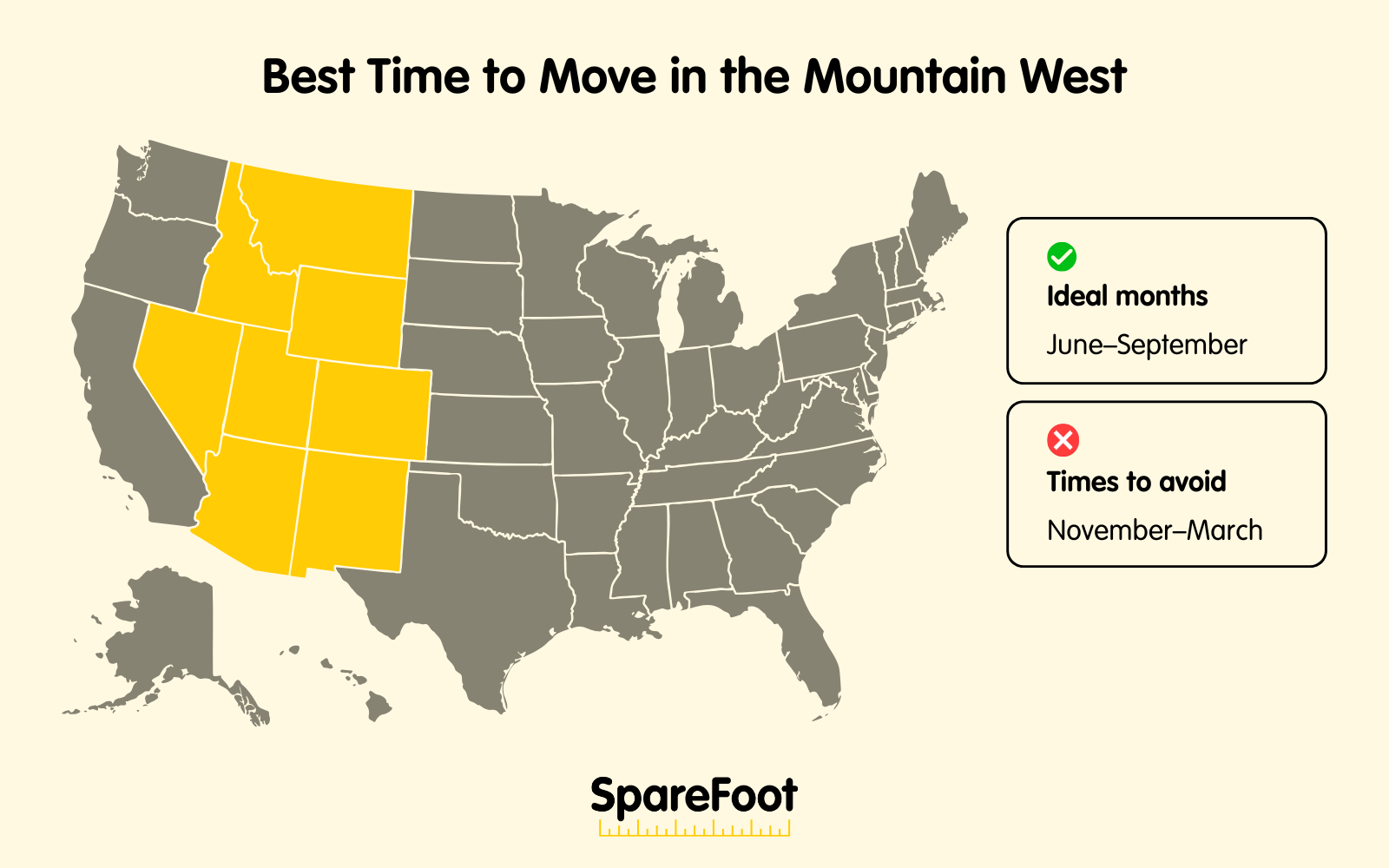
Ideal months: June–September
Mountain regions require careful timing around weather patterns and road access. Summer provides the most reliable window when mountain passes are clear and weather is stable. Late spring and early fall can work but require monitoring elevation-specific conditions.
Regional weather challenges
Heavy snowfall affects mountain passes and high-elevation areas from October through May. Major routes through the Rockies can close unexpectedly due to storms. Elevation changes create rapid weather shifts even in summer. Winter driving requires chains or four-wheel drive on many routes.
Times to avoid
November through March brings heavy snow, icy conditions, and potential road closures. Thanksgiving and Christmas travel periods create additional complications with limited mover availability. Early spring can see unpredictable late-season storms at elevation.
Planning considerations
Check mountain pass conditions through state transportation departments before finalizing your move date. Popular passes like Vail, Loveland, and Snoqualmie have real-time closure information online. If moving in shoulder seasons (May or October), have flexible timing to accommodate late or early snowstorms. Consider lower-elevation routes when possible. For winter moves at lower elevations, prepare vehicles and pack appropriately for cold weather.
Best Time to Move in the South Central Region

Ideal months: March–May and October–November
The South Central region’s varied climate requires balancing heat, storm seasons, and regional differences. Spring and fall avoid extreme summer temperatures while missing peak hurricane risk along the Gulf Coast. These moderate periods provide comfortable working conditions across Texas, Oklahoma, Louisiana, and Arkansas.
Regional weather challenges
Summer heat and humidity dominate from June through September, with temperatures regularly exceeding 95°F and heat indices often topping 105°F. Gulf Coast areas face hurricane season from June through November. Spring tornado activity peaks in April and May, particularly in Oklahoma and northern Texas. Severe thunderstorms bring hail and damaging winds.
Times to avoid
July and August bring the most intense heat across the entire region. Gulf Coast residents should avoid August and September when hurricane risk peaks. While spring tornadoes are a concern, they affect smaller areas and are easier to monitor than widespread summer heat.
Planning considerations
Schedule moves for early morning during warmer months. Texas heat makes afternoon work particularly challenging. Monitor tropical weather forecasts if moving near the Gulf Coast during hurricane season. Have backup dates available if severe weather threatens. Consider storage for flexible timing if coordinating a move during storm season. Tornado risk typically provides sufficient warning through modern forecasting systems.
Beyond Weather: Other Factors That Affect Your Moving Timeline
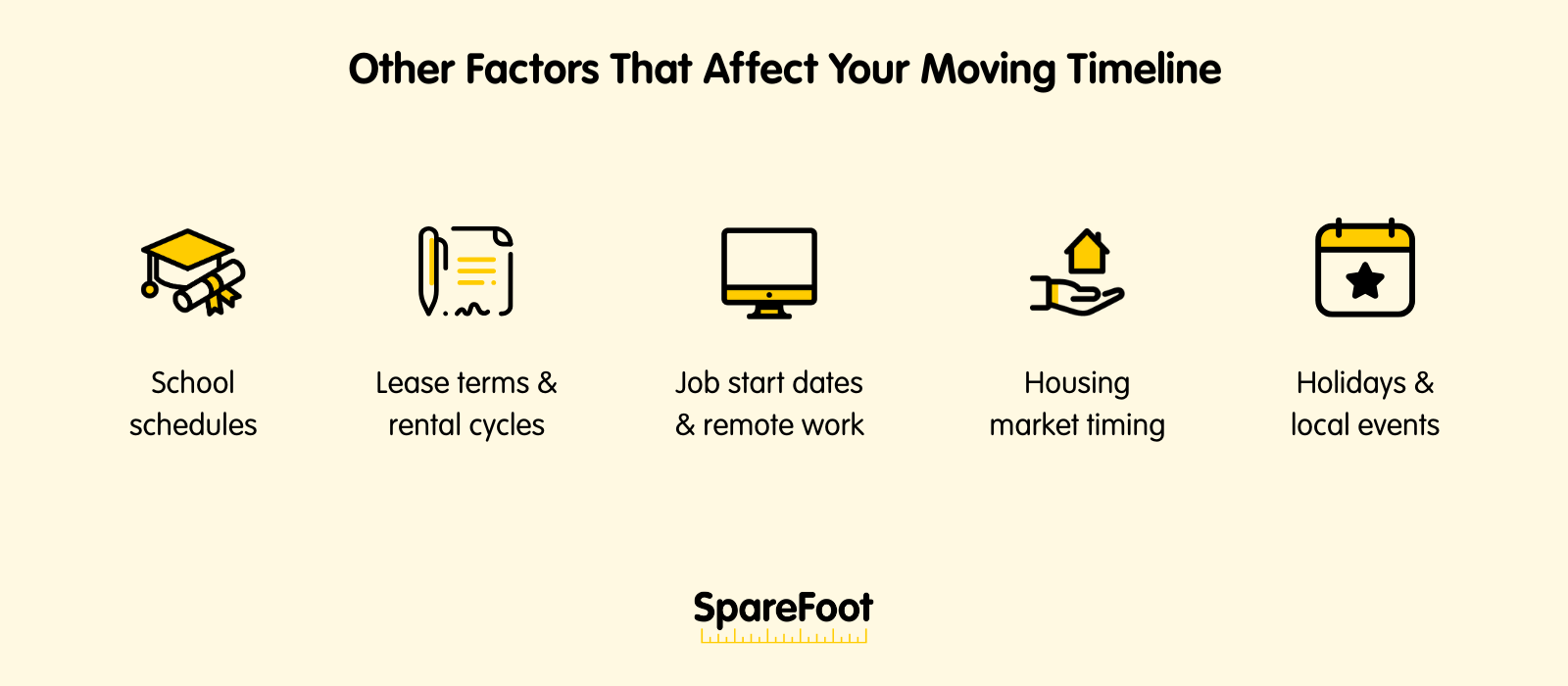
Regional weather patterns provide a framework for timing decisions, but personal circumstances ultimately determine your moving window. School schedules, lease terms, employment obligations, and housing market conditions are all hidden costs of starting over that intersect with seasonal considerations. Understanding how these factors interact helps you make informed decisions when ideal timing isn’t possible.
School Schedules
Families with school-age children typically target summer moves to minimize educational disruption. This preference concentrates demand between Memorial Day and Labor Day, driving up costs and reducing availability. While summer moves offer continuity, they place you in direct competition with millions of other households moving during the same narrow window.
Year-round and staggered school calendars create opportunities for off-peak moves in some districts. Mid-year relocations can significantly reduce moving costs while avoiding summer congestion. The tradeoff involves adjustment challenges that vary by student age, district policies, and academic calendar structure. Elementary students generally adapt more easily than high schoolers facing credit requirements and graduation timelines.
Consider coordinating with semester breaks when possible. Winter break (late December) and spring break (March or April) allow students to start new schools at natural transition points. Many districts accommodate mid-year transfers with established enrollment procedures.
Lease Terms and Rental Cycles
Most rental leases expire at month’s end, creating concentrated demand during the final week of each month. This pattern drives up prices and reduces availability, particularly in urban areas with active rental markets. When your move-out date at your current residence and move-in date at your new location don’t align, you face pressure to coordinate everything within a tight window.
Short-term storage provides a buffer between locations. Rather than rushing to complete everything in one day or paying for overlapping rent, storage allows you to move out on schedule and move in when your new place is ready. This flexibility reduces stress and often costs less than double rent payments.
Month-to-month rental agreements or lease extensions offer another solution when timing doesn’t align naturally. Many landlords will negotiate short-term extensions, particularly with reliable tenants during off-peak seasons. Even a two-week extension can shift your move from peak demand at month’s end to a quieter mid-month period with better rates.
Job Start Dates and Remote Work
Employment transitions create fixed deadlines that often conflict with ideal moving seasons. New job start dates typically allow 2-4 weeks for relocation, which may fall during peak season or challenging weather periods. Limited flexibility in these situations requires advance planning and a willingness to pay premium rates if necessary.
Remote and hybrid work arrangements have introduced new flexibility for some movers. When physical presence isn’t required immediately, you can potentially delay your move to a more favorable season or take advantage of off-peak pricing. Even maintaining your current residence for an extra month while working remotely from a temporary location can provide valuable scheduling flexibility.
Negotiate your start date during the job offer process when possible. Many employers offer some flexibility, particularly if you explain timing concerns related to housing, school schedules, or seasonal considerations. A two-week adjustment to your start date could shift your move from peak season to shoulder season, saving thousands of dollars.
Housing Market Timing
Real estate inventory follows seasonal patterns that influence both moving timelines and costs. Spring and early summer typically bring peak listing activity, providing more options but also more competition from other buyers and renters. This increased activity raises prices and creates urgency that can pressure decisions.
Fall and winter markets generally favor buyers and renters with reduced competition and potential for better deals. Sellers and landlords become more motivated as seasons change, often offering concessions or price reductions. However, reduced inventory means fewer choices. The tradeoff between selection and value varies by market and personal priorities.
Regional patterns differ significantly. Sunbelt markets see sustained activity through winter as seasonal residents return. College towns experience cyclical patterns tied to academic calendars rather than traditional seasons. Understanding your specific market’s inventory patterns helps identify the best timing for your situation.
Holidays and Local Events
Major holidays constrain moving schedules despite potentially lower prices during these periods. Moving companies often have reduced staff around Thanksgiving, Christmas, and New Year’s. While rates may be lower, availability is limited and support services (utilities, internet installation, government offices) operate on reduced schedules or close entirely.
Local events create regional demand spikes that don’t appear on national calendars. University move-in weekends transform college towns into moving traffic jams. Festival seasons in tourist destinations fill hotels and roads. Major sporting events, conventions, and seasonal gatherings all affect local moving costs and availability.
Research local events when planning your move timeline. A major marathon, music festival, or graduation weekend might seem irrelevant until you discover every moving truck within 50 miles is already booked. Local chamber of commerce websites and event calendars help identify potential conflicts well in advance.
How to Save Money by Moving During Off-Peak Season
Strategic timing and planning can significantly reduce moving costs beyond simply avoiding peak season. These tactics work together to maximize savings while maintaining service quality and reducing stress.
- Schedule mid-week moves: Moving companies charge 20-30% more for Friday through Sunday moves due to higher demand from people with traditional work schedules. Tuesday and Wednesday typically offer the lowest rates with the best availability. If taking time off work, a mid-week move saves more than the day’s wages in most cases.
- Target mid-month dates: Avoid the last week of the month when most leases expire. Moving companies raise rates during this period due to concentrated demand. The second and third weeks of any month typically offer better pricing and more scheduling flexibility. If your lease allows, negotiating a mid-month move-out date can provide immediate savings.
- Request multiple quotes and negotiate: Get written estimates from at least three moving companies. Share competitive quotes to encourage price matching. Off-peak season gives you stronger negotiating position when companies compete for business. Ask about discounts for military service, seniors, students, or AAA membership.
- Handle your own packing: Professional packing services typically add $300-$1,000 to moving costs depending on household size. Packing yourself requires advance planning but delivers substantial savings. Start 4-6 weeks before your move, beginning with seasonal items and rarely-used belongings.
- Use off-peak timing strategically: October through April offers the best rate reductions in most regions. January and February often see the deepest discounts as moving companies seek to fill empty schedules. Some companies offer 10-15% discounts specifically for winter moves in northern regions.
- Leverage storage for flexible timing: When your ideal move date doesn’t align with lease terms or housing availability, short-term storage provides cost-effective flexibility. Moving to storage during off-peak season and then to your new location weeks or months later can cost less than paying premium peak-season rates for a direct move. Storage also allows you to take advantage of favorable housing market timing without rushing decisions.
- Consider portable moving containers: Companies like PODS offer flexible timing since containers can sit at your location for weeks. Load at your own pace during off-peak periods, avoiding rush charges. This option combines storage and transportation, potentially reducing total costs for moves with uncertain timelines.
- Move yourself for short distances: Rental trucks cost significantly less than full-service movers for local moves. A one-day truck rental typically runs $50-150 compared to $500-2,000 for professional movers. This option makes sense for smaller households, short distances, and off-peak timing when you can recruit friends to help.
Planning ahead creates the most opportunities for savings. Book off-peak moves 4-8 weeks in advance to secure the best rates while maintaining flexibility. Compare total costs including storage, truck rentals, and time off work rather than focusing solely on moving company quotes.
Preparing for Regional Weather During Your Move

Weather preparation protects your belongings, ensures crew safety, and reduces the risk of costly delays. Regional conditions require specific precautions beyond general moving best practices.
Monitor forecasts leading up to moving day
Check weather predictions daily, starting one week before your move. Watch for temperature extremes, precipitation, and severe weather warnings. Most weather services provide hourly forecasts that help you plan specific timing for loading and unloading. Consider subscribing to weather alerts for your origin and destination locations.
Verify insurance coverage
Review your moving company’s insurance policy and your homeowner’s or renter’s insurance for weather-related damage coverage. Standard moving insurance may have exclusions for certain weather events. Consider purchasing additional coverage for high-value items if moving during risky weather periods. Document the condition of belongings before packing with photos or video.
Protect belongings from weather exposure
Use weatherproof packing materials for moves during wet or humid conditions. Wrap furniture in plastic sheeting or moving blankets. Pack electronics and documents in sealed plastic containers. For winter moves, allow climate-sensitive items like plants, electronics, and musical instruments to acclimate gradually to temperature changes rather than moving directly from heated homes to cold trucks.
Maintain clear communication with movers
Establish a backup date or window with your moving company before weather issues arise. Discuss their weather delay policies and cancellation terms. Exchange cell phone numbers for day-of coordination. If the weather deteriorates during the move, decide together whether to pause, continue with precautions, or reschedule.
Take region-specific precautions
For cold weather moves, winterize your vehicle if driving long distances. Pack emergency supplies including blankets, water, snacks, and a first aid kit. Dress in layers and ensure movers have appropriate cold-weather gear. Salt or sand walkways and driveways before moving day. Keep a heat source available for warming breaks.
For hot weather moves, schedule work during cooler morning hours when possible. Provide water and shade for movers. Keep vehicles running with air conditioning between loads to protect temperature-sensitive items. Watch for signs of heat exhaustion including dizziness, nausea, or excessive fatigue. Take frequent breaks in climate-controlled spaces.
For hurricane-prone regions, avoid scheduling moves during peak hurricane season (August-September) if possible. Have an evacuation plan if moving to coastal areas. Keep important documents, medications, and valuables easily accessible. Monitor tropical weather forecasts up to two weeks before your move date.
For wildfire areas, monitor air quality indexes during fire season. Postpone moves when air quality reaches unhealthy levels. Keep climate-controlled storage as an option if smoke delays your timeline. Have evacuation routes identified if moving to fire-prone areas.
Having contingency plans reduces stress when weather doesn’t cooperate. Identify backup storage options, alternative routes, and flexible timing before committing to moving dates during challenging seasons.
Making Your Move Work for Your Timeline
The best time to move depends on where you live, what the weather’s doing, and what’s happening in your life. What works great in one part of the country might be totally impractical somewhere else.
For most of the U.S., spring and fall offer the best combo of cost, availability, and predictable weather. Planning a few months ahead, avoiding peak windows, and building flexibility into your timeline makes everything smoother.
When timing doesn’t work out perfectly (and it rarely does), tools like short-term storage or staggered move dates take the pressure off. They prevent rushed decisions and give you room to adjust when plans change.
A move planned around your local conditions instead of national averages is more likely to stay on track, protect your stuff, and give you the flexibility you need. Start planning early, stay flexible, and you’ll be in good shape.
January and February typically offer the lowest moving rates nationwide. Moving companies experience reduced demand during these months and often discount rates 15-30% below summer peaks to fill their schedules. However, northern regions face winter weather challenges that may offset cost savings through potential delays or weather-related complications. October and November provide a good balance of reduced rates without severe weather in most regions.
The answer depends on your region and priorities. Summer offers predictable weather, longer daylight hours, and easier coordination with school schedules, but costs 20-30% more with limited availability. Winter provides significant cost savings and flexible scheduling but brings weather challenges in northern climates. For most people, shoulder seasons (April-May and September-October) offer the best combination of moderate weather, reasonable pricing, and adequate availability.
Summer represents peak moving season when demand concentrates within a narrow window. Families coordinate moves with school schedules, college students relocate between semesters, and home sales peak during these months. This concentrated demand allows moving companies to charge premium rates while maintaining full schedules. Limited availability forces customers to book early or accept higher prices for last-minute moves. The basic economics of supply and demand drive summer price increases across the industry.
Yes, winter moves in cold climates are possible with proper planning and precautions. Many moving companies operate year-round, even in northern states. Successful winter moves require flexibility for weather delays, protection for temperature-sensitive belongings, and appropriate cold-weather preparations. Benefits include significantly lower costs, better availability, and flexible scheduling. Allow extra time for potential snow delays, use climate-controlled storage if there’s a gap in your timeline, and protect electronics, plants, and other sensitive items from extreme temperature changes.
Booking timelines depend on season and distance. For peak season moves (May-September), book 8-12 weeks in advance for local moves and 12-16 weeks for long-distance relocations. Popular moving corridors and college towns may require even earlier booking. Off-peak season offers more flexibility, with 4-6 weeks typically sufficient for most moves. Last-minute availability exists year-round but comes with premium pricing and limited options. Early booking provides better rates, preferred dates, and time to compare multiple quotes.

Melynda Kloc
With a deep passion for writing, poetry, and storytelling, I've built a career creating copy that educates, builds trust, and encourages genuine connection between customers and brands. Drawing from my background in fine arts, I bring a creative perspective to strategic content that prioritizes authentic voice over formulaic approaches. I believe the best copy doesn't just inform—it creates real human connection in an increasingly automated world.