KEY TAKEAWAYS
▸ Storage units are usually advertised by their length and width, making it easy to calculate their square footage.
▸ Take the ceiling height of a storage unit into account so you can calculate cubic footage and determine how much volume you need.
▸ Measure the belongings you plan on storing to find the right size storage unit for you.
Trying to shove something into a car or closet without measuring it first is a recipe for disaster. You’ll find yourself pushing and cramming to maximize space, potentially damaging the object you’re trying to put inside.
On a larger scale, you might wind up in a similar situation if you try to put boxes into a storage unit without knowing how much cubic footage you’re working with.
Storage unit sizes can be confusing for anyone who isn’t familiar with how they’re measured. Most storage facilities advertise their units with square footage, but the height of these units (and their cubic footage in turn) matters just as much.
For example, a 5’ x 5’ mini storage unit is usually 8’ in height, while a 3’ x 3’ storage locker is usually only 5’ to 6’ high.
In this article, we’ll help explain how storage unit measurements work and how you can calculate square and cubic feet. By the end, you’ll understand how to choose the right storage unit size for you.
How are storage units usually measured?

Most storage facilities advertise their units by their horizontal dimensions; for example, you’ll typically see units advertised as “5’ x 5’” or “10’ x 10’”.
Most of these facilities have a standardized height in most of their units, so these horizontal measurements make unit sizes easier to understand and compare for most customers.
This also makes it easier to calculate square footage.
A storage unit’s square footage refers to its length times its width, measuring how much floor space it has.
Multiplying the advertised dimensions of a unit by each other will easily give you its square footage; for example, a 5’ x 10’ unit has 50 square feet, while a 10’ x 10’ unit has 100 square feet.
Why does cubic footage matter when calculating storage space?
Square footage is handy for most storage unit renters, but ceiling height matters as well. Two units with the same square footage but different ceiling heights can hold very different amounts of items, and a higher ceiling gives you more room to stack boxes and use shelving and other vertical storage methods.
Most standard storage units, ranging from 5’ x 5’ to 10’ x 20’, have a ceiling height of 8’, while most storage lockers, ranging from 3’ x 3’ to 5’ x 5’, have a ceiling height of 5’ or 6’. Pay attention to these ceiling heights when you’re deciding how much to put in a unit.
| Standard Unit Size | Standard Ceiling Height | Square Footage | Cubic Footage |
| 3’ x 3’ locker | 5’ to 6’ | 9 ft2 | 45-54 ft3 |
| 5’ x 5’ locker | 5’ to 6’ | 25 ft2 | 125-150 ft3 |
| 5’ x 5’ | 8’ | 25 ft2 | 200 ft3 |
| 5’ x 10’ | 8’ | 50 ft2 | 400 ft3 |
| 10’ x 10’ | 8’ | 100 ft2 | 800 ft3 |
| 10’ x 15’ | 8’ | 150 ft2 | 1200 ft3 |
| 10’ x 20’ | 8’ | 200 ft2 | 1600 ft3 |
| 10’ x 30’ | 8’ | 300 ft2 | 2400 ft3 |
Just as square footage refers to length times width, cubic footage refers to length times width times height and will give you the total volume of a storage unit.
For example, a 10’ x 10’ standard storage unit with a typical ceiling height of 8’ has 100 square feet, but 800 cubic feet.
A 5’ x 5’ mini storage unit with the same ceiling height has only 25 square feet, but 200 cubic feet.
A standard-issue moving box, for comparison, is 18” x 18” x 16”, or 1.5’ x 1.5’ x 1.333’; this calculates to 2.25 ft2 and 3 ft3.
A larger item, such as a queen-size mattress, is 60” x 80” x 14”, or 5’ x 6.67’ x 1.167’; this calculates to 33.35 ft2 and about 39 ft3.
If you have a mini storage unit, you’ll be able to fit around 53 standard moving boxes and a queen-size mattress within its 200 cubic feet with no extra space.
However, you most likely want to leave a little extra room for any unplanned extra items.
Why might I consider a storage locker instead of a full-size unit?
Storage lockers have smaller square footage than mini and standard storage units, but they also have lower ceilings (5’ to 6’ as opposed to 8’).
These units can fit less than a mini storage unit, but they’re less expensive than standard storage units, so you don’t end up paying for space you don’t need if what you’re storing doesn’t take up much space.
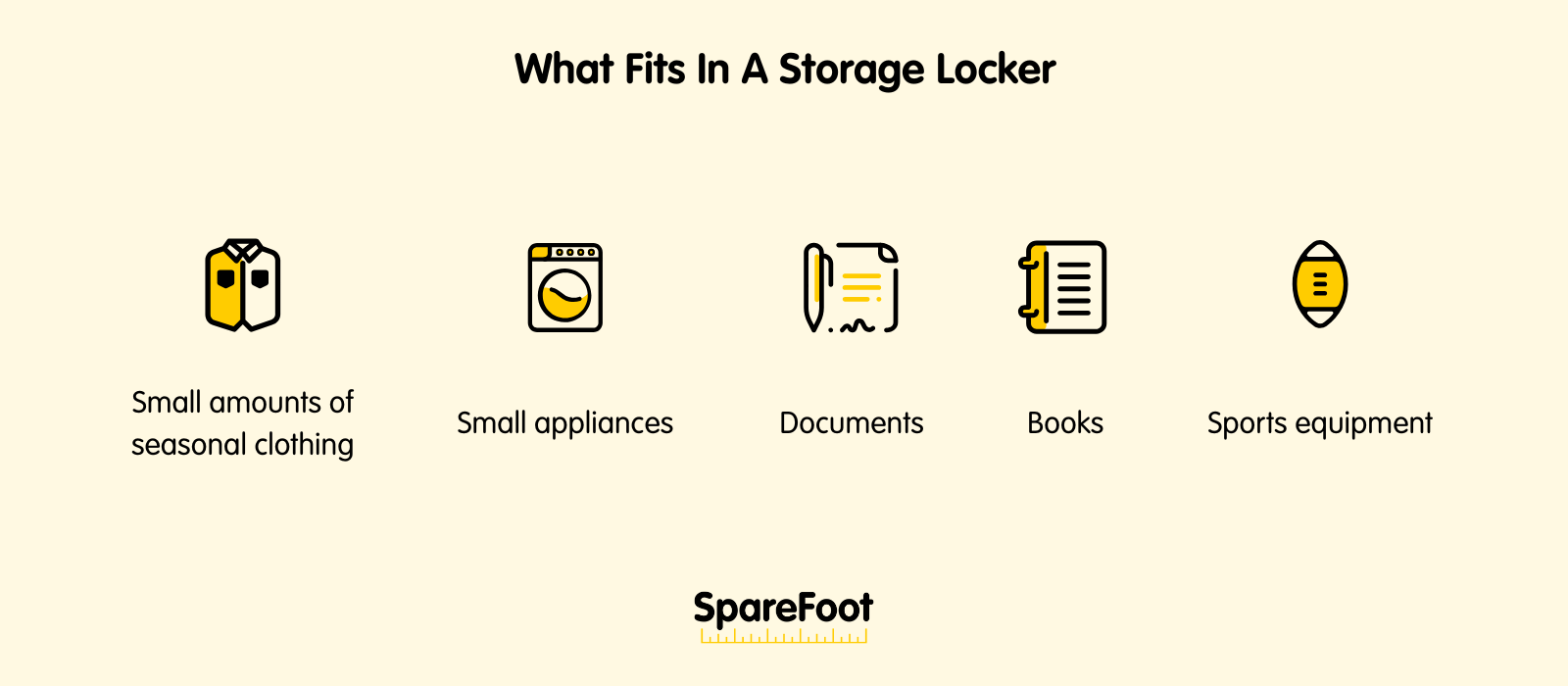
Here are a few things you might want to consider storing in a storage locker.
- Small amounts of seasonal clothing, or more clothes in vacuum sealed bags
- Small appliances
- Documents
- Books
- Sports equipment
How do I calculate how much storage space I need?
Cubic footage in a storage unit means nothing if you don’t know how much space your stuff takes up!
Calculating how many cubic feet you need for your stuff is an important part of the process. Let’s go over how to properly measure what space you need.
- Inventory your items. Make a detailed list of everything you plan on storing. Estimate how many boxes you’re going to use, and accurately measure the size of any pieces of furniture you want to store.
- Estimate floor space and volume. Make sure you account for any space you need to walk through the unit; walkway space can take up 10% to 15% of a storage unit’s floor space. Consider how high you can safely stack your boxes and account for any items with unusual or irregular shapes, as they’ll need more cubic space.
- Calculate. Add the cubic feet of any furniture to the cubic feet of any boxes you plan on storing, and compare it to the available space in different storage unit sizes. Allow for about 20% of free space to account for walkway space and any future items you may want to include.
Quick tips for estimating cubic feet:
- An average moving box takes up 1.5 to 3 cubic feet.
- A small appliance takes up 3 to 5 cubic feet.
You can use SpareFoot’s storage calculation tool to help you estimate square and cubic footage.
How do I find the right storage unit for me?
Most storage units are measured in square footage, but cubic footage is also important! Square footage gives you floor space, while cubic footage gives you the total capacity of a unit.
Make sure you accurately calculate these dimensions before you commit to renting a storage unit so you have enough space.
Looking for available storage unit sizes near you?
SpareFoot can help! Use our storage calculator tool to estimate how much space you need, or use our search tool to compare available units near you with the sizes you require.

Peter Lalush