The best way to store clothes is to organize, evaluate, and get rid of any that you don’t wear anymore. Let’s take a step-by-step look at how to start that process.
Clothes Organization: Evaluate and Sort Your Wardrobe for Storage
Before putting your spare clothes in storage, we recommend rummaging through your wardrobe for a quick update. Comb through your clothes for storage item by item, considering their condition, fit, and how often you really wear them. Be honest with yourself!
One of the best ways to store clothes without causing wear is to reduce the number of clothing items you’re storing. Assess what you left in that guest room closet or seasonal clothing storage unit last year and what actually got worn.
Learning from your personal history can help you decide what to keep handy and what to keep in your storage space. Donate, sell, or give away clothing you won’t wear to make room for more of the larger items and delicate items that you want to preserve.
Clean Your Clothes For Storage

Kmpzzz / Shutterstock
Storing dirty clothes is one of the fastest ways to wear out your wardrobe. Prepping your wardrobe for storage means more than just folding your clothes and packing them away — cleanliness plays a significant role in how well they retain their freshness. Before packing, clean your clothes, storage unit, and the plastic container or cardboard box you’re storing them in.
Every piece needs to be washed or dry-cleaned to remove dirt, stains, and odors—even your fancy cashmere items. Wait until they’re completely dry before you pack them, as any residual dampness can encourage mold or mildew growth.
Now that you’ve transformed your dirty clothes into a clean, dry wardrobe for storage, we can move on to the next step in our journey toward the best way to store clothes.
Choose the Best Storage Container For Seasonal Clothing Storage

Antoni M Lubek / Shutterstock
Plastic storage bins are ideal if how you store clothes is in a storage unit. If you’re storing them in your home, linen storage organizers might blend better than clunky plastic bins. Fabric organizers let the air circulate through your wardrobe, keeping it fresh.
Choosing the right storage container is the cornerstone of a successful long-term clothes storage plan. That said, there are plenty of options for any type of container, which can make us dizzy with choice paralysis.
To narrow our options down, let’s look at the advantages and disadvantages of each type of container. From plastic containers to storage bins to cardboard boxes, the best way to store clothes in a clothes storage unit typically depends on the item of clothing.
Cardboard Boxes
- Pros: Cheap and recyclable, suitable for short-term use.
- Cons: Absorbs smells and liquids, prone to mold growth, not very protective, and may attract bugs.
Plastic Bags
- Pros: Affordable and compact, excellent for quick transport.
- Cons: Traps and accumulates moisture, leading to mildew–not suitable for long-term clothes storage.
Vacuum-Sealable Storage Bag
- Pros: Space-efficient and suitable for seasonal clothing storage.
- Cons: Extended compaction can damage clothes, making them less efficient for long-term clothes storage.
According to Karina Toner, Operations Manager at Spekless Cleaning, vacuum-sealable storage bags are game-changers for short-term purposes, especially for storing bulky items. “When I was preparing for a long trip and needed to pack my winter clothes, I decided to give these bags a try,” Toner said. “I was amazed at how much space I saved by compressing my bulky sweaters and coats. Plus, when I arrived at my destination, my clothes were still fresh and protected from any potential moisture.”
Garment Bags
- Pros: Cotton garment bags are breathable, keep out dust, and are excellent for storing clothes long term, particularly items like suits, costumes, or special occasion dresses.
- Cons: Plastic garment bags can trap moisture, leading to mold or mildew growth.
Toner worked with a client who was moving to a new home and needed to pack up her entire wardrobe. Her suggestion was to use garment bags.
“She had a diverse collection of delicate fabrics and special occasion outfits that she was worried about wrinkling,” she said. “We suggested storing these items in breathable garment bags, which allow for proper airflow and prevent creases. Our client followed our advice and was thrilled with the results. She mentioned how easy it was to access her clothes when she needed them without having to worry about ironing out stubborn wrinkles.”
Plastic Containers
- Pros: They keep out pests, humidity, dust, and water, making them one of the most efficient ways to store clothes, especially long-term.
- Cons: They can be expensive and prone to warping or cracking if overpacked.
Wardrobe Boxes
- Pros: Ideal for garments that need to be hung up, they allow airflow throughout the garment.
- Cons: Like cardboard boxes, they can absorb liquid and odor and are only good for a few uses.
NOTE: Always select high-quality containers for your long-term clothes storage. It might cost more upfront, but it will protect your clothes from damage, making it a sound investment.
Clothes Organization Methods For Long-Term Storage
Kostikova Natalia / Shutterstock
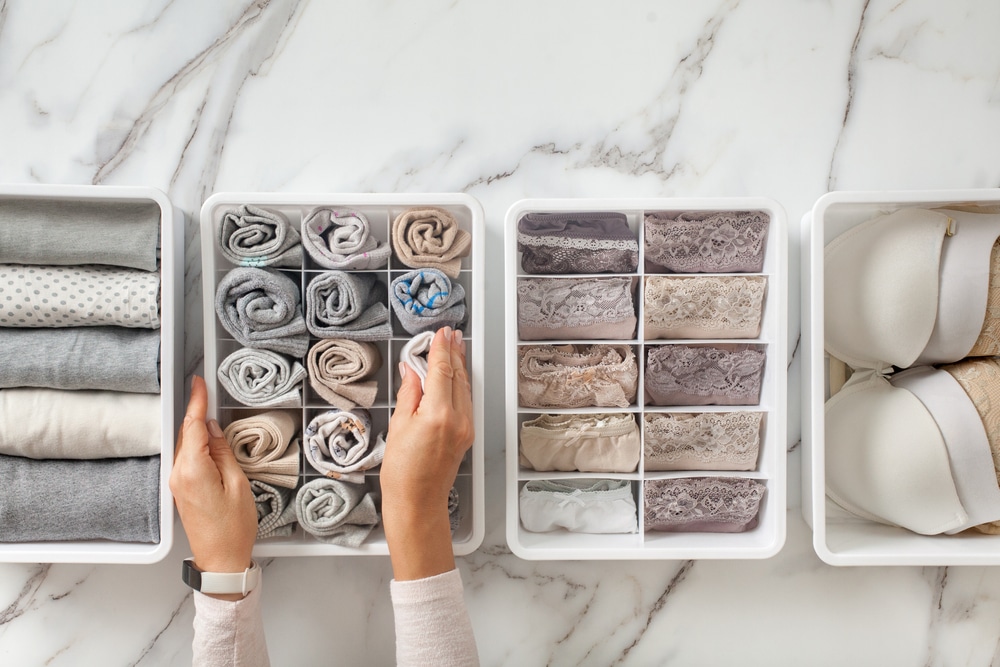
Proper packing and organizing of your clothes maximize space and maintain their quality. Here are some efficient strategies for arranging your wardrobe:
Style Folding Clothes By Type: Is it Better to Store Clothes Hanging or Folded?
A simple fold is adequate for storing bulky clothes like shirts, pants, and sweaters, proving you focus on reducing wrinkles and maximizing space. For delicate items, tucking in some tissue paper or soft cloth can help to avoid creasing.
Most of us aren’t strangers to the effects poor storage can have on our wardrobes. An inadequate folding job that lasts a whole season can alter the clothing’s shape.
While folding is better for some items, hanging is ideal for other garments:
- When to fold clothes for storage: Fold delicate items, including any hand-knitted sweaters or cashmere items. We suggest adding some acid-free tissue between these special items for extra protection. Denim jackets, shirts, and jeans should also be folded, as hanging can stretch random areas of denim fabric over time.
- When to hang your wardrobe for storage: Outerwear stays crisp for longer if you hang it up in your storage closet or on a rack in your clothes storage unit. That fly suit, stylish puffer, delicate blouse, vintage leather jacket, or peacoat will retain its form for longer if it’s carefully hung up. We suggest flocked velvet or wooden hangers; avoid wire hangers if possible. For cocktail dresses and other delicate items, we suggest hanging them in a clothing bag.
- When you can fold or hang clothes for storage: Casual items such as T-shirts and cotton tops can either be folded and kept in a storage container or hung up in a closet or on a storage rack.
Employ Creative Ideas and Space Saving Techniques
Another great tip is to use shower caps or plastic bags for shoes to safeguard your clothes from contact with the soles of your shoes. This adds a protective layer, effectively preventing dirt and debris from soiling your clothes and keeping them in immaculate condition.
Toner, a seasoned professional in space-saving techniques, shares her unique but effective approach to strong clothes in containers, drawers, chests, or dressers:
“Roll instead of folding: It felt counterintuitive to me at first, but it turns out, rolling clothes instead of folding them can save space and reduce wrinkles,” she said. “This technique is particularly useful for T-shirts, jeans, and other casual wear.”
Label Containers For Easier Clothes Organization
Whether you’re storing your clothes in the basement, attic, or guest room closet or stashing your out-of-season clothes in the family clothes storage unit, labeling saves time and stress when you’re looking for a specific item of clothing later on.
Organize your clothes by type, season, or frequency of use. If you’re storing clothes for multiple people, another option is to store each person’s clothing separately. Label it according to who it belongs to and the season or type of clothing.
The Best Storage Locations: How to Store Clothes in a Storage Unit
The best way to store clothes long-term starts with choosing the right storage location. Your clothes and shoes require a cool, dry, dark, and well-ventilated area, away from direct sunlight or excessive humidity.
Garages and attics might be convenient, but the temperature extremes and lack of ventilation can damage your clothes if they’re kept there.
We suggest stashing your clothes in an under-bed storage or climate-controlled storage unit. Storage facilities maintain stable temperature and humidity levels, making a clothes storage unit the best way to store clothes in long-term storage.
When it comes to storing shoes, it’s equally important to guard against pests and mildew.
- Deter pests by stuffing shoes with cedar chips or cedar balls instead of using mothballs.
- Tackle mildew with silica gel packets or cedar shoe trees that absorb moisture and help maintain your shoe’s shape.
Remember, like all items of clothing, the most efficient way to store shoes involves careful preparation, protection, and location selection.
The ‘cool, clean, dark, and dry’ rule is your go-to guide for successfully storing your wardrobe long-term.
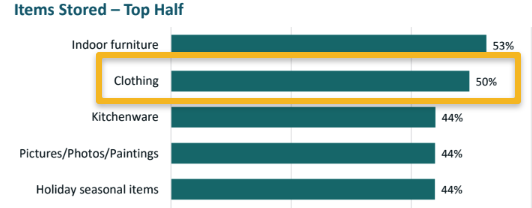
Interesting Fact: Based on a 2023 Demand Study that the Self Storage Association conducted, data collected over 2022 shows that at least half of the consumer storage unit renters store clothing in their units!
Keep in mind that some clothes are better hung up while others will last longer folded and kept in plastic boxes with cedar chips to absorb moisture before it can cause mildew and mold. For tips on how to store unused clothes hangers, scroll down to our helpful FAQ section.
Maintaining Your Clothes Storage Unit with Regular Check-Ups
Extending the life of the clothes in storage requires more than just proper packing–you’ll need to perform routine storage maintenance as well.
- Periodically Inspect Stored Clothes: Vigilance is key in clothing storage. Keep an eye out for signs of damage, pests, or moisture during routine inspections of your stored items, and swap out any cedar chips from the bottom of your plastic bins with some freshies.
- Rotate Seasonal Items: As the seasons change, a seasonal rotation of those special items in your clothes storage unit is unavoidable. Swapping out some of the seasonal clothing in storage with the current items in use helps to maintain freshness, prevent damage, and curb mildew buildup. Consistent upkeep will keep your clothes in prime condition for the long haul.
The Best Way to Store Clothes Long-Term: Finding the Ideal Clothes Storage Unit
Organizing your wardrobe for storage starts by employing clothes organization methods to assess each item and how well it fits, how often you wear it, and if you should keep it or give it away, donate, or sell it. Be sure you clean your clothes before you store them, drying them thoroughly before packing them into plastic containers.
Line your plastic containers with cedar chips to absorb moisture, and be sure you’re using containers that come with tight-fitting lids to keep out dirt and moisture.
Even the tightest fitting containers can sweat, so you’ll have to check on them from time to time. We suggest avoiding basement, attic, shed, and warehouse storage options and either storing your clothes under the bed or in a climate-controlled storage unit.
Whether you’re hanging your clothes or holding them in a container, storing your clothes in the wrong environment can render all the proper steps useless, especially if they’re exposed to pests or mold. Enter your zip code, city, or address into our handy Sparefoot storage search tool, and you’ll find all the best storage options in your area.
With more than 20,000 storage facilities in all 50 states, SpareFoot offers the nation’s largest selection of storage options in one place. View our results based on your chosen search parameters, and you’ll find the best place to store your clothes in no time.
Storing Clothes FAQ
How to Store Clothes in a Storage Unit Long-Term?
Wash and dry all clothes for storage before packing them into air-tight containers lined with cedar chips to absorb moisture. Outerwear should be hung, and we suggest storing all clothes in a climate-controlled storage unit.
Is it Better to Store Clothes in Bags or Boxes?
Both cardboard boxes and plastic bags can hold moisture, leading to mildew formation. We suggest storing clothes in air-tight plastic bins with cedar chips to deter pests and moisture. Delicates that are sensitive to wrinkling should be hung up.
Is it Better to Store Clothes Hanging or Folded?
While hanging is better for outerwear and wrinkle-prone delicates like silk blouses and linen dresses, it's best to fold denim jeans and jackets and knitted sweaters to prevent the stretching in random areas that can occur when they’re hung up.
How to Store Clothes Hangers?
First, separate your hangers by type: wood with wood, plastic with plastic, and the same goes for wire and velvet hangers. Stack your hangers by type in groups of 10, wrap them with a rubber band, and stash them in a box in your storage area.
Is it Better to Fold or Roll Clothes for Storage?
Folding is the best way to store bulky clothes for the long haul to keep them easily identifiable. Rolling is ideal for short-term storage, such as packing for a flight. Rolling clothes saves space but causes wrinkles and can change the shape of clothes if rolled up long-term.

Michael Ta’Nous
Michael Ta’Nous is a full-time writer who works and lives with his wife in Taos, New Mexico. “Mikey” spent his early twenties living either out of a van as a touring musician or out of a backpack on motorcycle trips writing from cafes–these rigorous adventure years polished him into a master packer. In addition to managing storage units full of catering supplies and outdoor gear professionally, Michael has used storage units as a band rehearsal space and a motorcycle garage.