Planning a major cross-country relocation this year? You’re not alone. More than 26.5% of Americans are expected to move in 2025, according to the latest data from the US Census Bureau. Whether you are relocating for a new job thousands of miles away, moving closer to family or friends, or because you’re ready for a refreshing change of pace, prepping for a big move can seem overwhelming.
You’ll need a solid plan, so feel free to use ours to create your moving across the country checklist. Our detailed cross-country moving tips and guidelines will help you organize a seamless long-distance relocation.

1. Visit Your New Hometown
You’ve already done your preliminary research. Before moving across the country, however, an in-person visit to your chosen city can be incredibly informative.
While you’re in town, consider a leisurely stroll through your new neighborhood to meet your new neighbors and gain a sense of the environment and energy of the community. Visit area shops. Request tours of homes in areas where you think you’d like to live. Get a sense of the local climate and changes in weather throughout the day.
Even if you have only a day or two to make the trek, a preparatory visit to your new town can make a big difference in how comfortable and prepared you feel when it’s time to start your move.
2. Do Your Financial Due Diligence
Moving across the country can seem overwhelmingly expensive, with fees easily creeping into the tens of thousands of dollars. Let’s make sure you’ve done your financial due diligence to prepare.
Gather financial and personal documents, such as tax records, banking statements, birth certificates and passports, and keep them handy. You may need them for everything from managing utilities to registering for various services in your new location.
Typical expenses to consider include:
| Moving Expense Category | What This Includes |
|---|---|
| Moving expenses | An estimate of your total, end-to-end moving expenses |
| Emergency fund | Extra cash on hand to cover unexpected expenses, such as unexpected delays or property loss |
| Cost of living | Includes monthly rent or mortgage payments, and food, entertainment, utilities, transportation and healthcare expenses |
| Insurance and fees | Includes move-in deposits, insurance, parking or other required usage fees |
| New home setup | Includes furnishings, decor and any major home modifications |
3. Create a Detailed Moving Budget
A move this big needs a well-planned budget. Expenses add up quickly, with fees easily creeping into the tens of thousands of dollars. As you plan how to move across the country, it’s important to be financially prepared for every expense you may encounter along the way.
Start by making a list of expenses you expect to incur as part of your move. It’s OK if you can’t think of everything right away. If you start early, you’ll have time to flesh out your budget as the details of your trip evolve.
Here’s a list of common moving expenses to get you started:

Finally, be sure to leave enough in your budget to order in or grab takeout for your first few nights in your new place. After a long day of moving, you probably won’t feel like cooking.
4. Find Your New Housing
You’ve picked your new city. Now it’s time to choose your new home. Start by researching the city and narrow your search to areas you think you’d like to live. Websites like Zillow, Realtor.com, online forums, and local real estate listings will help you get a sense of the costs of living, general expenses and what it’s like to live there. Virtual tours and video calls with real estate agents can help you further refine your options.
Once you’ve identified a few promising spots, plan a trip to tour the homes in person if possible. This gives you a firsthand feel of the place and lets you check out the neighborhood. Consider your budget and what features are non-negotiable, like pet policies, parking, or proximity to work. Have your rental or mortgage documents with you in case you decide to make an offer.
Local services and amenities to consider include:

5. Research and Choose Your Moving Solution
Among the biggest decisions when moving across the country is determining how you’ll get there.
If you are traveling light, you may opt to pack and move your belongings on your own. If you are moving several rooms of belongings, a private or professional truck rental service will be a better fit.
Moving Services
If you plan to use a moving service, do your research and choose a moving service that best meets your needs.
PODs will bring a shipping container to you, to pack at your own pace. After 30 days they will pick it up and deliver it to your new home. They price based on size, location, time and distance.
Professional cross-country movers typically calculate costs based on multiple factors, such as square footage, rooms, distance, time, packing, storage and more, so consider that when choosing your service.
Self Move
If you plan to move yourself, decide if you will rent and drive a moving truck yourself, ship your possessions and fly to your location, or sell off possessions and drive your own vehicle.
Post-Move Storage Solutions
When you arrive in your new town, you may need to store some items for a while as you settle in. Use SpareFoot to find temporary self-storage solutions in your new hometown during the move-in process.
6. Schedule Your Vehicle Transport (If Applicable)
If you are shipping a car, boat, motorcycle or other vehicle cross country, choose a transport service and schedule your transportation as early as possible during your preparations. Allow a couple of months if possible, to ensure the service you select is the right one for your schedule and budget.
The extra time will allow you enough time to prep your vehicle for shipping, schedule pickup and delivery, address any unexpected issues that may arise, or change service if needed.
7. Plan Your Travel Arrangements
Driving
Your mode of travel will most likely depend on the size and time of your move. If you are taking your own car or renting a truck, map out your route, book any necessary accommodations in advance and compile a playlist of your favorite road tunes or audiobooks to keep you entertained.
Don’t forget to inspect your vehicle’s condition—oil change, tire tread, tire pressure, fluids—before hitting the road, to ensure safe travel.
Flying
If you are flying, book early to score the best deals and your preferred seat. Review your airline’s baggage policies, especially if you’re checking a lot of bags. It might be worth shipping some belongings separately to avoid extra baggage fees.
On the day of your flight, arrive early, stay hydrated, and keep your ID, boarding pass, and any moving-related paperwork handy.
8. Declutter Your Space Before Packing
We surveyed more than 1,000 Americans, and 1 in 3 respondents reported it takes them a week or longer to declutter a space–so the sooner you can get started, the better.
Take inventory of everything you own and decide what to keep, donate, sell, or toss. Take only what truly matters to your new home. This literally lightens your load for the move and provides a fresh, clutter-free start in your new space.
It’s also a great opportunity to help others by donating items in good condition, and selling items you no longer need could net you extra cash for the move.
9. Pack Your Belongings Efficiently
Proper packing before you leave means trouble-free unpacking when you arrive.
Wrap tight, pack light
It’s a good rule to wrap everything you pack to cushion items from breaking while in transit. You should also avoid overpacking a single box.
A box that’s too heavy to lift will have to be properly repacked before it can be loaded, or worse–the box could break and your item could be damaged. Any of these scenarios could cost you valuable time.
Pack heavy items separately
Heavy items should be carefully wrapped with enough padding to prevent breaking, and packed in individual boxes. Heavier items that can be packed with other items should be wrapped and placed in the bottom of the box.
Pack and label boxes by room
Organize the contents of each box by room, and label each box with the name of the room in which its contents belong. This allows you or your movers to place each box in its corresponding room as they are unloaded, making it effortless to unpack and organize your new home from room to room.
10. Forward Your Mail and Transfer or Set Up New Utilities
Your moving to-do list should include a reminder to set up your new address and forward your mail through USPS, to ensure you don’t miss any important correspondence during or after your move. You can do this online at USPS.com or at your local post office.
Also, contact your current and new utility providers a couple of months before you move to transfer or set up utilities at your new home before you arrive, and to discontinue those at your current home after you move. Services include electricity, water, gas, internet, and any other services you have now or will need. Contact your current providers to schedule disconnections and your new providers to schedule start dates.
11. Set Aside a Travel Bag With Essentials
Moving cross country can take a day by air, or several days by car, so a travel bag filled with essentials will be a lifesaver. If you are flying, make sure your bag meets carry-on size requirements to avoid having to check it at the gate.
Here are some suggested items for your travel bag:
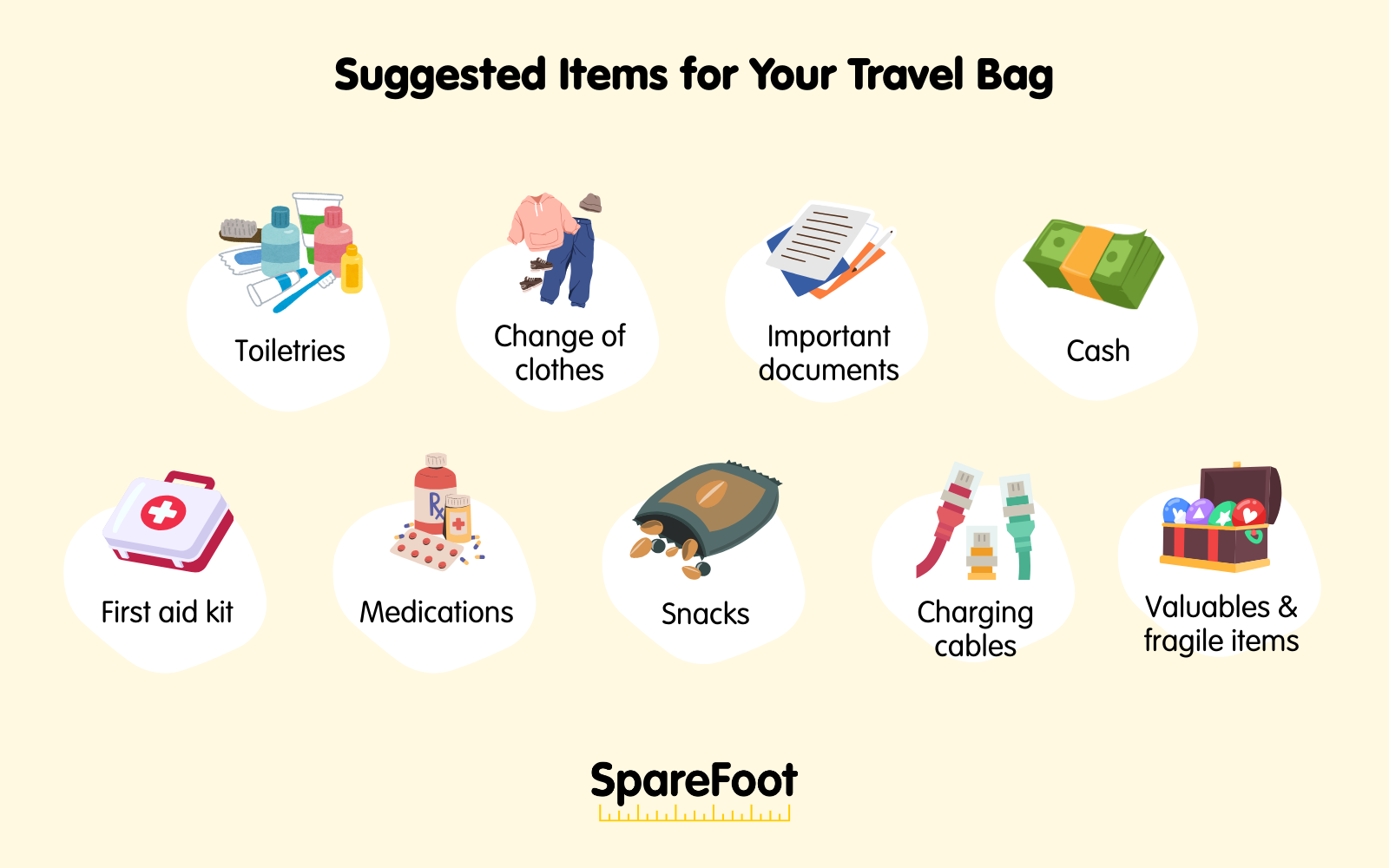
Think of this bag as your go-to survival kit for the move. Having these items handy will save you from digging through boxes and ensure you have everything you need with you when you need it.
12. Schedule a Move-Out Cleaning
Before leaving your old home, schedule a professional move-out cleaning or plan enough time to do it yourself. A thorough cleaning can ensure you get your security deposit back if you have one, and is a nice gesture that will leave a good impression on the new occupants.
Professional Cleaners
If you choose a professional cleaning service, schedule the cleaning close to your move date, and ideally after your belongings have been moved out of your old home.
DIY Cleaning
If you opt to do it yourself, focus on deep cleaning areas like the kitchen, bathrooms, and carpets. Clean appliances, wipe down surfaces, dust baseboards, ceiling fans and light fixtures, and vacuum or mop floors. If you’re renting, check your lease agreement for any specific cleaning requirements to ensure you meet the terms.
13. Hand Over Your Keys and Start Your Journey
When all your to-do items are finalized, and you are packed and ready to go, it’s time to hand over your keys to the landlord or new owners. Walk through your old home one last time to make sure you haven’t left anything behind.
If you have a landlord, check with them to confirm any necessary paperwork is completed. Leave any final details for the new occupants where they can find them, such as appliance manuals, keys or security codes. A brief welcome note can be a nice gesture to ensure a pleasant transition.
When you are satisfied everything is in order, you’re ready to hit the road and begin your new adventure.
14. Communicate With The Movers During the Trip (If Applicable)
If you’re using professional movers, give them your mobile number and keep their contact information readily available. Confirm pickup and delivery dates and keep track of your shipment’s progress through the moving company’s point of contact.
Be sure to provide your movers with any special instructions or updates to ensure your belongings are handled properly, and respect their expertise. Allow them to do their job and remain on the best possible terms with your crew.
The key to how to move across the country successfully is communication. If any issues arise, promptly and politely bring them to your movers’ attention to avoid delays or complications.
15. Save All of Your Moving Receipts
Oftentimes these can be claimed as deductions on tax return.
It’s wise to save every receipt related to your move. These receipts may be useful for tax deductions or employer reimbursements, and they will help you track your spending to remain within your budget during and after your trip. You may also need them for insurance claims, returns or proof of purchase should you need to file a warranty claim.
Keep all receipts related to your moving, storage and cleaning services, travel, lodging, and meals. An organized file folder will be helpful, and we recommend creating a digital folder to store scanned copies of your receipts for easiest access.
16. Settle In and Explore Your New Hometown
After you’ve arrived, unpacked, and rested, it’s time to settle into your new home. Take a stroll or drive around the neighborhood, introduce yourself to neighbors and explore area amenities. If you are moving for work, find your new office and try a few different routes to get there.
Local community groups or online forums are great ways to meet new people and learn about events. Acquainting yourself with local parks, shops, restaurants and people will help you adapt and connect with your new community.
SpareFoot Is Here To Help With Your Cross-Country Move!
Figuring out how to move across the country doesn’t have to be grueling or overly stressful. Keep these cross-country moving tips handy to help make your relocation easy, efficient and productive.
Ready to start planning your cross country move? Explore our comprehensive moving and storage services to find a solution to fit your needs. Whether you’re looking for expert moving advice or help finding the right storage unit, Sparefoot has you covered.

Lori Wertz