
KEY TAKEAWAYS
▸ Moving overseas is exciting, but costs can quickly add up.
▸ Properly research how much moving and visas will cost before you move, and consider renting a storage unit to store anything you can’t get rid of.
▸ Downsize what you’re bringing with you by selling, donating, discarding, and storing items that aren’t necessary to move with.
Taking a gap year from college? Working remotely and looking to relocate? Just want to see the world from a new perspective? These are just some reasons you might want to move to another country, but as magical as the idea may be, the costs can add up pretty quickly. Thankfully, there are just as many ways to cut down on those costs and save on your move.
If you’re serious about wanting to move overseas, make sure you’re prepared for the costs of visas, moving, packing, storage, customs, and international shipping before you start the process. In this article, we’ll help you make sense of those costs and give you the tools to budget, plan, and save money while preparing for a big international move.
What Costs Do I Need to Pay Attention to When Planning an Overseas Move?
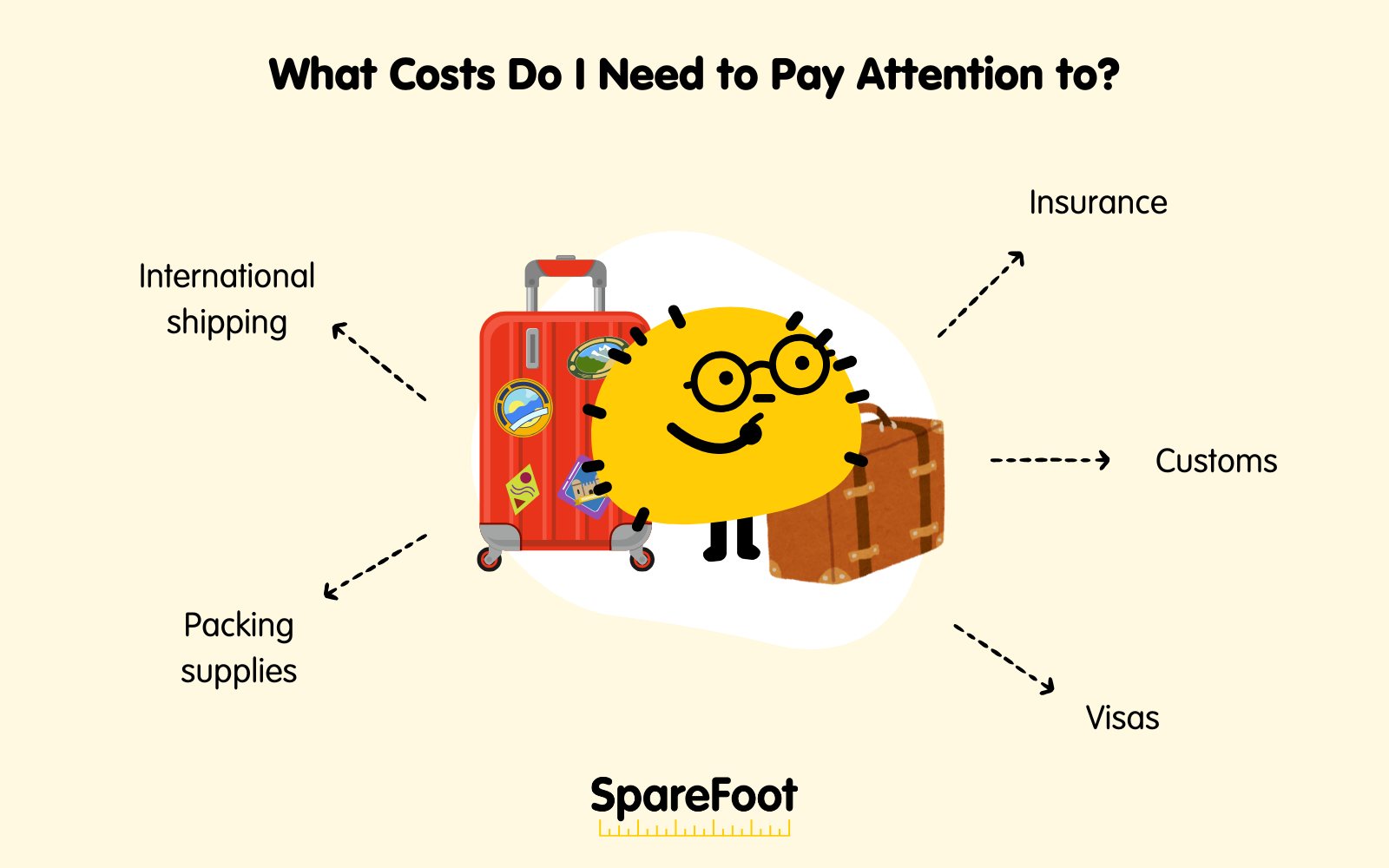
Moving costs can add up quickly, but often depend on where you’re moving to and how far. Here are some of the most important costs to consider.
- International shipping: Anything you can’t pack into a suitcase or backpack will need to be shipped to your destination by sea or air freight. Sea freight can take some time, but is more cost-effective than air freight. You may want to pay a little bit extra for air freight, however, if you need your belongings moved as quickly as possible.
- Packing supplies: The more stuff you move with, the more you (or your mover of choice) will need to spend on boxes, padding, and other materials for packing. You can cut this cost by downsizing or storing any belongings you don’t need to bring with you.
- Insurance: The farther you move, the more likely your belongings are to be damaged in transit. Investing in moving insurance will help you recover the cost of those belongings in case they don’t arrive in the best shape.
- Customs: Import duties, tariffs, and other taxes will apply to any items you’re bringing into your new country with you, whether you’re carrying them with you or shipping them. Again, downsizing will help you cut this cost.
- Visas: To reside in another country for an extended length of time, you’ll need a visa, and to obtain a visa, you’ll need to pay an application fee, plus anything you’d be spending on legal representation to help you out.
The amount you can expect to pay to move abroad will vary quite a bit based on how much you’re bringing with you–for example, the total cost of moving from North America to Europe can range from $3,500 for a small one-bedroom home to $17,000 for a five-to-six-bedroom home. You can expect these ranges to go up slightly when budgeting for other continents, depending on their distance from your home.
There are plenty of ways to cut down on these costs, such as downsizing and getting rid of belongings you don’t need. However, if you have belongings you want to keep but don’t want to bring with you, it may be worth investing in a storage unit to keep them secure while you’re overseas.
How Can a Storage Unit Help Me Save Money on An Overseas Move?
As we said before, moving abroad can cost you from $3,500 to $17,000, depending on how much you’re moving. However, renting a storage unit can cost you an average of $75 to $185 a month, significantly cutting down your moving costs if you want to secure some of your stuff without bringing it along.
A storage unit is perfect for a digital nomad, a temporary relocation, or a move with uncertain travel plans. Using one will give you some extra flexibility with your stuff and allow you to keep them in a secure place as long as you’re overseas.
How Should I Prepare for an Overseas Move?
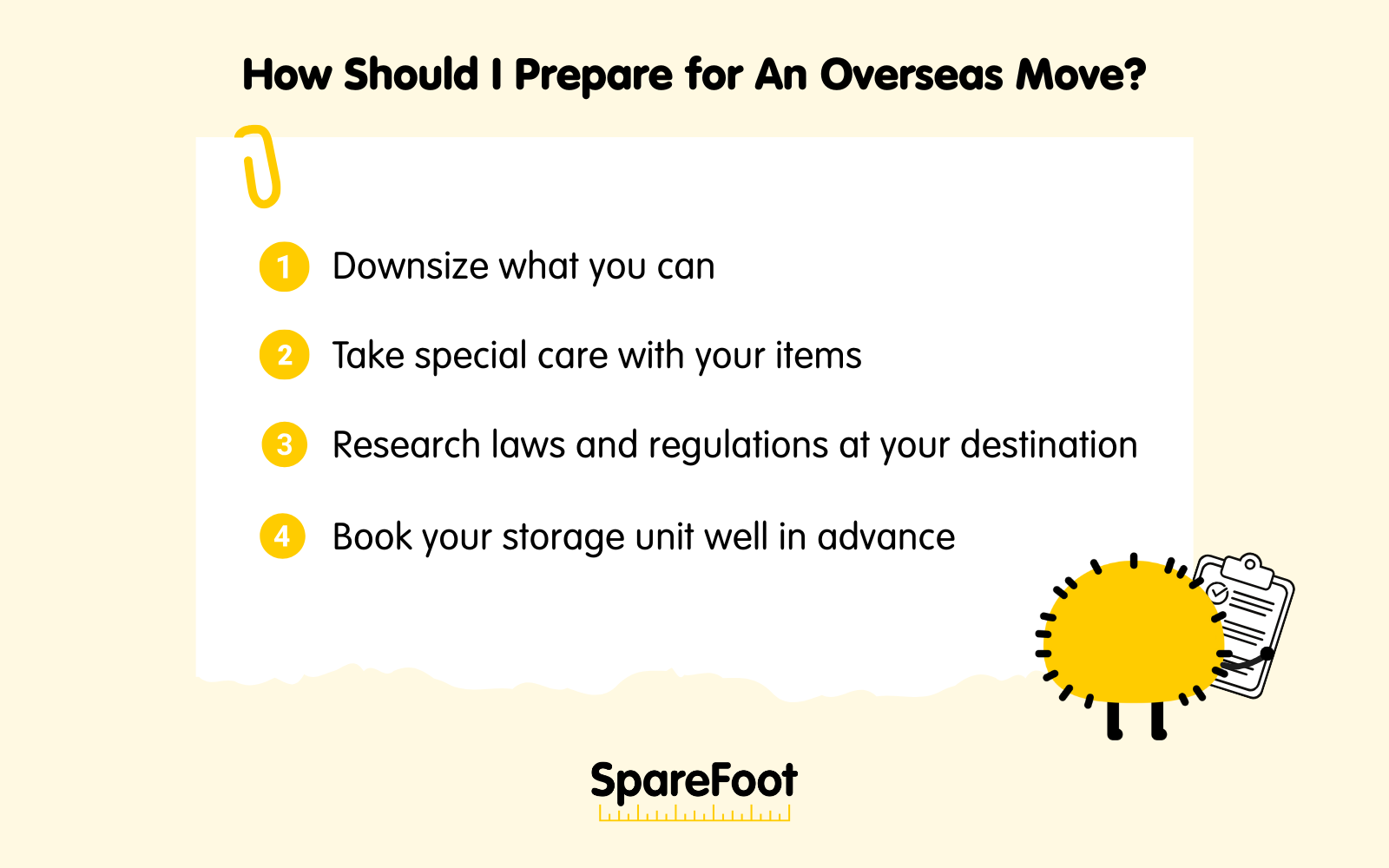
If you’ve calculated costs and have decided an international move is the right decision for you, there are plenty of steps you should take before you relocate. Let’s go over a few of them.
Downsize What You Can
Before making any move, you should sort your belongings into categories–start with what to take with you and what to leave behind, then separate the latter category into what you want to store, sell, donate, and throw away. Make trips to resale and donation centers and keep documentation so you can deduct donations on your taxes. Schedule any free donation pickups you need to, and if all else fails, hire a junk hauling company to take any discards off your hands.
From here, use the volume of what’s left to determine what size storage unit you need, then find a self-storage facility near you that offers the features you require. SpareFoot’s easy search tool can help you compare options near you and identify the exact storage solution that best fits your belongings.
Take Special Care with Anything You’re Moving
Whatever you’re bringing with you on your move will need to be packed properly. Start with your most valuable and important items, as you won’t want to leave them behind, and take special care with storing and digitizing any important documents, such as passports. Make an itemized list of each of your belongings so you can triple-check at every step of the process and be sure you don’t forget anything.
Figure out what you can bring in a suitcase or backpack on your trip, as this will help you save on space and moving costs. If you’re packing a lot of casual clothes, try rolling them up to save space and fit more in your suitcase.
Research Laws and Regulations at Your Destination
Certain countries have certain import taxes, as well as lists of certain items you won’t be allowed to bring into the country with you. These lists differ based on where you’re traveling, so do plenty of research before you move and make sure you don’t have any illegal items. This will also help you budget for any import taxes so you don’t get hit with any surprise costs.
Book Your Storage Unit Well in Advance
Speaking of surprises, you may end up out of luck if you wait too long to book a self-storage unit for storage. Plot out the best date for you to move your belongings into a unit, get in touch with the storage facility managers, and make your rental as far in advance as possible to save money and be sure you get the unit you want.
Simplify Your Move, and Save Some of Your Moving Budget with SpareFoot
Moving overseas is an exciting idea, but the cost of getting a visa and bringing your life with you can be a harsh reality check if you’re not prepared. Luckily, renting a self-storage unit will give you a safe, secure place to keep some of your important belongings while cutting down on your moving costs. If you’re a digital nomad or a young traveler who’s always on the move, a storage unit back in your country of origin will give you extra flexibility and peace of mind with your goods.
Budgeted your move? Ready to nail down a storage unit that meets your needs? That’s what we’re here for! Use SpareFoot’s built-in storage search tool to find facilities near you, and narrow your search by your budget and the features you need to find your perfect match.
While you may be tempted to store, lock, and forget about your items, it’s best practice to have someone you trust check in on your storage unit once in a while if you’re far away from it. If you can regularly make it back into the country, you can make these stops yourself and check to make sure your belongings are clean and pest-free.
The main risk of using a storage unit while abroad is not being able to regularly visit your unit to keep your items clean and organized. Regular check-ins by a trusted friend can keep this from becoming an issue.
It’s best practice to only bring what you need to cut down on costs. Furniture and other large objects should only come with you if you plan on fully re-furnishing a home abroad. Only bring clothes suited to the climate and style of your destination, and make a list to figure out everything you own that you could save money by purchasing new ones once you arrive.
Renting a storage unit on a short-term basis is a viable solution for storing belongings while spending a shorter time abroad. You’ll most likely be bringing less with you and storing less, so look into smaller units.
Paying for a longer rental period up front will often save you money on a storage unit, but some units do offer discounts to college students with valid IDs. There aren’t discounts specifically for travelers, but long-term storage rental can still save you plenty of money over a month-to-month rental.
Depending on how much you’re leaving behind, different sizes will suit different movers’ needs. For example, if you lived in a one-bedroom apartment before your move, a 10’ x 10’ unit will fit most of your belongings and furniture. Making a list and taking stock of what you plan on storing will help you identify the size you need–choose a slightly larger unit so there’s room to move around and organize it.

Peter Lalush