

KEY TAKEAWAYS
▸ Marietta ranks as one of the safest areas in metro Atlanta. Strong communities, engaged neighborhood associations, and active law enforcement make this suburb ideal for anyone seeking a comfortable and secure lifestyle.
▸ Reasonable cost of living makes Marietta an affordable alternative to Atlanta. Median home prices are, on average, 10% lower than its larger sister city.
▸ Living in Marietta, GA puts you in proximity to abundant amenities. Highlights include top-rated schools, diverse cuisine and entertainment options, and easy access to outdoor recreational activities.
▸ Marietta offers four distinct neighborhoods that cater to different lifestyles. East Cobb appeals to families seeking great schools, historic Marietta Square offers walkable urban living, West Cobb boasts affordable new construction, and Sandy Plains features established homes and quiet living.
▸ The local economy is healthy. Marietta’s job market is strong, supported by major corporations, aerospace manufacturers, healthcare companies and small businesses.
If you are considering a move to the greater metro Atlanta area, you may be wondering: Is Marietta, GA safe? The answer is yes. Marietta is a safe and welcoming family-friendly suburb with historic charm that offers a high quality of living, low crime rates and plenty of amenities for every lifestyle.
Safety is more than just crime stats. It’s also reflected in how at home you feel, the affordability of your cost of living, and how welcomed and connected you and your family are with your neighbors and communities. Marietta offers all this and more for various lifestyles and needs, and for these reasons and more is consistently ranked one of the best places to live in the US.
This comprehensive guide will help you discover what makes Marietta the destination of choice for families, professionals and retirees seeking their next home in the greater Atlanta area.
What Makes Marietta, GA Feel Safe: Low Crime, Strong Communities, and Excellent City Services
Marietta excels in building strong, friendly community connections that bring residents and locals together. Active neighborhood associations organize regular meetings and crime watch programs that maintain direct communication with local law enforcement, creating real safety for residents.
The family-friendly atmosphere is palpable throughout the city, which boasts excellent schools and educational opportunities, robust parks and recreation programs, and a wealth of sports and activities for kids. It’s common for neighbors to know each other by name and develop bonds that support working together to keep their neighborhoods safe.
Marietta’s well-maintained infrastructure also reflects the city’s commitment to safety and security. Roads, utilities, and buildings are kept in good working order. Public spaces are kept clean, parks are cared for, and city services and local government are responsive and proactive.
If you’re active, there are plenty of things to do in Marietta, Georgia. The city radiates a small-town feel, with the benefits of big-city access. The historic downtown square is a walkable district packed with boutiques, restaurants and specialty shops, and local business owners know their regular customers by name. If you crave the big-city feel in the big city itself, Atlanta is just a 20-minute drive from town.
Diverse Living in Marietta, GA: Get to Know the Best Neighborhoods for Different Lifestyles
Living in Marietta, GA comes with its choice of four distinct neighborhoods, each offering different lifestyles.
East Cobb: The Suburban Family Haven
For those asking, “is Marietta, GA safe for raising kids,” the East Cobb neighborhood is worth more than a little consideration. This community features highly rated public schools, quiet subdivisions and plenty of parks and recreation. You’ll also find abundant shopping and dining here.
Historic Marietta Square: Walkable Urban Living
Young professionals, retirees and solo types may enjoy the Square’s lofts, townhomes, and historic houses, which are within easy walking distance to restaurants, museums, festivals and entertainment. You’ll also find older and renovated homes and smaller multifamily dwellings cradling the area’s vibrant central square.
West Cobb: Affordable New Development
First-time buyers, renters and young families seeking spacious affordability often gravitate to this cozy, developing community. West Cobb features newer planned communities, shopping centers, and family-oriented recreation, parks and activities. West Cobb also offers very good schools and lower cost of living in Marietta, GA than those encountered in the East Cobb area.
Sandy Plains: Peaceful & Established
Retirees, families and long-time locals who prefer a slower pace and quieter residential lifestyle are often drawn to this laid-back ‘burb. Established homes on larger lots peek through mature trees. This area has a settled character that dates back several decades, with lower traffic, density and activity than the other neighborhoods.
Cost of Living in Marietta, GA: What to Expect
Housing Costs
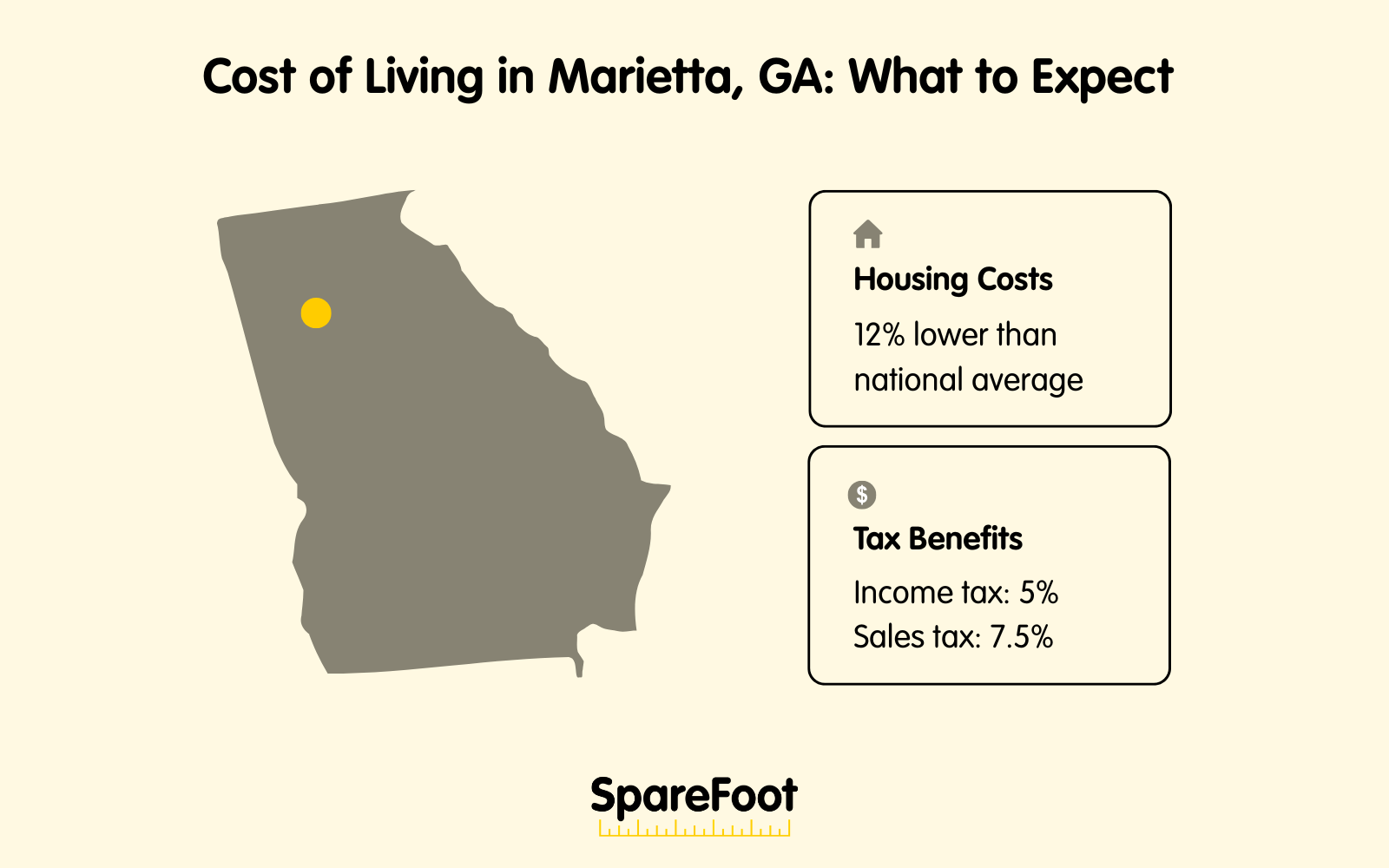
The housing cost of living in Marietta, GA is quite affordable, compared to the national average. In 2026, housing costs in the area remain 12% lower than elsewhere in the US. Home prices vary by neighborhood, with high-demand areas like East Cobb and the Historic Square Area commanding premium prices between $500,000 – $700,000+, while West Cobb and Sandy Plains offer more affordable home prices that start around $415,000+.
Marietta’s rental market starts around $1,200 per month for one-bedroom apartments near the square, rising to $1,400 – $1,600+ per month for East Cobb. Two-bedroom apartments across Marietta start at $1,600+, depending on location, and three bedroom rentals hover around $2,200+ per month. Property taxes run approximately 1% of assessed value annually, which is lower than many Northwestern and Midwestern states. HOA fees vary significantly depending on location, from $100+ monthly for newer communities to $300+ annually for established areas.
Everyday Expenses
Everyday expenses such as groceries, dining out, gas and transportation, and utilities are similar to national averages. Expect prices for these goods and services to reflect the overall cost of living for the surrounding community in which they’re provided.
Georgia Tax Benefits
Georgia has a flat state income tax of just over 5%. Sales tax in Marietta combines state, county and local rates for a total of approximately 7.5%. Those moving to the area from states with higher taxes will enjoy greater overall savings, especially combined with the overall affordability of the area.
What You Get for Your Money
One of the biggest advantages of living in Marietta, GA is the amount of square footage you get for your money, especially compared to other markets in the metro Atlanta area. The cost of living in Marietta, GA offers an affordable, high quality of life for less than you would pay for a comparable experience in Atlanta proper.
Things to Do in Marietta, Georgia: Attractions, Activities and Entertainment

Historic Marietta Square
Marietta’s walkable historic square is flanked by restaurants, museums, and historic buildings. On weekends the square hosts a Saturday farmers market, as well as seasonal events and festivals, art walks and live music.
Outdoor Recreation & Nature
Nature lovers will enjoy area trail systems and parks. Kennesaw Mountain National Battlefield Park is just outside Marietta and offers 22 miles of hiking and biking trails, as well as scenic overlooks and historic sites. Sope Creek offers greenways and easy walking trails for anyone seeking gentle terrain. Families regularly visit Swift-Cantrell Park for its playgrounds, skate park and amphitheater. Chattahoochee River is a popular destination for water lovers
Family Entertainment
Six Flags White Water is the summer water park destination for area families. The Marietta Square Farmers Market offers kid-friendly activities and enrichment, and families living in Marietta, GA also enjoy myriad local pools, recreational centers and youth sports leagues.
Arts & Culture
Those living in Marietta, GA have access to a rich arts and culture scene. The Marietta Museum of History, Marietta/Cobb Museum of Art, and Gone with the Wind Museum are historical and cultural regional touchstones. Gallery walks and art shows are held year-round, and help residents connect to their rich local heritage.
Dining & Nightlife
Marietta has a diverse and dynamic dining and nightlife scene. The city teems with popular restaurants, a lively brewery scene and plenty of date night spots for singles. Locals have their pick of things to do in Marietta GA, and if you’re wondering “is Marietta, GA safe” for after-hours entertainment, the city’s well-kept and well-lit public spaces help keep its residents secure.
What It’s Really Like Living in Marietta: Schools, Wellness, Commutes and Climate
Education & Schools
Cobb County School District is highly regarded as one of the best in the nation, thanks to its top-performing elementary, middle, and high schools. Families seeking alternative approaches to education also have their choice of local private schools. Kennesaw State University, located just 5 minutes from central Marietta, is well-regarded for students seeking higher education without having to relocate.
Healthcare & Wellness
When thinking about “is Marietta, GA safe,” the strength of its healthcare infrastructure cannot be overlooked. WellStar Kennestone Hospital, one of Georgia’s largest hospitals, is located in Marietta. This Level 1 trauma center provides world-class critical care services and is easily accessible for residents in need of care.
Urgent care and medical facilities that provide convenient non-emergency care are located throughout Marietta. Pediatric care options also abound, as do fitness centers and a variety of other wellness options for health-conscious locals.
Transportation & Commuting
Commute times to Atlanta for those living in Marietta, GA vary based on the time of day and the neighborhood from which you’re traveling.
In general, commuters can expect 25-30 minutes to midtown during off-peak hours, with peak hours adding 15-30 minutes or more. For those taking the interstates, Marietta is conveniently located immediately northwest of I-75 and I-285. Many commuters take advantage of the CobbLinc bus system, which provides public transport throughout Marietta and Cobb County.
Walkability varies depending on the neighborhood. Historic Marietta Square is popular for residents who prefer to stroll, and earns the city’s highest walk scores thanks to its ready access to shopping, dining and entertainment.
Parking in Marietta is generally convenient. A mix of free and paid options are available, depending on location and event activity.
Weather & Climate
Marietta experiences four distinct seasons, with relatively mild winters and hot, humid summers typical to the Southeast. Spring and fall tend to be the best times to enjoy outdoor activities, due to moderate temperatures and lower humidity. Severe weather such as thunderstorms are occasional, and the threat of tornadoes is rare, but possible.
The Marietta Job Market: Employment, Industry and Cost of Living
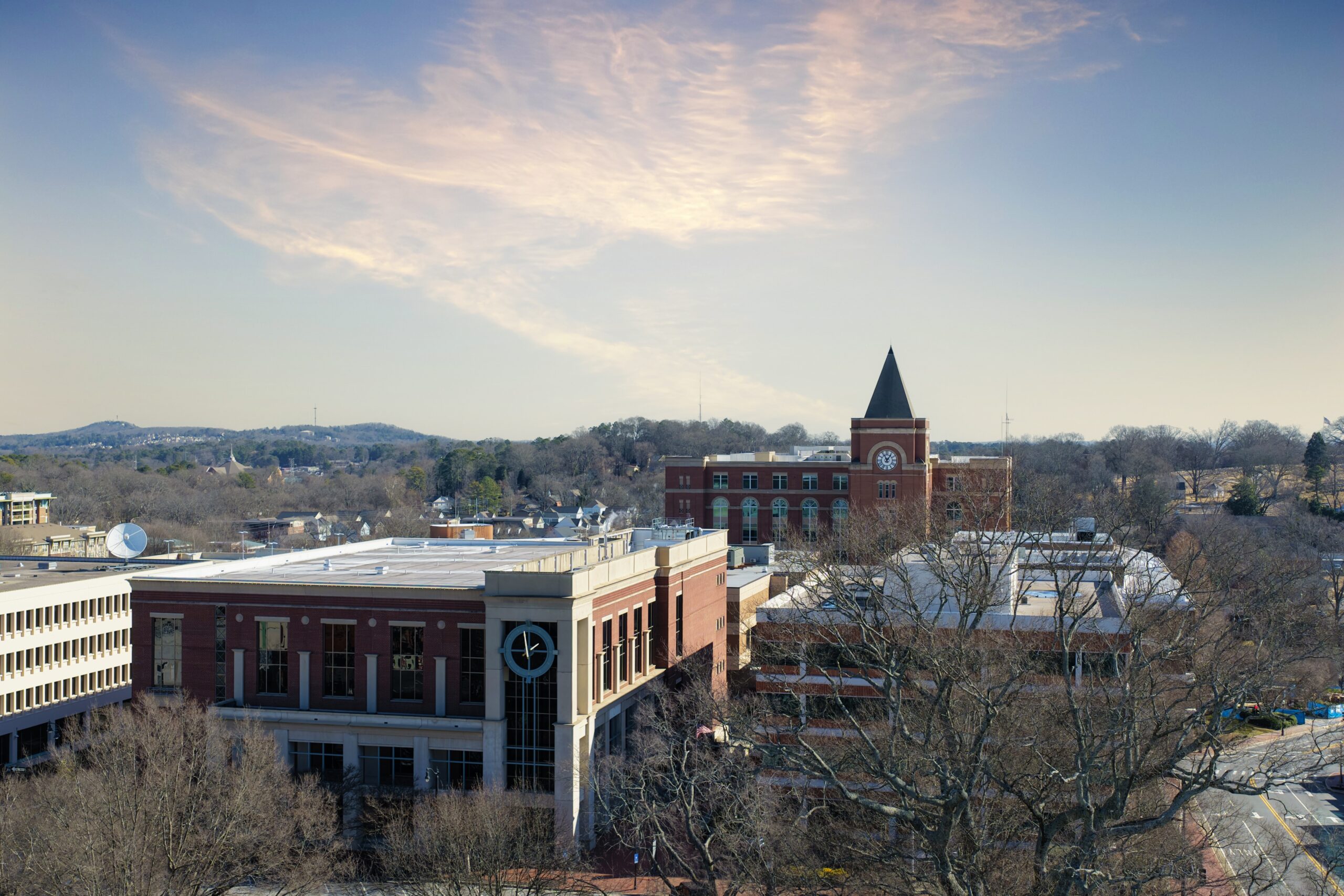
Marietta’s local economy appends closely to the broader Atlanta metro job market. Professionals in the area commonly work in growing sectors spanning healthcare, logistics, technology, manufacturing, and professional services. Major employers include Lockheed Martin, Home Depot and WellStar Health System. These employers also create an economic foundation that buoys smaller businesses, entrepreneurs and service industries.
Many Marietta residents commute to work in different parts of Atlanta metro, while living in Marietta for its suburban charm and amenities. Remote-friendly work is also strongly represented in the area for those who prefer to skip the daily commute.
Is Marietta, GA Safe? Here’s the Bottom Line on the Area’s Lifestyle and Security
By the numbers, Marietta’s overall crime rate is near or slightly above national averages. Property crimes make up the majority of incidents, as is typical in many US cities, while violent crime rates rank lower than many large cities.
“Is Marietta, GA, safe” is best answered by combining statistics with city services, supports and security efforts. Strong community engagement creates strong bonds between neighbors who look out for one another and report anything that seems amiss. Additional community crime deterrents include well-lit, well-maintained public spaces, active police presence and active neighborhood watch programs.
It’s wise to follow general safety practices in any city. Lock doors, use caution at night and in unfamiliar places, be aware of your surroundings, and research any area before signing a rental or purchase contract to live there.
Community safety is about more than numbers. Safe communities are active and invested communities, and many find living in Marietta, GA offers both.
Making the Move to Marietta: What to Know, What to Do
If living in Marietta, GA sounds right for you, here are a few things to know when you’re ready to make the move.
Best Time to Move
Spring and fall offer the most favorable weather if comfort and logistics are priorities for your move. The weather during these seasons is neither too hot nor too cold, making physically taxing moving tasks more pleasant experiences.
If you have school-aged children, it’s best to time your move around the school calendar so they can start school at the beginning of the term, which will help them settle in more smoothly. If you’re buying a home, local markets are least competitive in the winter months. Spring typically offers the broadest selection, and summer is when you’ll find motivated sellers offering their best prices.
Finding Your Perfect Neighborhood
When looking for the right community for you, the question “is Marietta GA safe?” can be answered by visiting specific areas during the day, at night and on weekends to get a sense of safety and community activity.
Talking to residents, reviewing school ratings, and driving the commutes to places that will be regular destinations will create a complete picture that helps you choose your ideal neighborhood.
What to Do First After Moving
The first things to do in Marietta, GA after moving include addressing the essentials to ensure you are compliant with state rules and requirements. Register your vehicle within Georgia’s required 30-day window, update your driver’s license, and set up utilities in your new home.
Next, it’s time to explore things to do in Marietta, GA and start building connections. Visit grocery stores and parks, and locate essential services like fire, police and health departments in your area. If you’re eager to get to know your neighbors, consider joining community groups and introducing yourself on neighborhood social pages.
Living in Marietta, GA: Your 2026 Guide to Safety, Neighborhoods, Costs and Lifestyle

Marietta is widely regarded as a safe, welcoming place because of its strong communities, active and diverse neighborhoods, and family-focused lifestyles. The Gem City offers an appealing mix of affordability, amenities, entertainment and overall quality of life, all of which can be enjoyed almost year-round thanks to the area’s moderate climate.
If you are considering living in Marietta, GA and are asking “Is Marietta safe for my family and / or me,” the best next step is to visit the area and experience it firsthand. Walk the Square, visit the four neighborhoods to see which one feels like a fit, chat with the residents, and see how the city feels both during the day and at night. This will help confirm if living in Marietta, GA is right for you.
If you decide to make the move to Marietta, GA, our helpful search tool can help you find affordable and convenient climate-controlled storage solutions to keep your belongings secure as you make the transition.
Yes. Marietta ranks high among metro Atlanta’s most desirable places to live, thanks to its attractive cost of living, low crime rates, strong communities and uniquely diverse neighborhoods.
Yes. The Cobb County School District is consistently ranked as one of the best in the nation. Families also enjoy a variety of recreational opportunities, summer camps and sports leagues for kids, and family-centric community activities.
Marietta is approximately 20 miles northwest of downtown Atlanta. Expect a 30-minute drive on average, depending on traffic and the neighborhood or part of town from which you are coming.
Snow is infrequent and light in Marietta. At most, the suburb may see a couple inches of snow one or twice during winter that melts within a day. It is not uncommon to go many winters with no snowfall at all. Large accumulations of 5” or more are rare, occurring every 5-10 years or so.

Lori Wertz


