Are you planning a big move, decluttering your home, or perhaps dealing with inherited furniture? Whatever the reason, figuring out how to get rid of furniture or handle furniture removal can feel daunting.
Fortunately, there are numerous options available to suit your needs. Important factors to consider include the amount of furniture, its condition, and your timeline. Whether you have a single piece or an entire houseful to dispose of, this guide, prepared by storage experts at SpareFoot, will cover various methods, ranging from recycling to hiring a junk removal service.
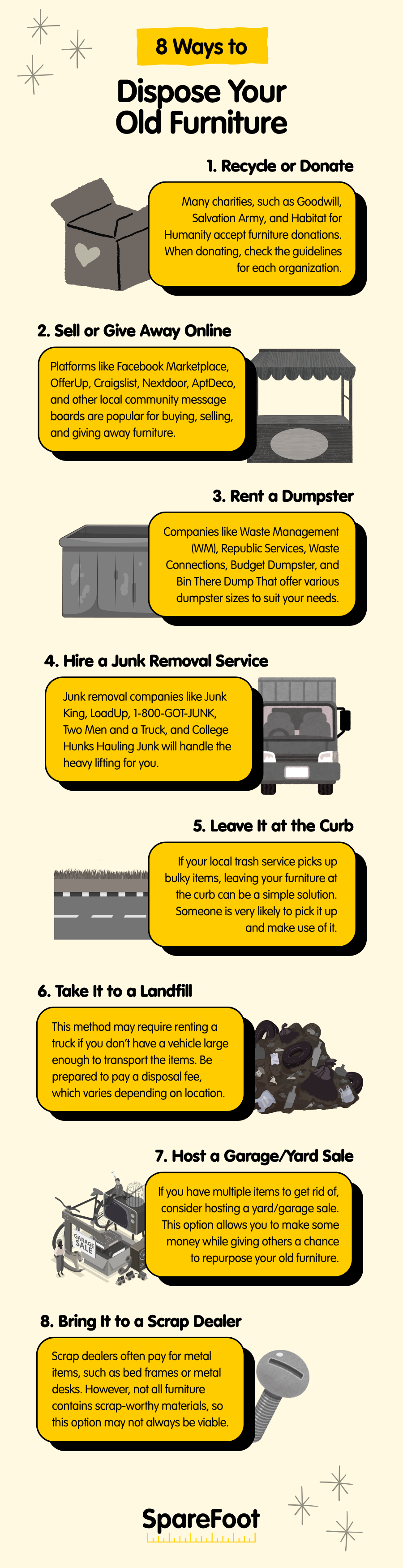
1. Recycle or Donate
If your furniture is still in usable condition, recycling or donating is one of the best ways to go. Not only does this method help reduce waste, but it can also support local organizations in need. Many charities, such as Goodwill, Salvation Army, and Habitat for Humanity, accept furniture donations. Some smaller local non-profits, like community centers, churches, shelters, and Furniture Bank organizations, may also take furniture to support their members or programs.
When donating, check the guidelines for each organization. For example, Goodwill typically accepts gently used sofas, tables, and chairs, but may not accept items with significant damage or missing parts. Habitat for Humanity’s ReStore locations accept furniture, building materials, and appliances in good condition, and they often offer pickup services, which can save you the hassle of transporting large items.
Some recycling centers offer furniture recycling options, particularly for items made of metal, wood, or plastic. However, recycling furniture can be more involved since you may need to disassemble the items and separate materials. Always call ahead to confirm what the recycling center will take and any preparation you need to complete before drop-off.
| Pros | Cons |
| ‣ Environmentally friendly ‣ Helps others in need ‣ May qualify for a tax deduction | ‣ Requires transporting the furniture yourself ‣ May have restrictions on the types of items accepted |
Tips for Donating:
- Clean the Furniture: Before donating, make sure to clean and sanitize the furniture. A quick wipe-down with a damp cloth or vacuuming can go a long way in making your item more appealing.
- Take Photos: Take clear, well-lit photos of the furniture to show potential organizations the item’s condition, especially if scheduling a donation pickup.
- Call Ahead: Contact the organization beforehand to confirm what they accept and whether they can assist with moving large or heavy items.
2. Sell or Give Away Online
If you’d like to make some extra cash or simply find a new home for your unwanted furniture, consider selling or giving it away online. Platforms like Facebook Marketplace, OfferUp, Craigslist, Nextdoor, eBay, AptDeco, and other local community message boards are popular for buying, selling, and giving away furniture. Certain platforms, such as Etsy, Chairish, and Vinterior, are also suitable for selling vintage or higher-end furniture.
| Pros | Cons |
| ‣ Can earn some money ‣ Convenient for buyers who pick up ‣ Variety of platforms are available to reach a wider audience | ‣ Can take time to find a buyer ‣ May require negotiation and communication with multiple people ‣ May incur shipping and handling costs |
Tips for Selling Online:
- Set a Fair Price: Research similar listings to determine a competitive price. If your item doesn’t sell quickly, lower the price every few days. Depending on the overall interest in your item, consider giving it away.
- Write an Honest Description: Use keywords in your description to help your listing get noticed. Include dimensions, materials, condition, and any flaws so buyers know what to expect, especially when listing larger furniture sets.
- Take High-Quality Photos: Photos are key to attracting potential buyers. Take pictures from multiple angles in natural light, showcasing any special features or imperfections.
- Arrange for Contactless Pickup: If you are concerned about safety, consider setting up a contactless pickup location where buyers can retrieve the furniture without entering your home or meet in a public place.
3. Rent a Dumpster
For a large-scale cleanout, renting a dumpster can be a practical solution. This method is ideal if you have multiple bulky items, including office furniture, or are clearing out a large space. Companies like Waste Management (WM), Republic Services, Waste Connections, Budget Dumpster, and Bin There Dump That offer various dumpster sizes to suit your needs. A 10-yard dumpster is typically suitable for household furniture disposal, but larger sizes are available if needed.
| Pros | Cons |
| ‣ Cost-effective and time-efficient for larger projects ‣ Can handle multiple types of furniture | ‣ Can be expensive ‣ Requires a suitable location for the dumpster |
Tips for Renting a Dumpster:
- Compare Prices: Get quotes from different dumpster rental companies to find the best price. Ask about additional fees involving things like weight limits, extended rental periods, or specific types of furniture.
- Check Local Regulations: Some areas have restrictions on what can go into a dumpster, so make sure you know what’s allowed in your municipality, county, and state.
- Plan the Drop-Off Location: Ensure you have enough space in your driveway or yard for the dumpster. Avoid placing it on your lawn, under trees, or near power lines to prevent damage.
4. Hire a Junk Removal Service
If convenience is a top priority, hiring a junk removal service may be your best option. Junk removal companies like Junk King, LoadUp, 1-800-GOT-JUNK, Two Men and a Truck, and College Hunks Hauling Junk will handle the heavy lifting for you. Many of these services offer full-service furniture removal as well as curbside pickup options in certain jurisdictions where they come to your home and remove items, and curbside pickups if you can get the furniture out to the curb yourself.
| Pros | Cons |
| ‣ Convenient and hassle-free ‣ Most services handle the heavy lifting | ‣ One of the more expensive options ‣ May have restrictions on what they will take |
Tips for Hiring a Junk Removal Service:
- Get Multiple Quotes: Pricing can vary significantly depending on the size of the furniture, the volume of items, and the level of service (full-service vs. curbside). Get a few quotes to find the best deal.
- Check Reviews: Look for companies with positive customer reviews. Consider asking whether they donate or recycle items they collect.
- Ask About Costs: Some services charge based on the truck’s volume, while others charge a flat rate. Make sure you understand the pricing structure before scheduling a pickup.
5. Leave It at the Curb
If your local trash service picks up bulky items, leaving your furniture at the curb can be a simple solution. Be sure to check with your local waste management service, as some require advance notice or charge a fee for this service. Depending on where you live and the condition of your curbed furniture, someone is very likely to pick it up and make use of it. Also, some jurisdictions host Spring Cleanup events during which bulky items are picked up and removed for free.
| Pros | Cons |
| ‣ Free or low-cost ‣ Minimal effort required | ‣ Not all trash services accept furniture ‣ Can create an eyesore if not picked up promptly ‣ Could trigger HOA fees |
Tips for Curbside Disposal:
- Schedule Pickup: Call your local waste management service to arrange a pickup date and time. This will ensure your furniture doesn’t sit out for days.
- Follow Regulations: Some areas have regulations about curbside disposal, such as size limits and prohibited materials. Make sure you adhere to local guidelines to avoid fines and penalties.
6. Take It to a Landfill
If all else fails, getting rid of furniture at a landfill is also an option. This method may require renting a truck if you don’t have a vehicle large enough to transport the items. Also, be prepared to pay a disposal fee, which varies depending on location.
| Pros | Cons |
| ‣ Gets rid of furniture quickly ‣ No need to wait for pickup | ‣ Requires a vehicle suitable for transport ‣ Not environmentally friendly ‣ Forfeits the potential value of the furniture |
Tips for Landfill Disposal:
- Check Hours: Landfill hours vary, so check the operating schedule before heading out.
- Prepare for Fees: Landfill fees are typically based on the weight, volume, or type of material being disposed of. Confirm accepted payment methods.
7. Host a Garage/Yard Sale
If you have multiple items to get rid of, consider hosting a yard/garage sale. This option allows you to make some money while giving others a chance to repurpose your old furniture. However, garage sales can be time-consuming to organize and may require advertising to attract potential buyers.
| Pros | Cons |
| ‣ Potential to earn money ‣ Clears out multiple items at once | ‣ Requires planning and setup ‣ No guarantee of selling all items ‣ Takes up a full day of your time |
Tips for Hosting a Sale:
- Advertise: Post about your sale on social media, community boards, and local event websites to attract buyers.
- Price Items Clearly: Use tags to show each item’s price and be prepared to negotiate.
- Organize and Display: Arrange items neatly and categorize them (e.g., furniture, clothing, kitchenware) to make browsing easy for potential buyers. A well-organized setup can encourage more sales.
8. Bring It to a Scrap Dealer
If your furniture contains valuable metals, bringing it to a scrap dealer is a niche but potentially profitable option. Scrap dealers often pay for metal items, such as bed frames or metal desks. However, not all furniture contains scrap-worthy materials, so this option may not always be viable.
| Pros | Cons |
| ‣ May earn some money ‣ Environmentally friendly | ‣ Limited to certain types of furniture ‣ Requires transportation to the scrap yard |
Tips for Scrapping Furniture:
- Separate Materials: Scrap dealers often pay more for pre-sorted materials. For example, if your desk has a metal frame and wood top, separate the parts before taking them to the scrap yard.
- Call Ahead: Contact local scrap yards to confirm which materials they accept. Inquire about current rates.
How Much Does Getting Rid of Furniture Cost?
The cost of removing furniture depends on several factors, including the number of items, their weight, and whether you’re removing the items yourself or hiring a service. Here’s a more detailed breakdown of potential costs:
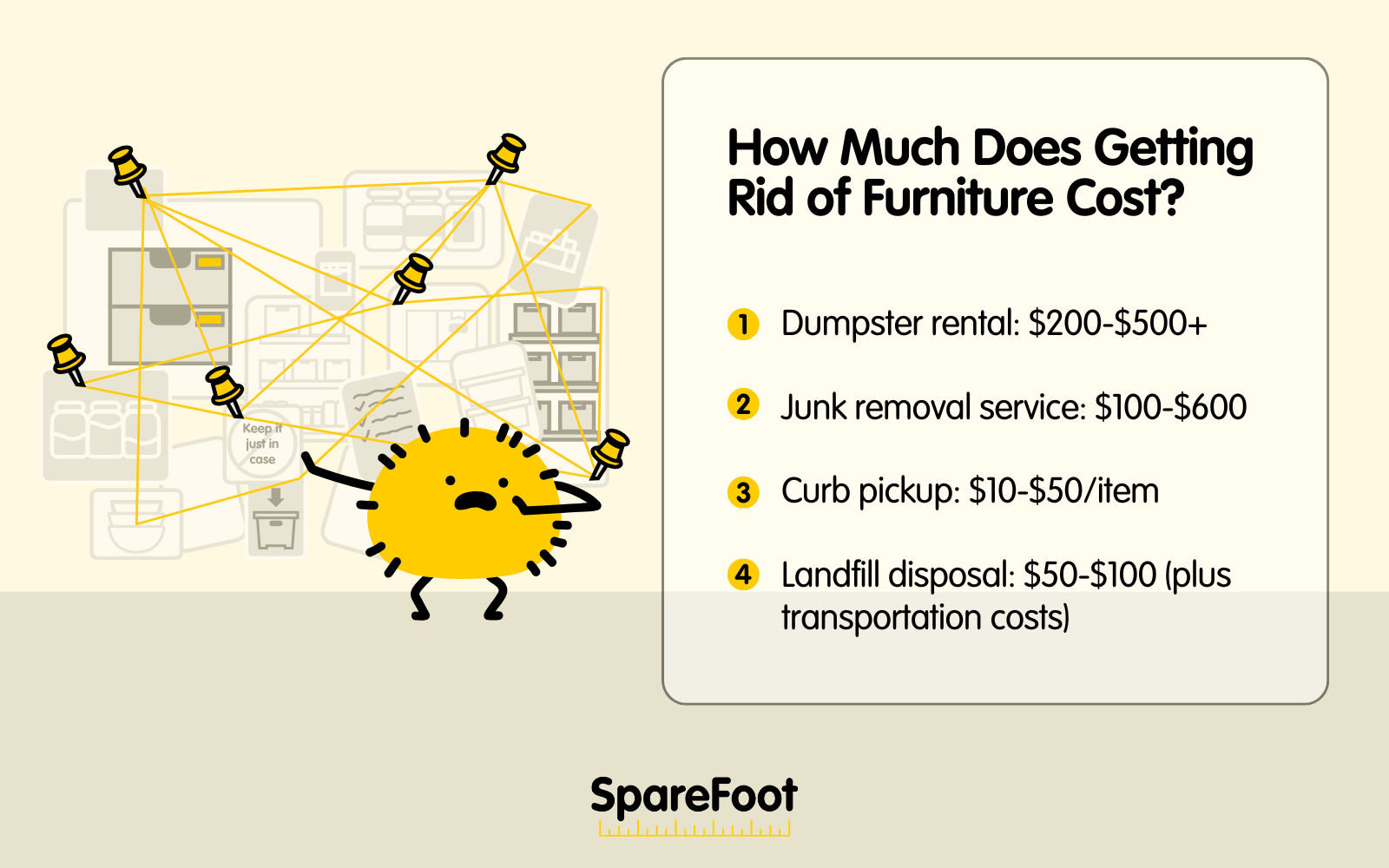
- Dumpster Rental: Costs can range from about $200 to $500+, depending on the dumpster size, rental period, and location. A 10-yard dumpster is usually sufficient for a household cleanout, but larger sizes are available if you have more furniture.
- Junk Removal Service: Prices can vary significantly based on the company, region, and volume of furniture. On average, junk removal services charge between $100 and $600.
- Curb Pickup: Some waste management services offer free pickup for bulky items, while others charge a fee ranging from $10 to $50 per item. It’s important to check with your local provider to understand their pricing and requirements.
- Landfill Disposal: Landfill fees depend on weight and location. Fees vary based on the weight, volume, and type of material being disposed of. Though you will likely spend between $50 and $100 in most cases, you may incur additional transportation costs.
The farther you have to travel to the disposal site, the more you’ll spend on fuel. Some services include disposal fees in their total cost, while others may charge separately. Make sure you ask about additional fees when getting quotes.
Some furniture stores also offer haul-away services when purchasing new items, which can simplify the process.
Choosing the Right Method
When deciding how to get rid of furniture, there are several factors to consider. Since not every method is suitable for all situations, here are some key considerations to help you choose the best option for your needs:
Furniture Condition
If your furniture is in good condition, consider donating it to a charity or selling it online. Well-maintained items are usually in higher demand and more likely to be accepted by donation centers or online buyers. Items with minor wear and tear can still be sold or donated, though it’s best to be upfront about their condition. Websites like Craigslist or Facebook Marketplace are perfect for listing “used but functional” items. Some charities might also accept these items if they still serve their purpose. If the furniture is broken, stained, or beyond repair, recycling, taking it to a landfill, or hiring a junk removal service might be your best bet. Always check if the item can be recycled first.
Time Constraints
If you need to get rid of furniture quickly, hiring a junk removal service, taking it to a landfill, or leaving it at the curb for local pickup are the fastest options. However, they may come with higher costs or restrictions. Junk removal services often provide same-day pickups, while dumpster rentals and landfill trips can be arranged with minimal notice.
If you have a bit more time, donating, recycling, or selling the furniture is a great option. This process may involve researching donation centers or coordinating with potential buyers, but it allows you to make a more environmentally conscious choice.
Budget
If you’re looking to dispose of furniture without spending too much, consider options like donating to charity, giving away items online, or leaving them at the curb (if your local trash service permits it). Some organizations also offer free pickup services, so this can be a cost-effective method.
For convenience, junk removal services and dumpster rentals are excellent options, though they are more expensive. If you’re moving or doing a major cleanout, the expense may be worth the time and effort saved.
Environmental Impact
Recycling, donating, or selling your furniture are the most environmentally friendly methods. These approaches prevent usable items from ending up in a landfill and reduce the demand for new furniture production.
Dumping furniture in a landfill should be a last resort. While some landfills do have programs for reclaiming certain materials, this option typically leaves a larger environmental footprint.
Logistics and Physical Effort
Hiring a junk removal service is the most hands-off option, as they handle all the heavy lifting and disposal. Donation centers that offer free pickup also facilitate the process.
Selling online, recycling, or taking furniture to a landfill requires more effort. You’ll need to handle the transportation and potentially some disassembly.
What to Avoid When Disposing of Furniture

While there are plenty of ways to get rid of furniture responsibly, it’s equally important to know what NOT to do. By avoiding these common pitfalls, you can ensure that your furniture disposal process is not only efficient but also that it does not harm the community and environment:
Illegal Dumping
| Why It’s a Problem | What to Do Instead |
| Leaving furniture on the street or in an unauthorized area without permission is often illegal. Not only does it create an eyesore, but it can also result in fines and penalties. | Always check with your local waste management service about proper disposal methods. Many areas have specific days for bulk item pickup, and some have designated disposal sites for large furniture items. |
Ignoring Donation Guidelines
| Why It’s a Problem | What to Do Instead |
| Donation centers normally have specific guidelines for the types of furniture they accept. Bringing damaged, stained, or otherwise unusable items can generate disposal costs and harm the charity’s operations. | Research each organization’s donation policies before dropping off items. If in doubt, ask if your furniture meets their criteria. Some charities also list acceptable items on their websites. Check there first. |
Overlooking Recycling Opportunities
| Why It’s a Problem | What to Do Instead |
| Many furniture items and appliances like air conditioners contain recyclable materials, such as wood, metal, and plastic. By simply tossing them into the landfill, you miss the opportunity to reduce waste and conserve resources. | Check with local recycling centers to see if they accept furniture. You might need to disassemble the items to separate recyclable components. Some areas have specialized recycling facilities for mattresses and large wooden furniture. |
Attempting to Move Heavy Furniture Alone
| Why It’s a Problem | What to Do Instead |
| Moving large and heavy furniture by yourself can result in injury or property damage. Back strains, falls, and scratched floors and walls are common mishaps. | Always get help when moving heavy items, whether from friends, family, or professional movers. If you’re determined to handle the task solo, use the proper equipment (e.g., furniture dollies, sliders, and straps) to prevent injury and damage. |
Failing to Disassemble When Necessary
| Why It’s a Problem | What to Do Instead |
| Large furniture is often difficult to transport or dispose of in one piece. Disassembling items can avoid complications during pickup, transportation, and disposal. | When possible, take apart furniture to facilitate moving and loading. This step can also make it easier for donation centers and recycling facilities to process the items. |
Not Considering All Your Options
| Why It’s a Problem | What to Do Instead |
| Rushing to dispose of furniture without exploring all available options might lead to unnecessary expenses or missed opportunities to donate or recycle. | Take some time to explore different methods. Research online marketplaces, donation centers, and recycling facilities in your area. You might be surprised to find simple, cost-effective solutions. |
How To Take Apart Different Pieces of Furniture
Before getting rid of furniture, consider disassembling it to make transportation easier. This process can also reduce the space the items take up, whether in a dumpster, storage unit, or vehicle. Disassembling furniture can also make it easier to recycle components.
Having your tools organized and your work area cleared can speed up the process. Tools you may need to disassemble furniture include a screwdriver (flathead and Phillips), an Allen wrench, pliers, a wrench or socket set, a rubber hammer (for tight fittings), and Ziplock bags to store screws and bolts.
Couch
Length of Time: Typically takes about 30 minutes to an hour. If you’re dealing with a larger or more intricate couch, it could take longer.
Steps:
- Remove cushions and pillows – Take off loose cushions and pillows from the couch.
- Detach the legs – Turn the couch over and unscrew the legs using a screwdriver or by hand if they twist off.
- Remove any upholstery – If needed, remove the upholstery by using a screwdriver or staple remover.
- Detach the backrest – Remove bolts or screws attaching the backrest to the frame using a wrench or screwdriver.
- Remove the arms – Detach the arms from the couch frame.
- Disassemble the frame – If the couch frame has multiple pieces, unscrew any remaining bolts holding them together.
- Disassemble recliner mechanisms – If the couch has reclining features, look for screws or bolts holding the mechanism in place and remove them.
- Organize screws and hardware – Place screws, bolts, and small parts in a labeled bag to keep them safe.
Bed Frame
Length of Time: Usually takes about 20 to 45 minutes. For more intricate frames or if you’re working alone, it may take longer.
Steps:
- Remove the mattress and box spring – Clear the bed frame by removing the mattress and box spring.
- Detach the headboard and footboard – Unscrew bolts or screws attaching the headboard and footboard to the frame using a wrench or screwdriver.
- Remove the side rails – Unscrew or unhook the side rails from the headboard and footboard. Some rails slide out of brackets, while others are bolted in place.
- Separate slats or platform – If the bed frame has slats or a platform for support, remove them by unscrewing or lifting them off.
- Disassemble the center support – If the bed frame has a center support bar, remove it by unscrewing or lifting it off.
- Disassemble the frame – Unscrew or unbolt the four sides of the main frame.
- Organize screws and hardware – Place screws, bolts, and small parts in a labeled bag to keep them safe.
Desk
Length of Time: Usually takes about 20 to 40 minutes, depending on the size and whether it has additional features like drawers or attached shelving.
Steps:
- Clear the desk – Remove everything from the desk, including the drawers.
- Take out drawers – If the desk has drawers, pull them out. If they don’t slide out easily, check for latches and other hardware.
- Remove attached parts – Unscrew and remove parts like shelves or hutches with a screwdriver or wrench.
- Detach the legs – Flip the desk over and unscrew the legs using a screwdriver or wrench. If necessary, unscrew the top of the desk from the base.
- Organize screws and hardware – Put screws, bolts, and small parts in labeled bags.
Dining Table
Length of Time: Usually about 20 to 40 minutes. If the table is intricate or heavy, it might take a bit longer.
Steps:
- Clear the table – Remove all items from the table surface. Remove table leaves if present.
- Remove the legs –Turn the table over and locate the screws or bolts securing the legs. Use a screwdriver or wrench to remove them.
- Separate the tabletop – If the tabletop is attached to a base or frame, remove the screws or bolts holding it in place.
- Disassemble the base – If your table has a pedestal base or support structure, unscrew, detach, and unassemble it.
- Organize the hardware – Place screws, bolts, and small parts in labeled bags to avoid losing them.
Dresser
Length of Time: Usually about 20 to 45 minutes, depending on its size and complexity.
Steps:
- Empty the drawers – Remove all items from the drawers.
- Remove the drawers – Pull out the drawers. Some may have latches or stops that need to be released to remove them completely.
- Unscrew any attached pieces – If there are mirrors, shelves, or decorative elements attached, use a screwdriver or wrench to remove them.
- Disassemble the frame – If the dresser frame needs to be broken down further, unscrew connecting parts or braces holding the sides together.
- Organize the hardware – Place all screws, bolts, and small parts in labeled bags to keep them organized.
Ready to Declutter and Get Organized?
If you’re wondering how to get rid of furniture, consider options like donating to local charities, listing it for sale online, recycling it at a local facility, or hiring a junk removal service to handle the heavy lifting. No matter what method you choose, downsizing and decluttering can create a more organized and spacious environment.
If you find yourself wanting to store your furniture instead of getting rid of it, check out our great storage deals! SpareFoot makes storing furniture easy, allowing you to find the best solution by filtering based on unit size, location, and price. Not sure what unit size you need? Check out our storage unit size guide to ensure you choose the optimal space for your situation.

Melynda Kloc
With a deep passion for writing, poetry, and storytelling, I've built a career creating copy that educates, builds trust, and encourages genuine connection between customers and brands. Drawing from my background in fine arts, I bring a creative perspective to strategic content that prioritizes authentic voice over formulaic approaches. I believe the best copy doesn't just inform—it creates real human connection in an increasingly automated world.


