
KEY TAKEAWAYS
▸ Tackle decluttering consistently every few months, or try methods like the Minimalist Game to gradually remove items over a 30-day period, rather than treating decluttering as a one-time, massive project.
▸ Use the four-box method, labeling boxes as “reduce/recycle/trash,” “keep and relocate,” “sell,” and “donate,” then work through each room methodically from closets to garages.
▸ Combat overconsumption habits through a 30-day purchasing freeze, conduct a full inventory of belongings, establish pre-purchase decision systems, and commit to using what you already own before buying new items.
▸ Verify moving companies through SaferSys.org, get in-home weight-based estimates, ensure they provide the federally required “Your Rights and Responsibilities When You Move” booklet, and check reviews to avoid brokers and fraudulent companies.
▸ Use temporary storage units with features like climate control and electricity to protect belongings during home repairs, gradual minimalism experiments, or while testing whether you’re honestly done with items before permanently donating them.
It’s that time of year. The fall air stills, and leaves ripen to vibrancy only to decompose. Halloween abides in the death of autumn like the Grim Reaper.
And just like dead leaves clutter the dry and brittle earth, your junk drawer vomits onto your countertop, and trash bags full of clothes explode their garment guts across the living room floor.
That’s right, we’re talking about seasonal clutter and the nightmarish task of addressing it.
But decluttering disaster flicks aren’t the only moving horror stories. There are the downsizing demons to deal with. And let’s not forget about the dark cosmic forces of overconsumption.
All jokes aside, our editors surveyed over 1,000 Americans earlier this year and found that 41% of our fellow citizens spend 2 months of their lives decluttering. That’s 60 years of packing clothes, clearing out junk drawers, and sorting through clutter. And life is precious when you aren’t a witch cat with eight more to spare.
But with the right tools and resources in place, we can all survive these horror shows.
Enter SpareFoot, like a silver bullet to a werewolf.
Our storage experts work like garlic on a vampire to share the tricks and treats of the decluttering process that’ll turn your dark castle into a clutter-free sanctuary.
This helpful Halloween-themed guide explores how to declutter your home. We review the common causes of real-life decluttering and moving horror stories, and how to use storage to prevent the nightmare from continuing.
We also explain how to use our handy SpareFoot storage search tool to find a storage unit near you with the exact size dimensions and features you’re looking for, how to know what kind of storage solution you need, and how to get your first month of storage for free!
But beware. We mix real-life moving horror stories and cheeky thriller references into our cauldron of clutter solutions. This spooky guide to decluttering the dark forces and sources of stress isn’t for the faint of heart!
This isn’t a gore flick, mind you. And no jump scares. Clutter is more like the star of a classic creature feature. And starting the process of gradual decluttering is a psychological thriller.
Minimalist Black Magic and the Monstrous Mountain of Stuff
The first thing we need to accept is that decluttering isn’t a one-and-done task. You can actually spend less time decluttering in the long run if you declutter often. That means picking a day once every three months where you sort everything you own into sell, donate/giveaway, trash, or keep piles, and then organize what didn’t get tossed or end up at donation centers.
Or, if you’re drawn to the macabre and extreme, you can choose one month a year or two to play The Minimalist Game. This is a great way to become a minimalist in 30 days, or if you’re downsizing and don’t know what to keep when moving.
And no, the Minimalist Game isn’t a survival thriller show, despite the terror it can cause.
- The Minimalist was created by The Minimalists Podcast, made famous by a Netflix doc. Basically, you start at the beginning of the month. And every day that month, you declutter a number of items.
- The number corresponds to the day of the month: on the first of the month, you declutter 1 item; on the second, 2; on the 13th, ditch 13 (plus Jason if it’s a Friday); and on the 20th, 20, etc. What do you do with the items you declutter? Donate, sell, throw away.
- This may sound intense, and if you go the whole month, it certainly is. But it’s not all or nothing. We suggest committing to going as far into the month as you can, rather than trying to survive the whole Squid, I mean, Minimalist Game gauntlet.
- Even if you make it a week, that’s 1+2+3+4+5+6+7=28 items you’ve removed from your space! If you make it the whole 31 days of the month, you’ll declutter 465 things.
Now, when you’re new to minimalism, this may seem scary–which is why October is a great time to get started. You can always rent a storage unit and put your items in storage to ease the transition. Then, a few months down the road, you can play a similar game where you declutter your storage unit.
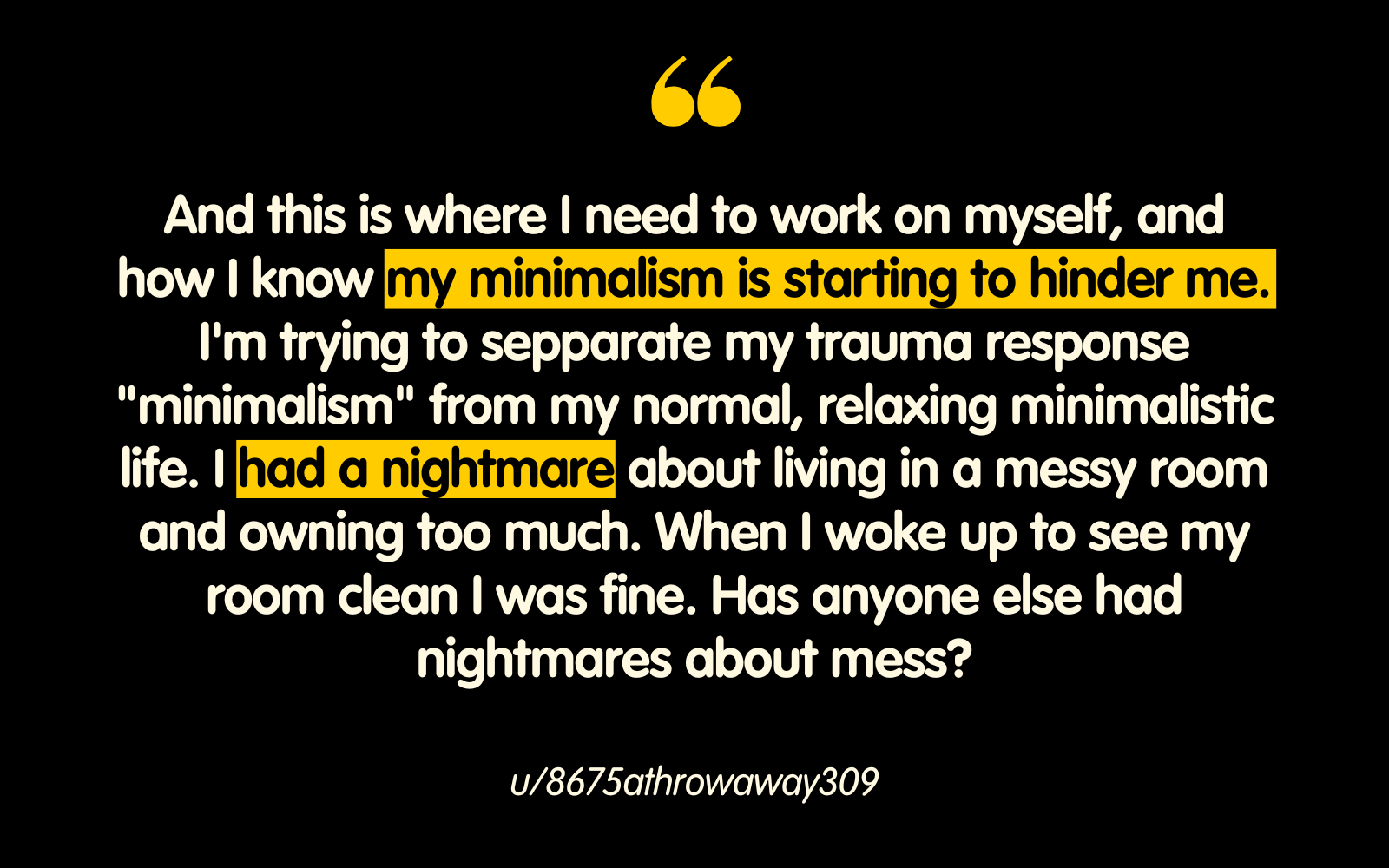
But for minimalist magicians, it’s not the purge, but the mountain of clutter that’s the stuff of nightmares… literally. This real-life Reddit (r/minimalism) story says it better than we can:
Exorcising Your Declutter Demons: Where to Start
Now, don’t get frightened off just yet– there’s more to see on the haunted hay ride of an article. Here’s how to avoid the monstrous mountain of stuff without committing to a violent, chaotic purge.
We suggest starting with a space where you work, either on creative projects and hobbies or professionally, or a space where you relax–and here’s why:
- As your house gets less and less haunted by clutter and visual distractions, your sense of value and focus levels will noticeably lift.
- And if your relaxation or work space seems too frightening a place to start your exorcism, pick one pile of corpse-like clothes, a LeMarchand box that needs unpacking, or a junk drawer that needs disemboweling.
- With your spirits raised from the depths by your small victory, decluttering a larger space feels less like a final destination.
Once you have your target picked out, we suggest employing the four-box method. Get yourself four boxes–aka clutter coffins. Label each box accordingly:
- Reduce/recycle/trash.
- Keep and find a new place.
- Sell
- Donate.
Once you’re in the groove of decluttering, we suggest using the four-box method, tackling one room a month, every 2 weeks, per week–whatever you’re comfortable with. Here are some tips, tricks, and treats on room-by-room decluttering:
| Room: | Tips and Trick-or-Treats: |
| Closets | Pull everything out–including the boogie man–and put it in the appropriate clutter coffin. Organize the keep items with a new system that keeps them hidden like a ghost. Sell what you can and immediately remove the recycling/trash and donation box from your house. |
| Bathrooms | Check expiration dates first and discard expired items, old potions, and severed limbs. Declutter visible areas, then move into cabinets. Organize your keep items with dividers in drawers and closets. |
| Bedrooms | Remove unused furniture first, breaking down what you can. Sort all remaining clutter into four coffins, then reorganize the keep items using drawer systems. Remove the monster under your bed and replace it with rolling under-bed storage for loose items. |
| Kitchen | Start by removing and donating unused appliances to make some space and clean out the expired food and lagoon creatures from your fridge. Declutter visible surfaces with the four-box method, then work through cabinets one at a time. |
| Living Room | Start by breaking down and donating unused furniture. Declutter mail, books, and magazines using the four-box method, declutter visible items, then organize storage spaces like trunks and ottomans by removing unused items and filling them with the keepsakes, charms, amulets…You get it. |
| Garage | Safely dispose of hazardous chemicals and witch potions first. Break down and donate large unused equipment and evil robots, empty all storage bins and toolboxes, sort tools into the four coffins, then implement a new organization system keeping similar items together and out of the way. |
Remember, set realistic goals, clean your house as you clutter, and practice digital minimalism by digitizing photos, music, books, and documents.
Fear… Is someone watching me?
Keep in mind that minimalism, decluttering, and organizing aren’t the same thing. Decluttering is getting rid of stuff you don’t need and finding a home for the clutter you aim to keep. Organizing is implementing an organizational system in your kitchen cabinets, bedroom closets, garage toolboxes, and bathroom drawers. Organization happens after decluttering, when you know what you’re keeping and what you’re getting rid of.
And despite our deep and darkest fears, there’s no wrong or right way to do minimalism… even if it feels like eyes are watching you in the dark…
Like the Cenobites of Hellraiser, some items might be angels to some, demons to others. Pay attention to the emotional responses you hold toward items and ask yourself why you’ve been avoiding or holding onto certain things.
Or as our next horror storyteller puts it:
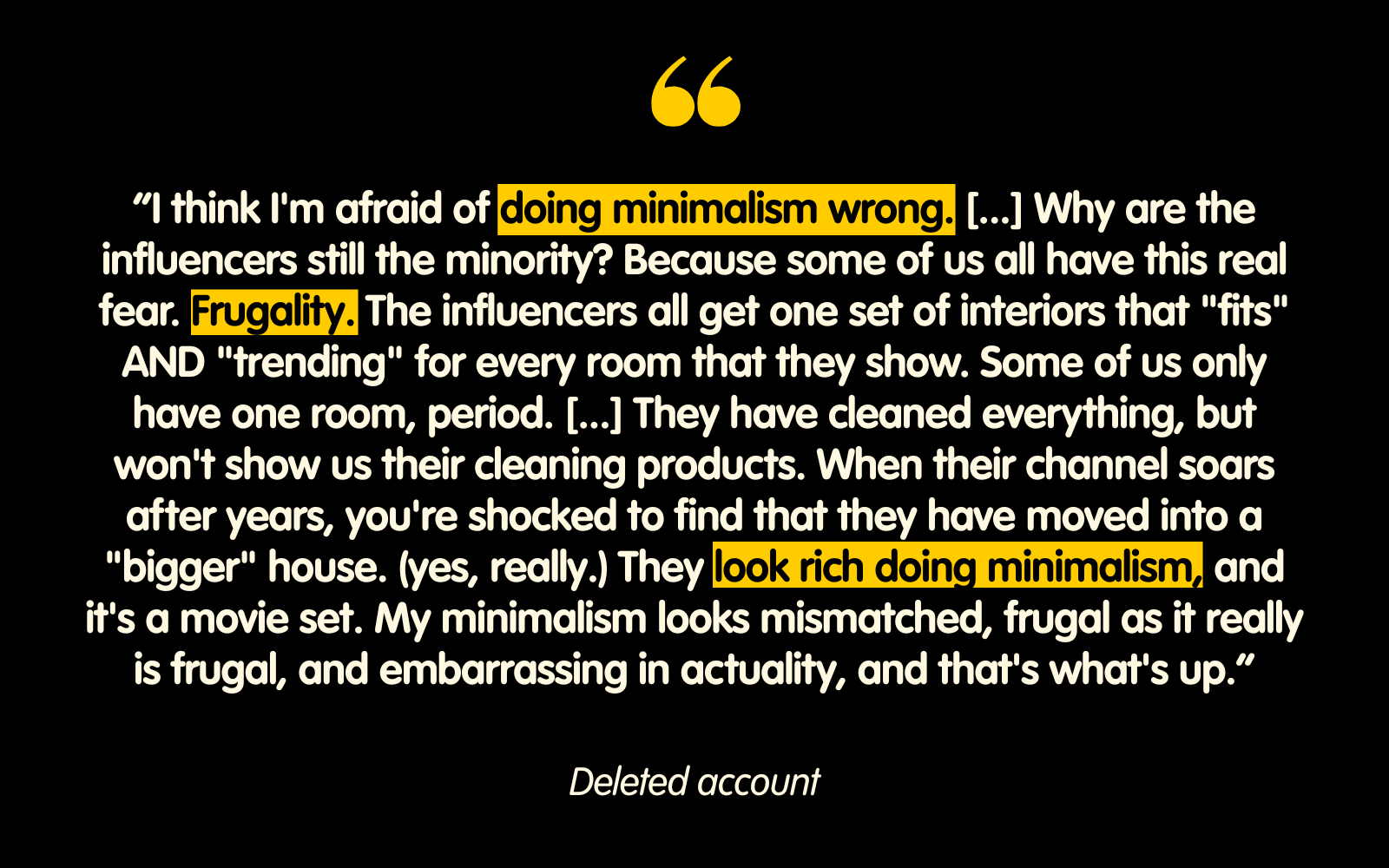
Letting go of the past can help declutter, and vice versa. Don’t feel guilty about keeping items you enjoy. You’re not actually a Cenobite–clearing our items that make you feel indifferent to make space for nostalgic belongings is as good a motivator for decluttering as any.
Self-storage can be a safety blanket to help ease your transition as you Frankenstein together your own version of minimalism.
Find a self-storage unit near your house to keep seasonal items and things you don’t use frequently but that you don’t want to get rid of. Booking a storage unit close to your house lets you go back and forth between the two without much hassle, ensuring you won’t put it off.
How To Be a Minimalist in the Mouth of Messy Madness
Minimalism is keeping only the bare minimum possessions of what you need to get through your daily life and letting go of anything you don’t need to survive, or anything you can borrow or rent. The goal of minimalism is often to downsize our belongings, shrink our footprint, and ultimately the space we occupy. And that often includes downsizing our home to a smaller space.
All spooky puns aside, there’s a proven link between clutter and mental health. Clutter anxiety is a real thing, and decluttering your living space has trackable mental, physical, and emotional benefits we cover extensively here.
If you’re curious whether minimalism is right for you but are hesitant to make such an intense commitment, we suggest trying the Packing Party method:
- Put everything you own, from clothes to books to kitchen utensils, into boxes and even break down your furniture, literally as if you’re getting ready to move.
- Unpack what you absolutely need as you need it. So, the night after you finish packing, you’ll realize you need a bed, a pillow, a blanket, and a toothbrush.
- Do this for three weeks, only unpacking what you absolutely need as you need it and leaving the rest in boxes.
- After three weeks, you keep whatever is unpacked and put all the still-broken-down furniture and packed boxes into storage.
- If it’s all still packed up in storage after another month, and you feel your life is enhanced by the minimalism, empty out that storage unit by selling, trashing, or donating furniture and unpacked items.
- You may want to find a temporary or month-to-month storage unit to carry this plan out, so you’re not stuck in a year-long lease with an empty storage unit.
- Or you may opt to keep the storage unit, or downsize to a smaller unit size, for seasonal items–including spooky costume storage– and important paperwork that you won’t use regularly but don’t want to get rid of.
Ultimately, you’re the authority on what’s right for your life–be it minimalism or decluttering. As the horror storyteller mentioned on Reddit, Minimalism can be a trauma response, an act of attention seeking, or a conscious lifestyle choice.
Part of the benefits of minimalism is shedding the alien influence of overconsumption…
Dark Influence of Alien Intelligence or Overconsumption Habits?
With the average American household debt resting at $105,000, overconsumption is a real epidemic. Our consumption habits are so real that it often feels like we’re under the influence of a dark intelligence telling us to consume.
But all dark, Lovecraftian humor aside, when we’re in the thralls of overconsumption, there are social, emotional, financial, and even physical impacts to our lives and well-being. If overconsumption habits feel like a real problem you need to solve asap, there’s a four-phase recovery process you can follow:
Phase: Description: Phase 1: The Emergency Stop. Phase 1 involves implementing a 30-day purchasing freeze, creating physical and digital barriers to prevent impulsive buying, and building new response patterns to replace shopping behaviors. Phase 2: Inventory. During phase 2, you conduct a room-by-room inventory of all belongings. We suggest decluttering as you go, utilizing temporary storage solutions as you go if you start feeling overwhelmed. The goal is to calculate the true cost of your accumulated items and identify any multiples that are taking up space. Phase 3: Creating Systems to Prevent Falling Back Into Old Habits. Phase 3 focuses on establishing a pre-purchase checklist that asks whether you already own something similar, where you’ll store the item, how often you’ll realistically use it within a year, and whether you can borrow, rent, or buy it used instead. It also includes shopping your home first and building in waiting periods with alternative activities. Phase 4: Maximizing What You Already Have. In this final phase, you commit to using up every single item you already own before buying anything new. That can mean engaging in creative repurposing projects to give items new life or rotating seasonal decorations, jewelry, books, and clothing so that “new-to-you” items regularly circulate into your active use.
Mindful Spending vs. The All-Consuming Old Ones
Another way to fight off the mental darkness without succumbing to a full-on minimalist lifestyle is mindful spending. Also known as conscious consumerism. Mindful spending could be as simple as implementing the one-in-one-out rule, where every time you buy an item, you donate a similar item. So before you get a new winter jacket, you donate an old one.
Conscious consumption could also mean only buying items from supply chains or sources you deem ethical, and leaving the ghoulish technocrats and corporate zombies causing environmental, social, or cultural unrest out to dry like a vampire in the sunlight.
The goals of mindful spending include:

- Lower Your Rate of Consumption
- Shop and Donate to Secondhand Stores
- Buy Local Products
- Avoid Greenwashed Products; Check for the B Corp Certification
- Research the Brands, Ingredients, and Retailers Before You Buy
- Repair, Repurpose, and Use Self Storage to Shrink Your Environmental Impact
Conscious consumerism means being as aware of your ecological footprint as paranormal detectives are of Bigfoot shapes in the mud.
The more items you can keep out of the trash heaps and growing sludge monsters, the less of an impact you’re making. And the less you have to worry about Swamp Thing manifesting out of a house plant to settle the score.
Release your inner mad scientist and repair old clothing, electronics, and children’s toys, or convert them into a Frankenstein’s monster via arts and crafts projects.
But at the same time, turning your home back into a cluttered black lagoon while you figure out how to use your broken items expands your footprint like a skeleton grows creeping flesh. Once again, a basic storage unit can really come in handy when you’re in the midst of a great purge.
- Keep anything you don’t use on a regular basis or need to repair.
- Once a year, take an inventory of everything in your storage unit.
- Donate anything that you haven’t touched or thought about since the last reorganization sesh.
There are even some charities that pick up donations that will meet you at your storage unit, like it’s a creepy lair, and they’re the white worm.
Advice for Moving Out of the Haunted House in Silent Hill
Now that we’ve conquered our decluttering demons, turn the pages of our necronomicon to some moving house horror stories.
And no, we don’t mean houses that move between dimensions. From insufficient storage spaces to new homecomer surprises, we’re talking about horror stories about people who are moving from one home to another.
This House Isn’t What It Seems…
For one Reddit user, the horror story began when they closed on a new house. What grim changelings and plumbing poltergeists awaited our new homeowners? As always, moving to a home is sure to get your heart pumping.
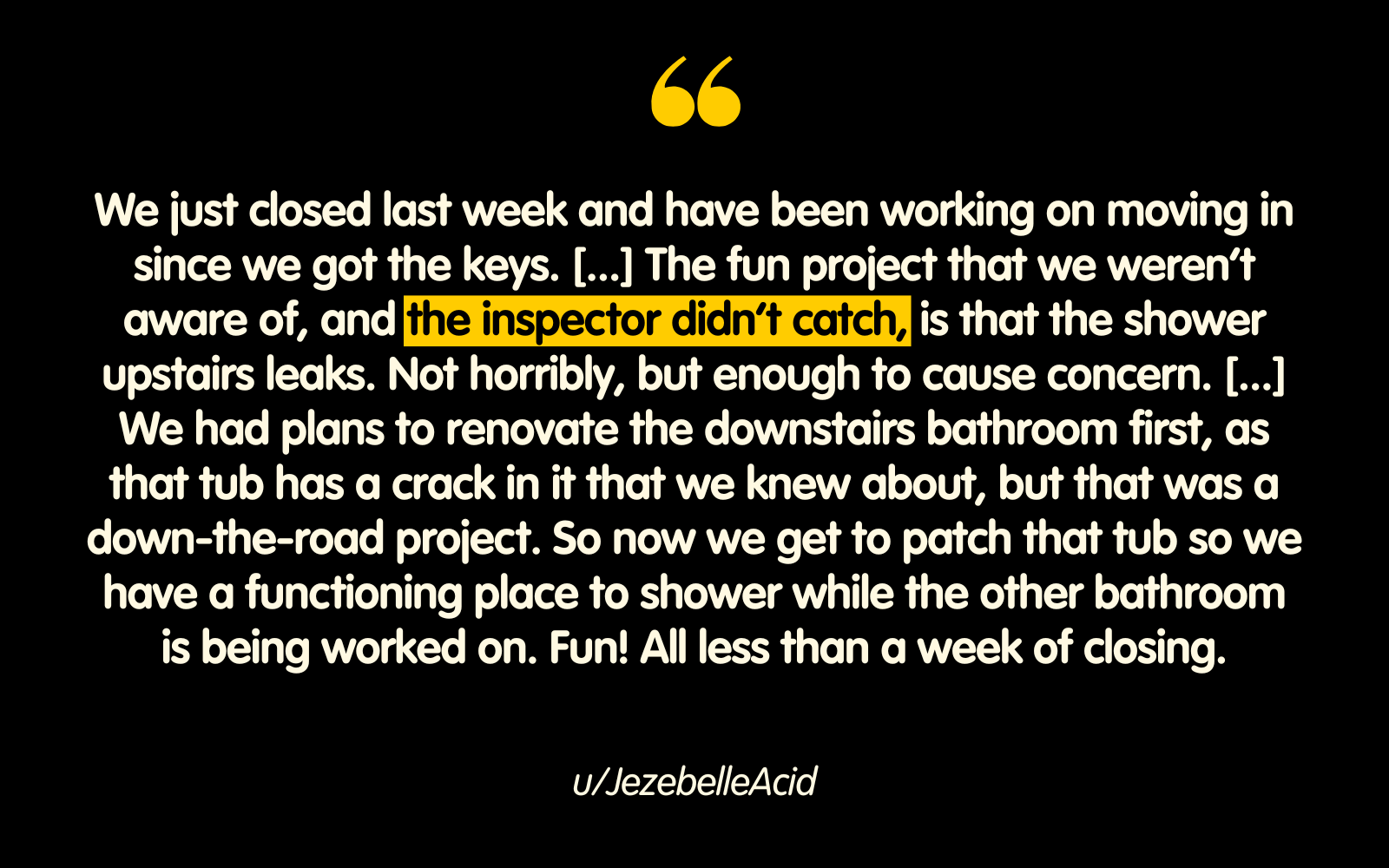
Yikes! Truly terrifying. What’s the gold you can use to ward off the banshees of new-home renovations? Short-term storage:
- Temporary storage can help protect your sacred stuff like an amulet against the dark energies of leaky showers, cracked pipes, and the John Carpenter-esque fog of construction dust and Wes Craven splatters of paint.
- And if you’re renovating one section of the haunted house at a time, short-term storage allows you to move your items in and out room by room, at your own pace.
- You’ll have enough going on tracking down and warding off the unseen phantoms you inherited with the property. Moving your stuff in step-by-step will at least help keep the space you’re not rebuilding organized and manageable.
How to Pick a Moving Company: Avoiding Omens and Exercise Possession Protection
Choosing a reputable and capable moving company is like choosing NOT to stay at the table in Would You Rather- you won’t end up feeling like you’re staring at the edge of a razor blade. But don’t take our word for it. Grab your popcorn and safety blanket and let’s strap in for another moving horror story, courtesy of r/extremelyinfuriating:

I’ll be sleeping with the lights on tonight. Moving and storing wooden furniture is already a high-tension homage, never mind when it’s a family-made heirloom.
But the terrifying truth is that the Department of Transportation receives 4,000 annual household moving complaints: here’s how to file one.
If you’re just now planning your escape from your House on Haunted Hill. Here’s what to look for in a moving company:
- Do Your Research: Research moving companies through recommendations and online reviews, avoid brokers in favor of local companies with their own trucks, and choose movers who allow you to personally pack the truck to prevent damage.
- Ask the Right Questions: Visit each company’s office to inspect their facilities and trucks, verify they use their own equipment and employees rather than subcontractors, ask about employee experience and background checks, and check with your homeowner’s insurance about coverage for items in transit or storage.
- Utilize FMCSA Tools: Use SaferSys.org to verify each company’s DOT number, legal authorizations, and insurance information, ensuring they’re marked as “Authorized for Hire” with active cargo and liability insurance. Call the FMCSA hotline to check their complaint history.
- Review Your Paperwork: Always get an in-home weight-based estimate rather than phone quotes or cubic feet estimates, ensure you receive the federally required “Your Rights and Responsibilities When You Move” booklet, and verify that your final contract documents all agreed-upon details, including price, belongings inventory, dates, and addresses.
DIY Housebound movers need to be sure they choose the right-sized vehicle rental and read up on how to pack a moving truck.
Storage Unit Amenities – The Final Girls of Smart Storage
Amenities like electrically-powered units, climate control, drive-up storage, and enhanced security features can help you store smarter and avoid shadow encounters like this one from r/nosleep:
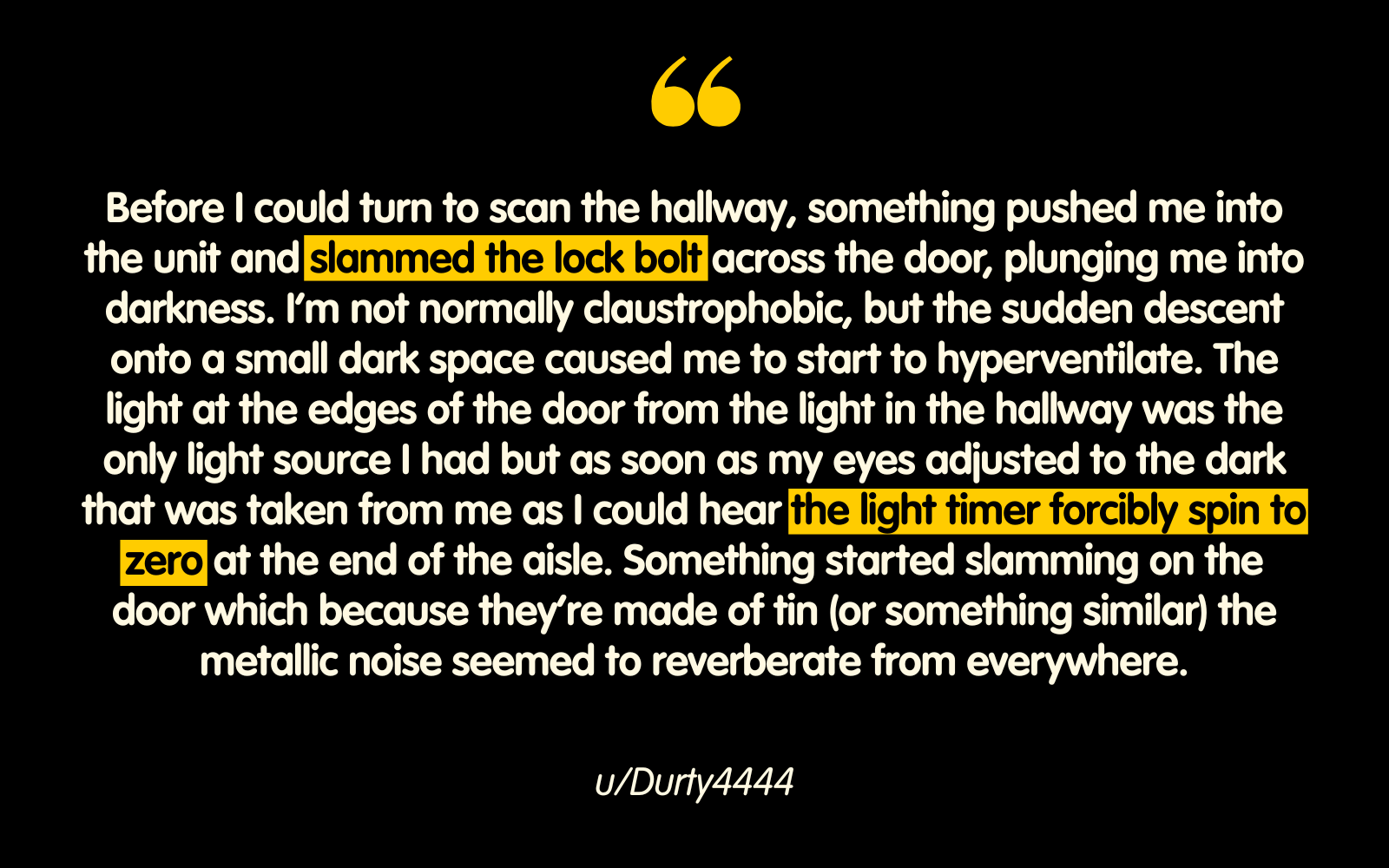
Click here to read the full story.
This sounds like something that could have been mitigated by a storage unit with electricity.
That’s right, there are specialized storage spaces with electricity that provide power access, allowing you to run lights, charge devices, and operate tools or equipment directly from your unit.
And while they’re not guaranteed to fight off the sleep demons and shadow people, electrically powered storage units do help you navigate the halls of storage units that are open 24/7. Some of the standard types of electrical setups you can find storage units utilizing include overhead lighting, standard outlets, and power strips.
How SpareFoot Can Help Avoid Decluttering and Moving Horror Stories

What’s the best part about scary stories? They happen to other people. In addition to the cool lore, the macabre imagery, and the roller coaster ride of adrenaline spikes and empathy overload, scary stories offer us hard lessons at the expense of characters in another world.
That said, these moving horror stories are all too familiar. And when it comes to how to be a minimalist and declutter your space, we suggest starting at the pace of a Walking Dead zombie, rather than sprinting like an infected from 28 Days Later.
If you get rid of everything in the dead of a single night, you risk creating a void. And we all know how dark voids live to consume–you may fall back into overconsumption habits just to fill it.
Get rid of the clutter that doesn’t conjure up your emotional spirits first, saving space for the things you use often and the possessions that bring you joy (leave the possessions that only bring vomit and irrelevance to the Hollywood priests).
You can stage things in storage before you commit to getting rid of them for good. But how do you find a storage space near you that has exactly what you need?
That’s where we come in. Our SpareFoot Search Tool lets you search for storage units in your area, filtering the results based on the features and unit size you need. Some storage facilities even give you your first month of storage for free, and our SpareFoot Storage Deals search feature even limits your search results to facilities in your area that offer that free first month!
Cenobites might take pleasure in suffering, but you don’t have to. Simply enter your zip code on our site to find an affordable storage unit that keeps your sentimental belongings safe, organized, and out of the way as you recycle, donate, minimize clutter, and figure out if minimalist magic is the right spell to cast on your life.
The 333 rule, also called Project 333, is a minimalist fashion challenge. Participants chose 33 items of clothing for three months and packed everything else up nd put it in storage. That includes not just items of clothing, but accessories like jewelry, scarves, and even shoes. Exceptions are made for sleepwear, wedding rings, workout clothes, and seasonal garments like winter jackets and bathing suits.
The 50% rule of clutter is when you declutter a room, drawer, cabinet, closet, or space by pulling everything else and getting rid of half of the stuff. Some people sell, donate, recycle, or trash the items right away, while others put them in storage for an intermediary period until they prove to themselves they can live without them.
The fastest way to declutter a house is the four-box method. Take four large boxes and label them as “reduce/recycle/trash,” “keep and relocate,” “sell,” and “donate,” then work through one room at a time and put everything into the boxes. The “keep” items are organized back into the space via a new organization system, and the contents of the other three boxes are sold, trashed, or donated.
The 20/20 decluttering rule states that if you can replace something in less than 20 minutes for less than $20, you don’t need to keep it. The foundational theory is that we hang on to things we don’t need based on a deficiency mindset, and once we see how easy it is to replace lots of our clutter, we recognize that we never really needed to own it in the first place.

Michael Ta’Nous
Michael Ta’Nous is a full-time writer who works and lives with his wife in Taos, New Mexico. “Mikey” spent his early twenties living either out of a van as a touring musician or out of a backpack on motorcycle trips writing from cafes–these rigorous adventure years polished him into a master packer. In addition to managing storage units full of catering supplies and outdoor gear professionally, Michael has used storage units as a band rehearsal space and a motorcycle garage.


