It all started with that kitten you rescued five years ago. Later, you adopted a Great Dane. Then a stray cat appeared on your doorstep… the same month you inherited your grandma’s Chihuahua—and maybe you even adopted a corn snake that your old roommate left behind.
Next thing you know, you’ve got a jungle of animals to manage. You’re officially a multiple-pet household with a pack of companion animals to manage, and it’s easy to get overwhelmed—especially when balancing pet policies, wellness appointments, special diets, and the intrinsic needs of each animal.
Read on for 20 tips on how to organize your space with pet-friendly layouts, create community harmony, and manage shared spaces for any assortment of furry (and scaly) family members—whether you’re pet parents to dogs, cats, or even a corn snake:
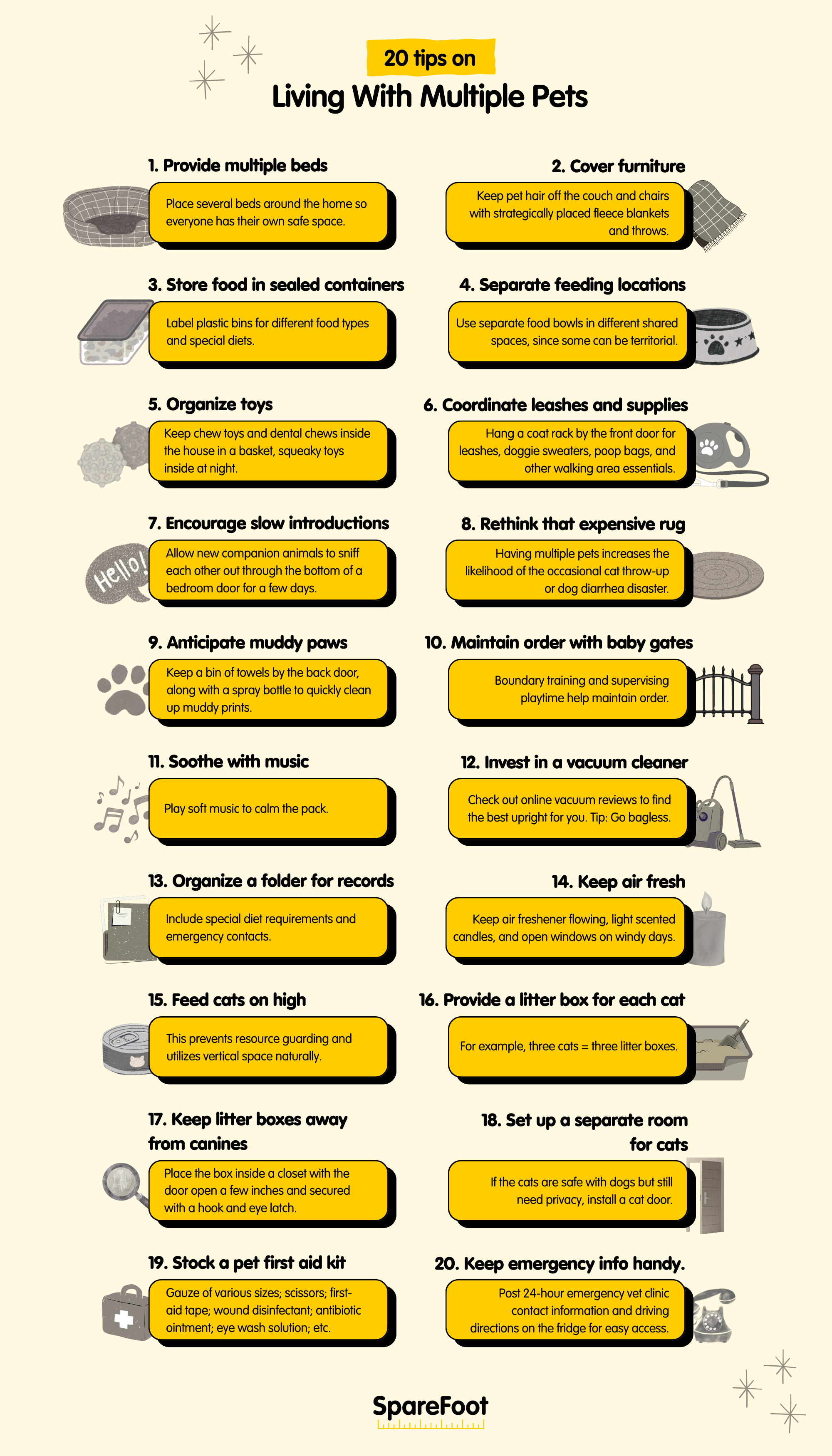
1. Provide Multiple Beds.
Place several dog and cat beds around the home so everyone has a place to nap and feel emotional support from their own safe space. Lots of beds may even make the sofa less tempting.
2. Cover Furniture.
Keep pet hair off the couch and chairs with strategically placed fleece blankets and throws.
Pro Tip: Vertical space is your best friend in a multiple-pet household. Install floating shelves and wall-mounted perches for cats to escape dog traffic. This creates safe zones and adds mental stimulation for climbing cats while keeping community harmony between species.
3. Store Food in Sealed Containers.
Label plastic bins for different food types and special diets. Store in the pantry or on a kitchen island shelf, away from curious noses and potential resource guarding conflicts.
4. Separate Feeding Locations.
To avoid resource guarding and food aggression, don’t feed all pets in one room. Use separate food bowls in different shared spaces, since cats and dogs can be territorial. Consider boundary training to help pet parents manage feeding time peacefully.
5. Organize Toys.
Keep chew toys and dental chews inside the house in a basket, and tug toys plus interactive toys outside to avoid romping dogs getting boisterous in the home. Add treat puzzles for mental stimulation. Keep squeaky toys inside at night (or use sound-dampening materials in play areas) to avoid disturbing sleeping neighbors and maintain community harmony.
6. Coordinate Leashes and Supplies.
Hang a coat rack by the front door for leashes, doggie sweaters, poop bags for waste cleanups, and other walking area essentials. This keeps shared spaces organized and ensures pet parents can grab everything for multiple dogs in one spot.
7. Encourage Slow Introductions.
Allow new companion animals to sniff each other out through the bottom of a bedroom door for a few days. Then separate with a baby gate or pet-safe barriers until all animals are comfortable. Supervising playtime during introductions helps pet parents ensure community harmony.
8. Rethink That Expensive Rug.
You may want to opt for durability rather than style on that sofa and loveseat too. Having multiple pets increases the likelihood of the occasional cat throw-up or dog diarrhea disaster.
9. Anticipate Muddy Paws.
Keep a bin of towels by the back door, along with a spray bottle to quickly clean up muddy prints.
Pro Tip: Maintain consistent potty training schedules for all dogs, designating specific walking areas for waste cleanups. This keeps shared spaces clean and helps pet parents manage a multiple-pet household more efficiently. If managing multiple walks is challenging, consider dog daycare for social engagement and exercise.
10. Maintain Order with Baby Gates.
Laura Marshment of Kansas City, MO, uses baby gates and pet-safe barriers to her office, kitchen, and a bedroom to keep six dogs in line. “I call it a gated community,” she says. “Sometimes it gets hectic having everyone out at the same time—boundary training and supervising playtime help maintain order.”
11. Soothe with Music.
Play soft music to calm the pack. Pop in a CD from Through a Dog’s Ear and Through a Cat’s Ear, music and sound therapies for pet anxiety. Or try the iCalmDog, a portable player pre-loaded with four hours of pet-pacifying tunes.
12. Invest in a Vacuum Cleaner.
Multiple pets leave behind loads of hair and fur. Check out online vacuum reviews to find the best upright for you. Tip: Go bagless.
Enroll dogs in an obedience class to improve boundary training and reduce chaos in your multiple-pet household. Group classes also provide social engagement for both pet parents and their companion animals, improving everyone’s mental health and emotional support connections.
13. Organize a Folder for Pet Records.
Keep records of wellness appointments, veterinary visits, adoption papers, licenses, microchip registration, pet policies, and pet insurance policies in a divided binder. Include special diet requirements and emergency contacts. “Trying to look for paperwork for four different dogs can get really hairy,” says Debi Spangler of Hollidaysburg, PA. “If there’s an emergency, I can grab that binder and go.”
14. Keep Air Fresh.
Just because you’re nose-blind to dog and cat odors doesn’t mean your friends won’t notice. Launder dog bed covers, throw rugs, and furniture covers weekly. Keep air freshener flowing, light scented candles, and open windows on windy days.
15. Feed Cats on High.
It only takes a few seconds for a dog to scarf down the cat’s dinner from the cat’s food bowls. “We feed our cat up on a stool, using vertical space,” says Diana Mansell of Phoenix. This prevents resource guarding and utilizes vertical space naturally.
16. Provide a Litter Box for Each Cat.
Cats like clean litter boxes, so make sure you have enough of them. For example, three cats = three litter boxes.
17. Keep Litter Boxes Away from Canines.
Few dogs can resist the crunchy confections in the kitty litter box. Place the box inside a closet with the door open a few inches and secured with a hook and eye latch so only cats can slip through. Or put the box in a closed room secured with a baby gate or accessible by cat door.
18. Set Up a Separate Room for Cats.
If your dogs aren’t cat-friendly and you’ve got an extra room, give cats their own pad with cat trees that maximize vertical space, beds with wall-mounted perches, and window-ledge views. Add interactive toys and treat puzzles for mental stimulation. If the cats are safe with dogs but still need privacy, install a cat door in a bedroom to allow kitties to slink in and out as they please.
19. Stock a Pet First Aid Kit.
Some items to include: Gauze of various sizes; scissors; first-aid tape; wound disinfectant; antibiotic ointment; eye wash solution; hydrogen peroxide; cotton balls or swabs; cortisone spray or cream; thermometer.
20. Keep Emergency Information Handy.
Post 24-hour emergency vet clinic contact information and driving directions on the fridge for easy access in medical emergencies. Don’t forget poison control center numbers.
While managing a multiple-pet household takes effort, pet parents of companion animals experience significant benefits. Studies show that caring for multiple pets can improve mental health, lower blood pressure, and provide emotional support. The social engagement between animals creates community harmony that enriches everyone’s lives—human and animal alike. Just remember to check your building’s pet policy before adding to your furry family, maintain regular wellness appointments, and create pet-friendly layouts with plenty of vertical space using floating shelves and designated shared spaces for peaceful coexistence.
Bonus Storage Tip: Pets of all kinds require enrichment and playtime, much like human children. This means picking up a catnip mouse here, a giant chew toy there…until suddenly you have bins full of toys, leashes, pet sweaters, travel accessories…things add up.
You can combat pet-induced clutter by rotating their toys and beds seasonally, as you would children’s toys! Small storage units or lockers are a great way to keep only what your pets are actively using in your home, ready to rotate as soon as Whiskers decides to snub his donut bed.
Looking to make more room at home without upsetting your furry and scaly friends? SpareFoot can help you declutter and take on the stuff you don’t have a place at home for.

Deb Hipp
Deb Hipp is a freelance writer who lives in Kansas City, MO. She writes about organizing, moving, personal finance and legal issues. When Deb isn鈥檛 writing, she鈥檚 traveling or cheering on the Kansas City Royals.


